
How to Build Bigger Legs When Squats Hurt Your Knees
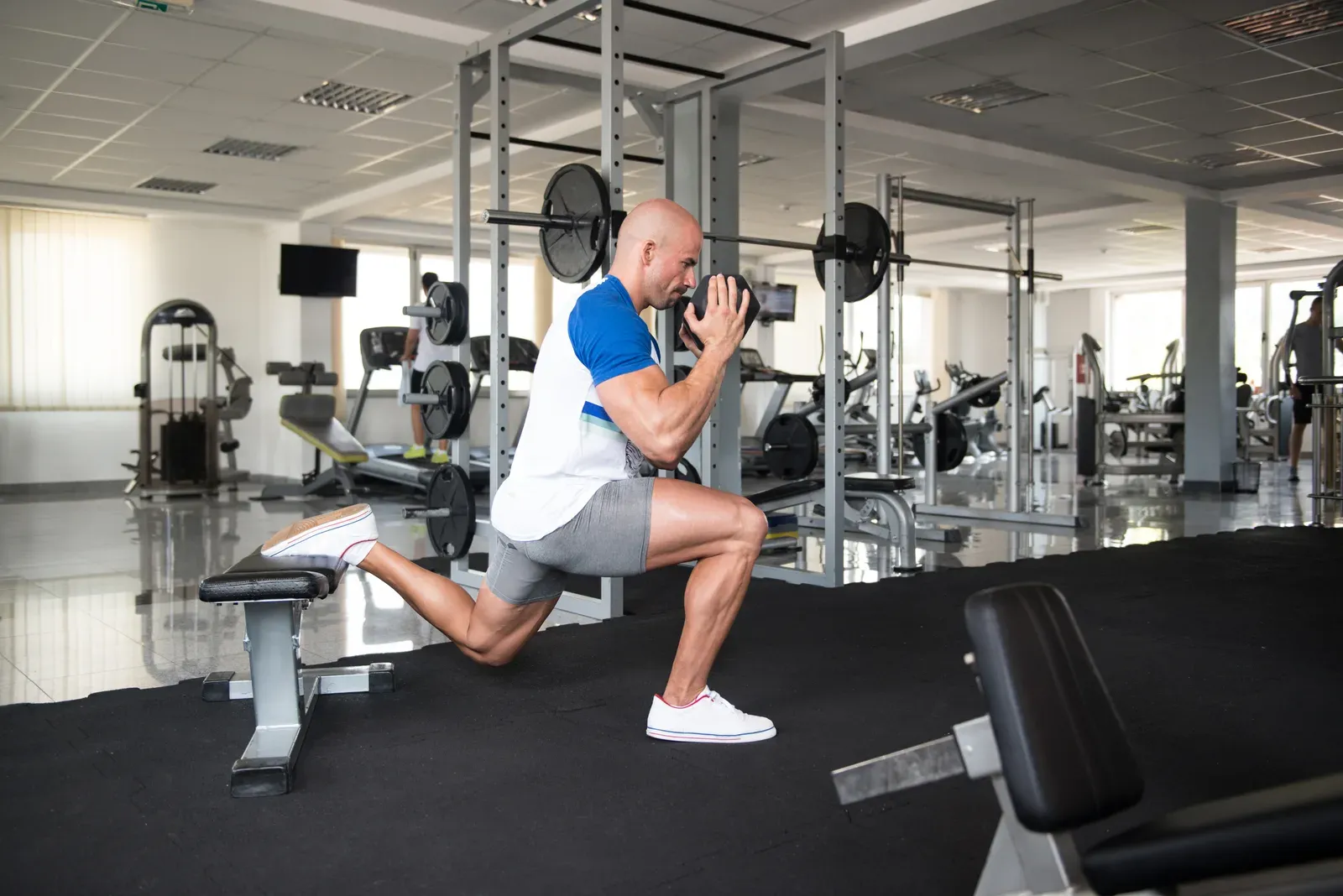
You can build bigger legs without heavy back squats by using split squats, a leg press and hip hinges, which load the quads, glutes and hamstrings while giving the knee a choice of angle and range. Squat pain has many causes, and a squat is only one way to train the legs. Because new knee pain should be looked at by a physician or physical therapist first, a free consultation can be a place to sort out what to ask them and what a coach can adapt.
Check what the pain is telling you
Mild, short-lived discomfort that settles within a day can be a sign that your technique or load needs adjustment. Sharp pain, swelling, locking, giving way or pain at night should be assessed by a clinician before you continue. The bad knees coaching guide explains where a coach’s role starts and stops.
The leg-building toolbox for sore knees
- Leg press with a short range. The back is supported, you control depth and foot position, and the load can climb steadily.
- Split squat or reverse lunge. Keep the front shin close to vertical and the stride a bit longer to put more work on the glutes.
- Box squat to a high seat. Sitting back to a chair or box limits knee travel and gives you a depth target.
- Romanian deadlift. Hinges grow the hamstrings and glutes with little knee bend.
- Step-up to a low box. Choose a height that does not hurt on the way down.
- Leg extension and hamstring curl. Machines let you load the muscles in a controlled path. Use a light weight and short range first if the knee is cranky.
Pick two or three of these per session, and rotate versions if one provokes the knee.
Adjusting the squat itself
If you want to keep squatting, small changes can help:
- Place the feet a bit wider with toes turned out slightly.
- Sit back as if reaching for a chair, so the shins stay more upright.
- Stop at the depth where the knee still feels fine.
- Slow the descent to three seconds, and use a lighter weight to start.
A coach checking your set from the side often finds the fix in seconds, which is the idea behind a form check.
Volume and progression
Aim for around 10 to 15 hard sets per week for the quads and the same for the hamstrings and glutes combined, spread over two sessions. Add a rep or small amount of weight each week, and keep two reps in reserve. Eat enough protein, and sleep.
What to expect
Strength gains arrive first. Visible leg size generally takes about two to four months, and varies by training history. For reference, the strength standards page lists commonly cited targets for regular adults.
A simple pain rule for knee-friendly training
Many coaches use a zero to ten pain scale during rehab-style training. Discomfort that stays at a three or below, does not climb during the set and has settled by the next morning is commonly treated as acceptable. Anything above that, or anything that changes how you walk, is the cue to stop and reduce the load, shorten the range or swap the exercise. Share the pattern with your clinician, because it is useful information for them as well.
Next step
Try a leg press, a split squat and a Romanian deadlift in one session, and note which feels best on your knees. In a private suite at FlexWerk in Carmel, a coach can swap exercises on the spot until the knees are comfortable.
Related questions
Is the leg press bad for knees?
Not inherently. The leg press is often easier on the lower back and balance, and range and foot position can be adjusted so the knee stays comfortable. Stop if pain increases.
Can I build legs with hinges alone?
You can build the hamstrings and glutes well, but the quadriceps need some knee-bending work. Pair hinges with a gentler quad movement such as a leg press with a short range.
How soon will my legs grow?
Strength often rises in a few weeks, and visible size commonly follows over two to four months of consistent, progressive training with enough protein.