
Hiking Trip Training in Carmel: From Flat Indiana to Real Trails
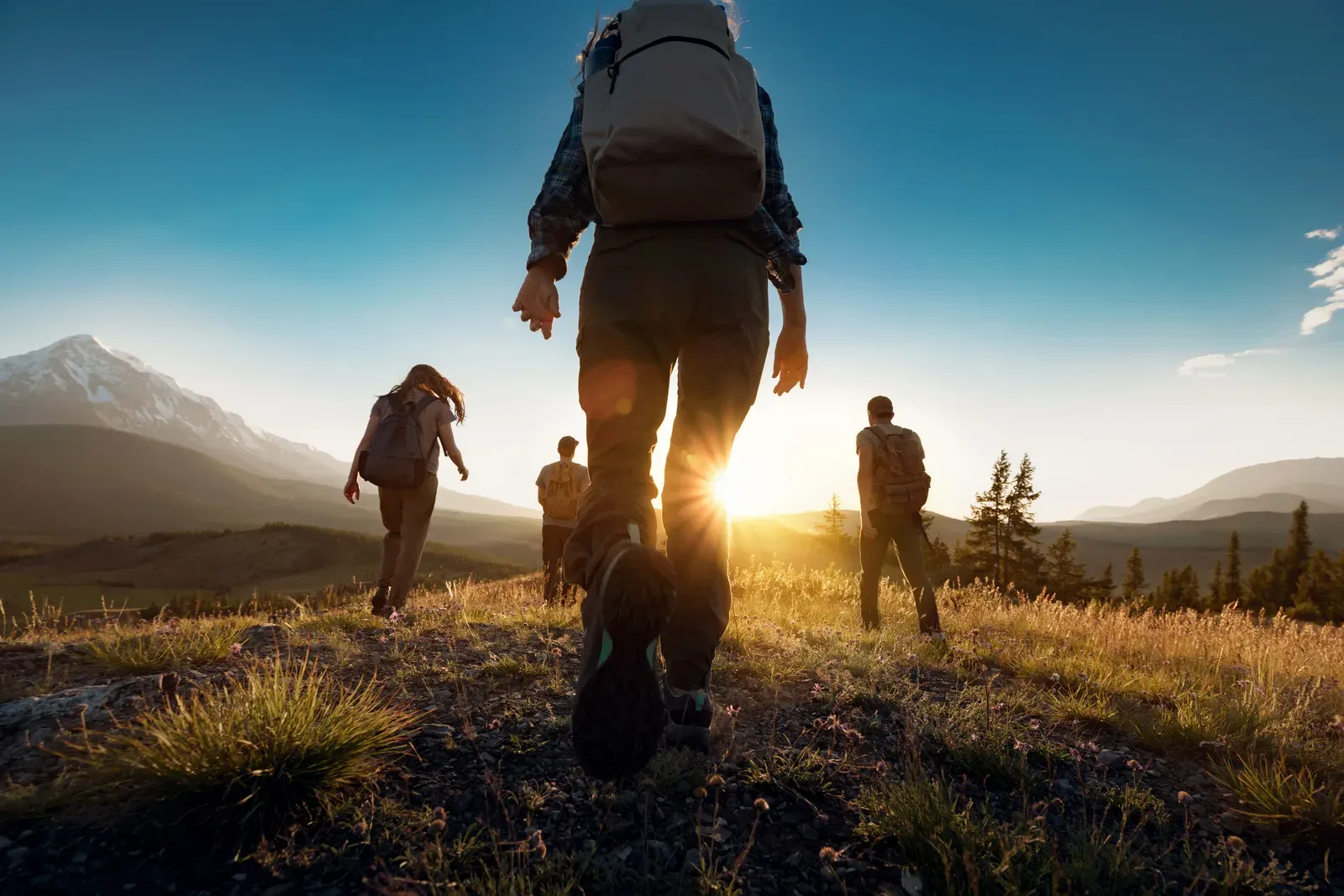
Central Indiana cannot give you a mountain, but it can give you mountain legs: eight to twelve weeks of step-ups, loaded carries, and downhill-focused strength work will do more for your hiking trip than any gear upgrade. The flatlander problem is real, the tallest climb most Carmel weeks offer is a parking ramp, but it is completely solvable in a gym, and solving it is the difference between finishing a trail happy and surviving it. The place to start is a free consultation: a free InBody body composition scan, a conversation about the trip, and a plan counted backward from your departure date.
What a trail actually asks of flatlander legs
A mountain day is three demands stacked on top of each other, and none of them exist on a Carmel sidewalk. The climb is thousands of single-leg step-ups under the weight of a pack: hip and quad strength, repeated for hours. The descent is the sneaky one: your quads work eccentrically, as brakes, lengthening under load with every downhill stride, and untrained eccentric strength is why day two of a hiking trip hurts more than day one. Then there is the terrain itself, uneven, rocky, root-crossed ground that asks your ankles and hips for stability the treadmill never taught them.
Add altitude if you are headed genuinely high, and stack the honesty on top: you cannot train thin air in Indiana, only arrive fitter so it costs less. And if the trip involves serious elevation or you manage a heart, lung, or joint condition, a conversation with your physician belongs at the top of the checklist, before the training plan, not after it.
The movements that earn their place
A hiking block does not need novelty; it needs specificity and progression. The short list:
- Step-ups, weighted, to a knee-high box: the climb, rehearsed. The single best minute-for-minute exercise in the block.
- Split squats and reverse lunges, with a controlled three-second lowering phase: eccentric braking strength for the descents.
- Hinge work, Romanian deadlifts and their cousins: the posterior chain that spares your knees and carries the pack.
- Loaded carries, ideally with the actual backpack you will hike in: grip, trunk, gait, and pack-fitting problems discovered in week four instead of on the trail.
- Calf and tibialis work plus single-leg balance: the ankle insurance policy for uneven ground.
In a private FlexSpace at Carmel City Center, all of it happens in one reserved room: custom lifting rack, cable system, and dumbbells, with your pack in the corner and nobody watching you rehearse step-ups with a backpack on, which is exactly the kind of training that feels awkward on a public gym floor and entirely normal behind your own door.
Build the engine underneath
Leg strength gets you up the mountain; your aerobic base decides how you feel doing it. The bulk of hiking fitness is unglamorous zone 2 work: long, conversational-pace efforts that build the engine without wrecking recovery. Carmel is genuinely good for this part. The Monon Trail runs steps from FlexWerk’s door, and a weekend habit of long walks with your loaded pack is the closest thing Indiana offers to trail miles. Indoors, the cardio suites cover the rest: curved treadmills for walking volume when summer heat or a January freeze makes the trail miserable, and a HYDROW rower for low-impact engine work that spares your legs between strength days. Two strength sessions and two aerobic sessions a week is the standard shape, and a coach will bend it around your actual calendar.
Progress the weekend walks the way you would progress a lift: add distance first, then pack weight, never both in the same week. A sensible arc runs from an hour unloaded to two-plus hours carrying most of your trip weight, and those long walks double as gear rehearsal, because week eight is when you want to discover the hip-belt rub and the sock seam, not mile four of day one. Break in the actual boots on the actual pavement; trail-day blisters are a training failure, and an entirely preventable one.
The eight to twelve week runway
Worked backward from departure, the block typically runs in three parts. Weeks one through four are the base: movement quality, moderate loads, walking volume, and the InBody baseline so progress is measured rather than guessed. Weeks five through eight add load and volume: heavier step-ups, longer carries, bigger weekend walks. The final stretch turns specific: pack weight up to trip weight, eccentric emphasis for the descents, then a taper in the last week so you arrive fresh instead of fatigued. It is the same deadline logic that drives ski trip preparation from Indiana, pointed at a different mountain season, and the same honest rule applies: the plan delivers preparation, not certainty.
Trip week itself is deliberately boring: loads drop, walks shorten, sleep gets protected, and nothing new gets attempted. The fitness is already banked; the last seven days exist to deliver it fresh. And the free first session earns a mention here, because it lets you test the coach, the room, and the whole drive-park-train rhythm at Carmel City Center before committing a single dollar of the trip budget to training.
One more Indiana-specific note: if your trip is in summer, some of your training will land in Carmel’s long humid stretch of upper-80s and 90s heat. Treat that as a feature. Heat-adapted walking here makes a 70-degree trail day feel easy, as long as you hydrate like it matters.
A trailhead date has a way of making training honest. Book the free hour, bring the trip details, and let a coach turn the weeks you have into legs that are ready for it.
Related questions
How far ahead of a hiking trip should I start training?
Eight to twelve weeks is the comfortable runway for most fitness levels, and six can still help meaningfully. Less than four weeks is triage: prioritize step-ups, walking volume, and breaking in your boots.
Can I prepare for altitude in Indiana?
Not directly; altitude adaptation only happens at altitude. What you can build here is a stronger aerobic base and stronger legs, which make the same thin air feel less punishing. If you have heart or lung concerns, clear the trip with your physician first.
Why do my knees hurt going downhill, and can training fix it?
Descents load your quads eccentrically, as brakes, and untrained brakes overheat fast. Eccentric-focused leg strength commonly helps a lot, but pain that exists now belongs to a physical therapist or physician before a training program.