
Get in Shape for a Ski Trip: Leg Training for Indiana Skiers
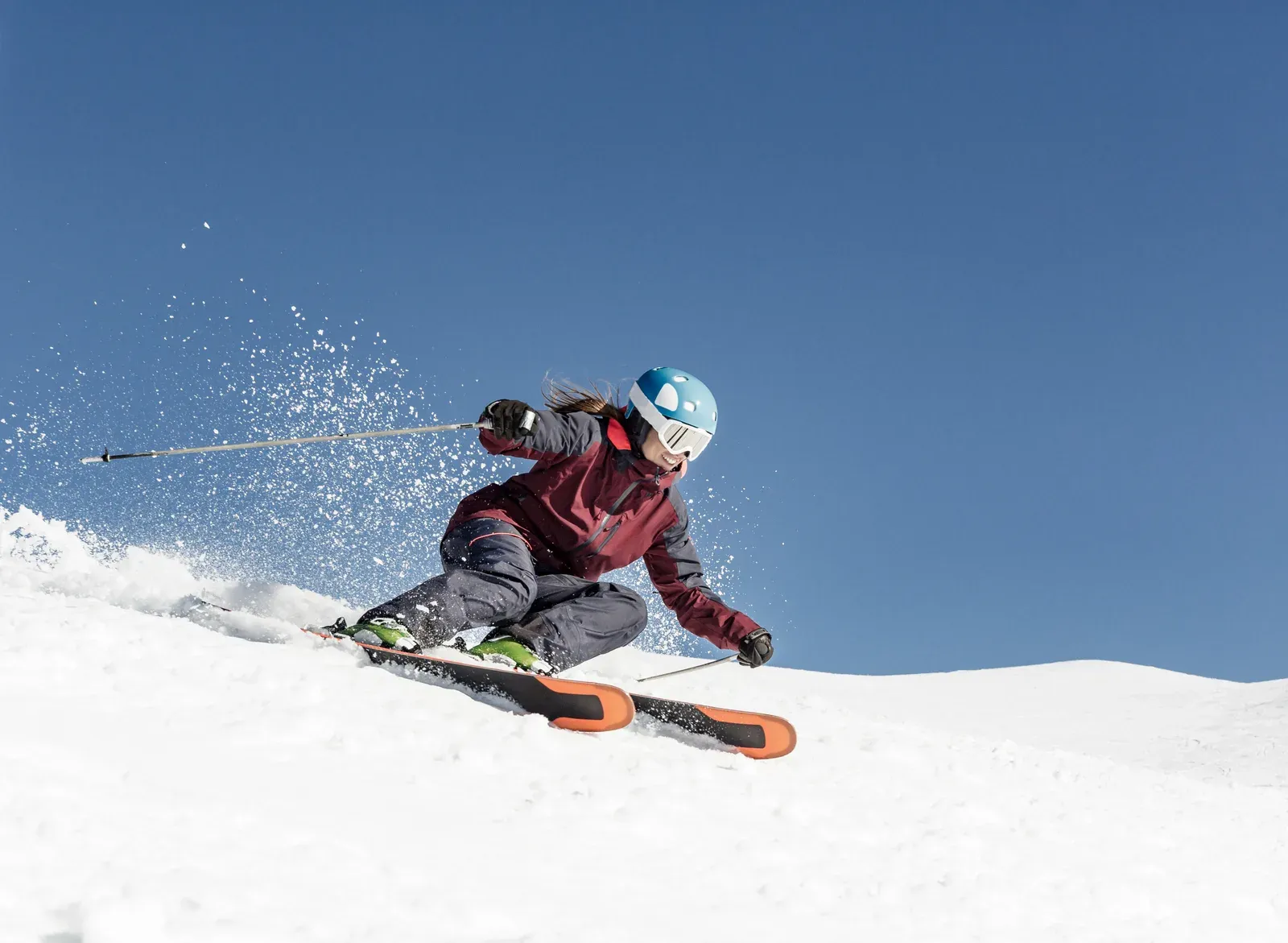
Indiana skiers have a specific problem: we live in one of the flattest states in the country and then ask our legs for a weekend of continuous downhill work at Perfect North, about an hour and a half away, Paoli Peaks at around two hours, or a week out west. You can get in shape for a ski trip in six to eight weeks by training the exact qualities skiing punishes: eccentric leg strength, isometric endurance, hip control, and balance. Your quads on day two of the trip will know whether you did.
If you want the plan built for you, with a coach and a deadline on the calendar, a free consultation is the fastest starting point. Here is what the work itself looks like.
What skiing actually asks of your legs
Skiing is a braking sport, which is why it wrecks untrained legs so reliably. Every turn loads your quads eccentrically, meaning the muscle works hard while lengthening, to control your descent. Between turns you hold a partial squat, an isometric demand most gym programs never touch. Add lateral edge-to-edge movement, hip rotation, and constant small balance corrections on changing snow, and you have a sport that reads like a checklist of things flat-state living never trains.
Ordinary fitness does not transfer as well as people hope. Runners and cyclists show up aerobically fit and still get destroyed, because concentric endurance is not eccentric strength. Snowboarders face nearly the same checklist, with even more demand on getting up off the snow. The gym can build exactly what the hill demands, and in Indiana the gym is the only place that can.
The six to eight week timeline
Work backward from your trip date. Weeks one and two are foundation: goblet squats, split squats, hinges, and calf work, learning positions and waking legs up. Weeks three through five are the heart of the block: heavier strength work, slow lowering tempos to build eccentric capacity, wall sits and split-squat holds for the between-turn burn, and lateral lunges and skater-style bounds for edge-to-edge movement. Weeks six and seven push intensity while keeping volume sane. The final week before the trip, back off almost entirely. You cannot gain fitness in the last five days, but you can absolutely arrive sore. If you already train regularly, the block simply reshapes your existing sessions toward these qualities rather than adding new hours to your week.
This deadline structure is the whole trick, and it works for any event on a calendar, as covered in training for a deadline. A trip you have already paid for is a better motivator than any January resolution.
The exercises that earn their place
You do not need a ski-specific circus. You need progressive loading on a short list:
- Squats and split squats for the base strength every turn draws on.
- Slow-tempo lowering work, such as a three to five second descent in squats and step-downs, to build the eccentric control that braking demands.
- Wall sits and isometric holds for the sustained tension of a long groomer run.
- Lateral lunges and skater bounds for side-to-side power and landing control.
- Single-leg balance work and hamstring strength to help you stay composed when a ski catches an edge.
- Trunk work so your upper body stays quiet while your legs do the arguing.
Two sessions a week is enough for most people, and a structured two day a week plan fits around work and family without negotiation. If you have a history of knee injuries or a heart condition, check with your physician before loading up a new program; a coach will gladly build around whatever guidance you bring.
Solving the no-mountain problem
Indiana cannot give you vertical, but a well-equipped room can simulate the load. This is where coached, private training suits ski prep unusually well. At FlexWerk you train one on one in a private suite at Carmel City Center, with a rack, cable system, and dumbbells, and nobody watching you do skater bounds and wall sits with a grimace. Your coach controls the variables a mountain would otherwise control for you: load, tempo, duration, and rest.
The timing works too. Ski trips get planned for January and February, which means the training block lands in the gray weeks of an Indiana winter when outdoor motivation dies at a 33 degree January high. An appointment with a coach at 6 AM, indoors, survives weather that would cancel anything self-directed.
Trip week and beyond
In the final week, taper. Two light sessions early in the week, then rest. On the mountain, the training pays out as more runs before fatigue, better control late in the day, and legs that recover overnight instead of mutinying. Fatigue is when most bad skiing decisions happen, so the fitness is not just about comfort.
A note on western trips: altitude compounds fatigue, hydration matters more than usual, and the smart play is banking your best skiing early in the day rather than chasing one last run at 3 PM on empty legs. Fitness buys you margin; it does not repeal physics.
When you get home, do not let the fitness evaporate. The legs you built for Perfect North are the same legs that make spring golf, summer hiking, and everyday life better, and maintaining strength is far easier than rebuilding it every December.
If this winter’s trip is already booked, count back eight weeks, then book the free consultation and let a coach handle the rest of the math.
Related questions
How long before a ski trip should I start training?
Six to eight weeks is the common sweet spot: long enough to build real leg strength and eccentric control, short enough that the trip date keeps you honest. Even four focused weeks beats arriving cold.
Will training keep me from getting injured on the slopes?
No program can prevent every skiing injury, and conditions and luck play their part. What leg strength and balance work reliably do is reduce your risk and keep fatigue, the biggest controllable factor, from making your decisions for you.
I only ski a few weekends a year. Is training really worth it?
That is exactly who benefits most. Frequent skiers get conditioning from the sport itself; the weekend-trip skier asks untrained legs for thousands of loaded turns in two days, which is why the third-day soreness is legendary.