
Body Composition Testing in Carmel: Options, Numbers, and a Free Scan
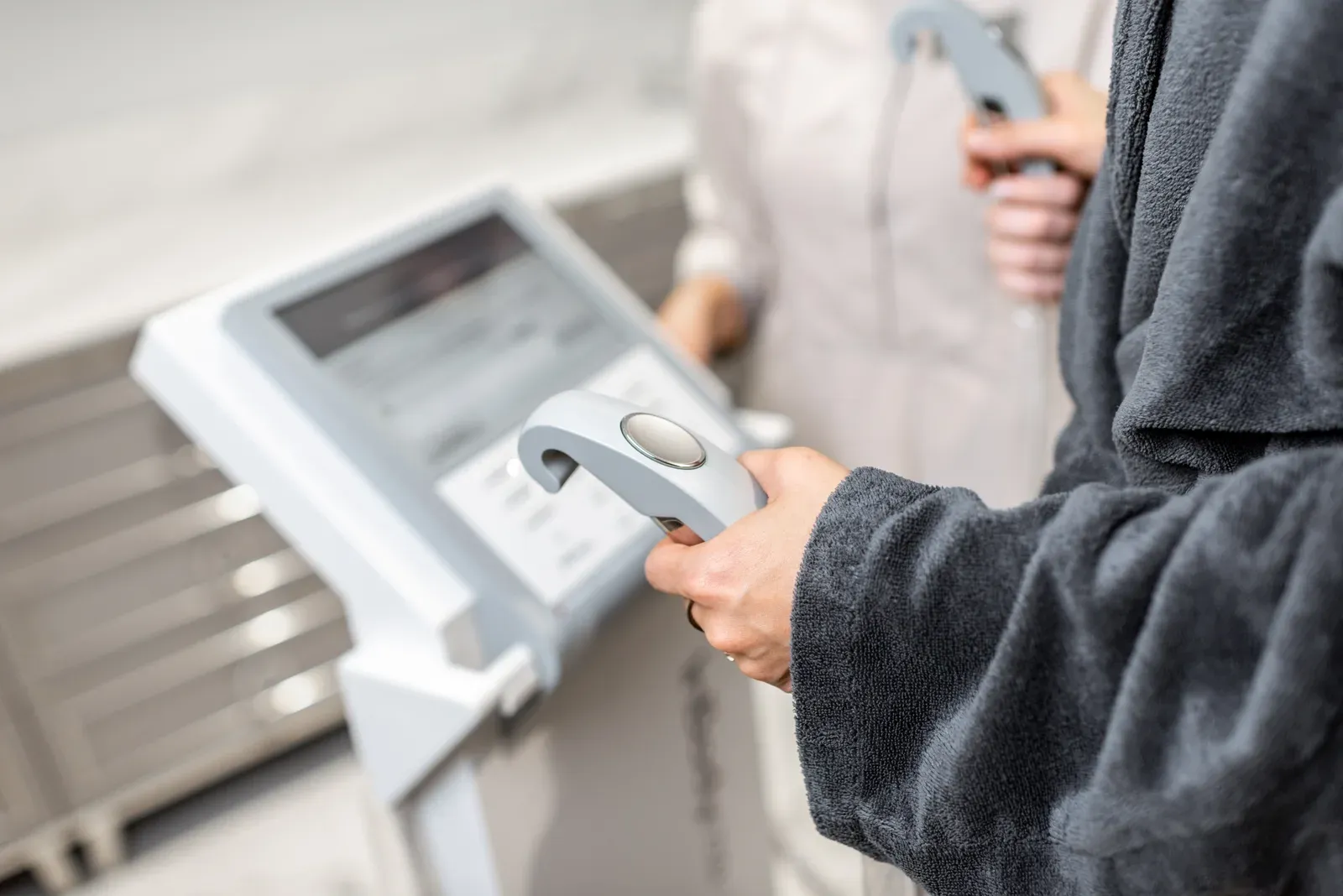
In Carmel you can get a clinical-grade body composition test two main ways: a medical imaging scan arranged through a clinic, or a bioelectrical impedance scan like the InBody, which FlexWerk includes free with its free consultation at Carmel City Center. For most people training toward a goal, the free option is not just cheaper, it is more useful, because what changes bodies is not one precise measurement but a repeatable baseline plus a coach who acts on it. Here is the full picture.
What a body composition test tells you that the scale cannot
A scale reports one number that blends everything: muscle, fat, water, bone. A composition test splits it apart, and the split is where the story lives. Two people can weigh 180 pounds and live in completely different bodies. More importantly, one person can hold 180 for eight weeks of good training while gaining muscle and losing fat the entire time, a result the scale reports as “nothing happened.”
The numbers that matter most:
- Skeletal muscle mass. The engine. Watching it hold or climb during weight loss is the difference between losing fat and just losing weight.
- Body fat percentage. A far better progress marker than weight, and the number most goals are actually about.
- Visceral fat. The fat stored around organs, which carries the most health relevance. Worth knowing, and worth discussing with your physician if it runs high, since a fitness scan is a screening tool, not a diagnosis.
- Segmental balance. How muscle distributes across limbs and trunk, which can flag imbalances worth training around.
Your testing options in Carmel
| Option | Strengths | Trade-offs |
|---|---|---|
| Medical imaging (such as a DEXA scan) | The precision benchmark; includes bone density | Clinic pricing per scan, scheduling overhead, impractical to repeat every month |
| Bioelectrical impedance (InBody) | Fast, repeatable, free at FlexWerk, trend-friendly | Single readings shift with hydration, so consistency between tests matters |
| Home scales and calipers | Cheap and convenient | Rough estimates; fine for curiosity, weak for decisions |
The honest comparison, covered in more depth in InBody vs DEXA accuracy, lands in a practical place: imaging wins on single-scan precision, while a repeatable scan you actually take every month wins on usefulness. Trends beat snapshots, and the best test is the one you will re-take.
When a test is most worth taking
Some moments make a baseline close to essential. Before starting any serious training or weight loss push, so you know what you are working with. Mid-diet, when the scale has stalled and you need to know whether progress actually stopped or just went invisible. After months of hard training, to confirm the work is landing where you intended. And during medically supervised weight loss, where protecting muscle while the scale drops is the difference between finishing lean and finishing simply smaller; that is a plan to build with your physician or prescriber, with the scan supplying the evidence along the way.
How a coach reads the printout
A scan without interpretation is a piece of paper, and this is where testing at a training facility earns its keep. At FlexWerk the scan happens inside the free consultation, and a coach walks the numbers with you: what your muscle mass means for your metabolism, where your body fat percentage actually sits against healthy ranges for your age, and which number deserves to be the target. That conversation regularly redirects goals. A large share of people who arrive saying “I need to lose twenty pounds” leave with a smarter plan: lose ten of fat, build five of muscle, and end up transformed at a weight the original goal would have called failure.
The baseline then does real work. Coaches at FlexWerk place clients into a phased 30/60/90 system, Reset for habits and baselines, Build for strength and body composition, Refine for details and visual change, and the scan is what makes that placement honest. It also sets up accountability that opinions cannot: re-scans every four to eight weeks tell you whether the plan is working long before the mirror does, which is the entire argument in the InBody scan guide.
Getting scanned, practically
The free route: book the free consultation at FlexWerk, 885 Monon Green Blvd at Carmel City Center, steps from the Monon Trail with garage parking a short walk away. The visit includes the InBody scan, a goals conversation, and a walk through the private training rooms, with no membership and no obligation attached; your first coached session is free as well if you decide to continue. Hours run 5 AM to 9 PM on weekdays and 7 AM to 4 PM on weekends, so a scan fits before work or into a lunch break, which suits the roughly quarter of Hamilton County that now works from home.
Two practical tips make any scan more useful. Test under consistent conditions, ideally the same time of day, hydrated, not straight off a workout, so re-scans compare cleanly. And decide in advance what you will do with the result: a number without a plan changes nothing, which is why the scan here comes attached to a coach conversation rather than a kiosk.
One last reframe, because it is the one that matters. The scan is not really about the numbers on the page; it is about removing the guesswork that makes people quit. Nearly every abandoned fitness attempt includes a stretch where real progress was happening invisibly and the person walked away believing nothing was. A baseline and a re-test calendar make that mistake impossible.
If you have been steering by the bathroom scale, one composition test will probably change what you think your goal is. Book the free consultation, get the baseline, and start measuring the thing you actually care about.
Related questions
How much does a body composition test cost in Carmel?
Medical imaging scans are typically paid out of pocket at clinic rates, while gym-based scans vary. At FlexWerk the InBody scan is free as part of the free consultation, with no membership or purchase required.
How accurate are bioelectrical impedance scans like the InBody?
Accurate enough to be genuinely useful, especially for tracking change over time under consistent conditions. Single readings can shift with hydration, so trends across re-scans matter more than any one number.
How often should I re-test body composition?
Every four to eight weeks is the common cadence during active training. That is long enough for real change to register and short enough to correct course if the plan is not working.