
Tennis Fitness Trainer Near Zionsville: Power from the Ground Up
A serve is a throw, and throws are powered from the ground: legs drive, hips rotate, the trunk transfers, and the racquet arm merely finishes what the floor started. Zionsville players chasing more pace can train that chain one on one, about 15 to 20 minutes east at Carmel City Center, and the Zionsville personal training page covers the practical arrangement between the village and the training room.
Pace problems are usually chain problems
When groundstrokes feel flat despite clean technique, the missing force almost always sits below the waist. Cable chops, hip-driven rotation patterns, and loaded leg work restore the links that produce racquet-head speed, which is why players often recover pace they had assumed age took. The complete inventory of what tennis-specific training develops, from first step to repeat engine, is in the Carmel tennis fitness trainer guide. Desk years are the usual culprit: hips stiffen, glutes disengage, and the chain quietly shortens until the arm does work the floor should have started. Training reverses that order.
The shoulder that serves is a shoulder that trains
A season of serving is an overhead throwing workload, and the supporting musculature either gets built deliberately or borrowed against. Rowing variations, external rotation work, and patient overhead progressions build that capacity in the gym. A shoulder that already aches, clicks painfully, or changes how you serve goes to a physician or physical therapist first, and training proceeds from what they clear. The volume required is modest, two focused blocks inside a normal training week, but the compounding effect across a season of serving is anything but.
Doubles players, this includes you
Shorter points do not mean smaller demands: doubles trades long rallies for more explosive starts, more overheads, and quicker net exchanges, so the emphasis shifts toward reaction-speed footwork and shoulder volume rather than shrinking. Mixed-doubles regulars, who often log the most court hours of anyone at the club, gain the most from that added capacity. Season planning matters too; the build-in-winter, maintain-in-summer rhythm Indiana’s calendar imposes is mapped in in-season versus offseason training.
The village-to-court logistics
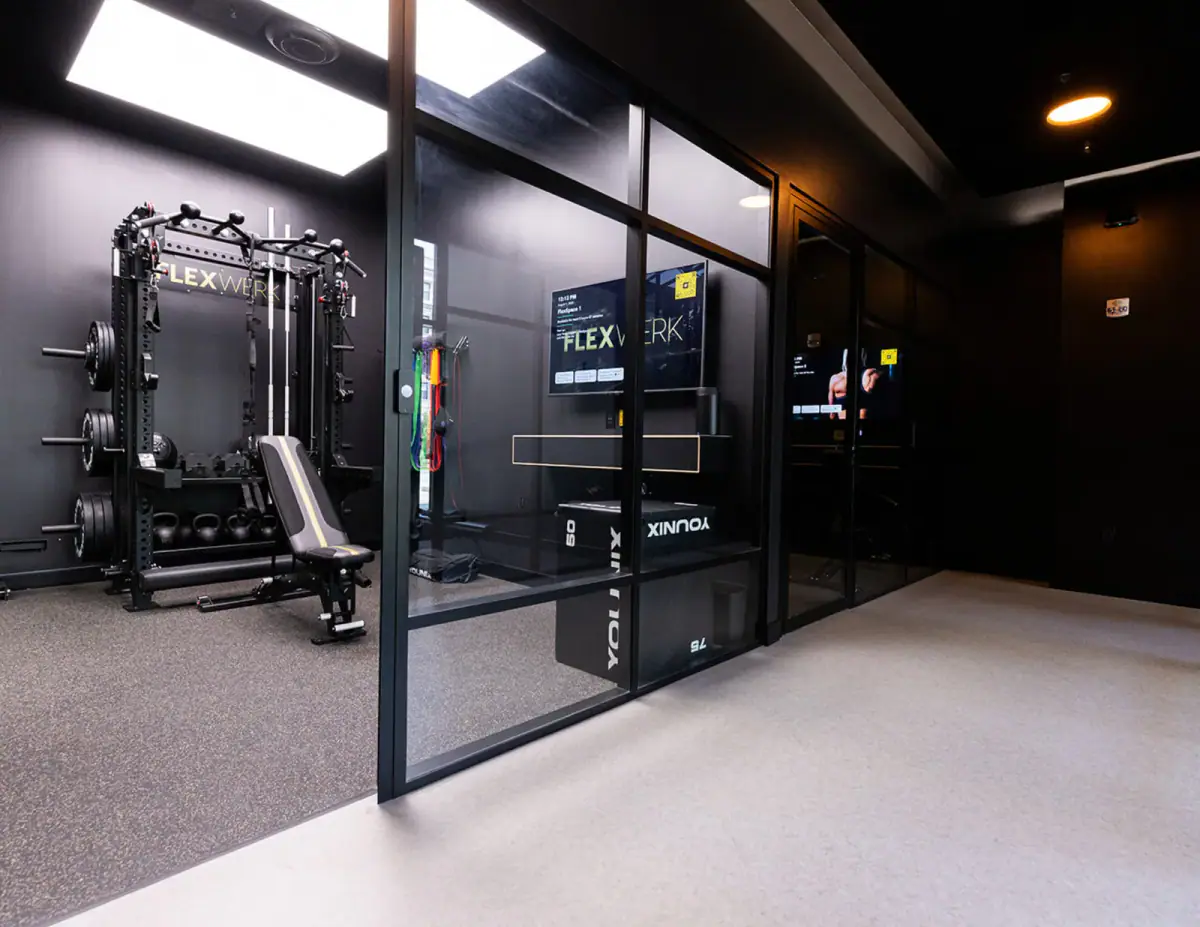
Sessions run in a reserved private FlexSpace with rack, cables, and dumbbells inside the room, matched through FlexConnect from a roster of more than 40 independent professionals; the sensible request is a coach who has trained overhead and rotational athletes. The drive follows 116th Street east without touching an interstate, doors open at 5 AM on weekdays and 7 AM on weekends, and the free consultation includes a free InBody body composition scan so the block starts from measurements. Two hours a week while building, one in league season, is the entire time cost.
More pace is sitting in your hips. Book the consultation and go collect it.
Related questions
Why is my serve losing speed even though my technique is fine?
Serve speed leaks from the ground up: legs and hip rotation generate most of the force, and they detrain quietly with age and desk years. Rebuilding them restores pace that technique alone cannot.
Do I stop strength work once league season starts?
No, you shrink it. One session a week maintains strength and power through the season, and dropping to zero hands back the winter's gains by the end of summer.
Is rotational power work safe for my back?
Programmed progressively, rotation work teaches the trunk to produce and resist force, which backs generally tolerate well. A back with an active or recurring issue sees a physician or physical therapist first, and the program follows their clearance.