
Sports Performance Training Near Grand Park for Tournament Athletes
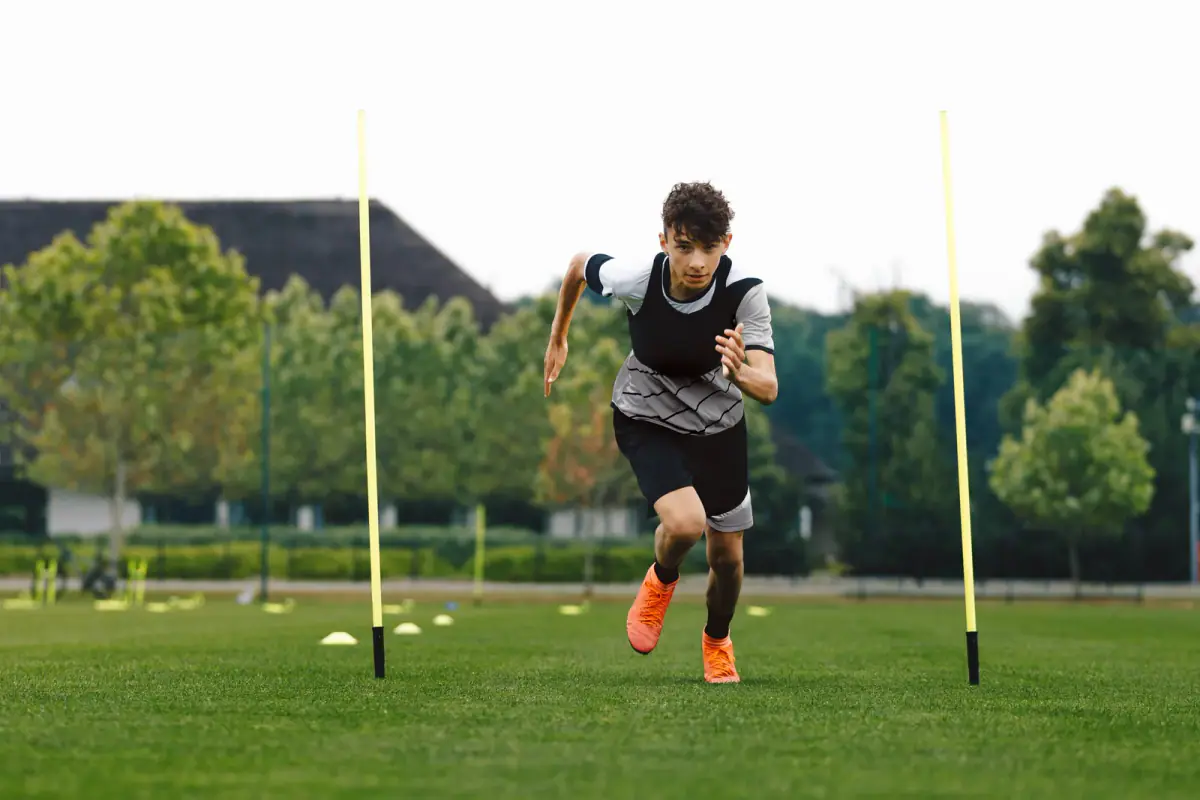
The athletes who fill Grand Park every weekend get constant chances to compete and remarkably few to develop: a bracket measures the speed, strength, and durability an athlete shows up with, and builds almost none of it. Year-round performance training is the missing layer, and for families already making the Grand Park drive it sits close by: one-on-one coaching at Carmel City Center, about 10 to 15 minutes down US-31, covered in full on the Westfield personal training page.
Why a packed tournament schedule leaves a development gap
Count your athlete’s year honestly and a strange ratio appears: fifty or sixty games, hundreds of hours of practice touching the ball or the bat, and close to zero hours spent making the body itself faster or stronger. Practice rehearses the sport. Games spend the athlete. Neither one loads the engine underneath, and by the second or third travel season the schedule is so full that nobody notices the engine work never got scheduled at all.
The gap shows up two ways. The first is the plateau: an athlete whose skills keep sharpening while their speed and power sit still, because nothing in the week trains those qualities. The second is quieter and more expensive: the same joints absorbing the same movements every weekend, all year, with no strength base underneath, which is the setup for the overuse problems that keep showing up in year-round youth sport. With roughly 1.5 million visitors a year moving through the park’s 400 acres, this is not a rare family’s problem. It is the default.
Where training fits between events
The workable answer is one or two weekday hours, treated like a practice. Tuesday and Thursday slots after school are the classic fit, and because sessions at FlexWerk are booked appointments rather than drop-ins, the hour holds its place against everything else on the family calendar. Weekday hours run 5 AM to 9 PM, so early or late works when carpools do not.
The calendar then does the periodizing. Open weekends and off-season months carry the real development blocks, when loads climb and speed work is genuinely fast. Bracket weeks flip to maintenance: a lighter session early in the week, nothing that leaves soreness past Wednesday, legs fresh by the first bracket games. The full logic of that seasonal split is laid out in in-season versus off-season training, and it is the difference between training that feeds a tournament schedule and training that competes with it.
What a between-tournament session works on
The work is individual by design, which is what a team environment cannot offer. A coach assesses the specific athlete first, then spends the hours where the return is highest:
- Strength as the base. Squat, hinge, push, and pull patterns coached rep by rep, because force is the raw material of every athletic quality a scout will ever time.
- Acceleration and deceleration. The first three steps and the ability to stop and cut under control, which decide more youth-sport moments than top speed ever does.
- Landing mechanics. Trained progressively, because absorbing force well is the most protective quality a jumping, cutting athlete can own.
- Review on the spot. Sessions run in a private suite with a monitor, so a coach can film a start or a landing and fix it within the same minute, with a parent welcome in the room.
An honest limit: no training program can promise an injury-free season, and an athlete rehabbing anything should be cleared by their physician or physical therapist before performance work begins.
Getting there from the park
US-31 carries you straight from the park into Carmel, a 10 to 15 minute drive for most Westfield addresses, and garage parking sits a short walk from the door at 885 Monon Green Blvd. The way in is a free consultation with a free InBody body composition scan, where FlexConnect matches your athlete with a performance coach from among more than 40 independent professionals by sport, age, and schedule. For the broader picture of athlete development on this side of the county line, see sports performance training for Westfield athletes.
Your athlete’s next bracket will test whatever they bring to it. The weekday hours in between are where what they bring gets better.
Related questions
Is the training located at Grand Park itself?
No. FlexWerk has no affiliation with the park; it is a private training facility at Carmel City Center, roughly 10 to 15 minutes down US-31 from the Grand Park campus, where athletes book one-on-one sessions with independent performance coaches.
Will added training leave my athlete flat for tournament weekends?
Not if it is dosed correctly, and dosing is the coach's job. Bracket weeks get lighter sessions placed early in the week, so legs are fully recovered by Friday check-in, and heavy development work waits for open weekends.
Can we keep training once the season is in full swing?
Yes, and you should: a small in-season dose preserves the strength and speed built earlier, while stopping entirely hands those gains back. The volume changes with the calendar; the habit does not.