
A Personal Trainer for Menopause on Indy's North Side: What to Require
A personal trainer for menopause should change the actual program, not just the pep talk: deliberate strength progression for bone, protein and recovery emphasis, joint-aware exercise selection, and progress measured by body composition instead of the bathroom scale, all built alongside your physician’s guidance, never in place of it. For north-side women, that coaching runs 10 to 20 minutes up the road at Carmel City Center; the drive specifics live on the north Indianapolis personal training page.
The markers of menopause-informed coaching
Four things separate an informed coach from a generic one, and every one of them is checkable in a single conversation. Strength work gets programmed toward genuinely challenging loads, because bone responds to meaningful loading and the years around menopause are commonly when density decline accelerates; the case for going heavier, carefully, lives in lifting heavy after menopause. Progress tracking moves off the scale, because this transition routinely holds weight steady while composition shifts underneath, and only a real re-test, like scheduled InBody scans, shows muscle up and fat down. Recovery becomes a dial rather than a switch, so a sleep-wrecked week gets a lighter session instead of a skipped one. And joints get worked with, not through; the menopause joint pain question covers how coaches adjust when they ache.
The audition question that reveals everything: “what would you change about my program because of menopause?” Specifics mean informed. A pivot to burning more calories means keep looking.
Where your physician fits
Alongside the coach, always. Hormone therapy decisions, symptoms that concern you, bone density testing, and anything diagnostic belong with your physician, and if you carry a diagnosis like osteoporosis, ask your doctor what loading is appropriate before starting, then expect your coach to program inside those lines. What training contributes is the piece no prescription supplies: muscle, bone stimulus, strength, and the energy that follows them. The two lanes work best when both are active, which any coach worth hiring will say unprompted.
Why the private room earns its keep here
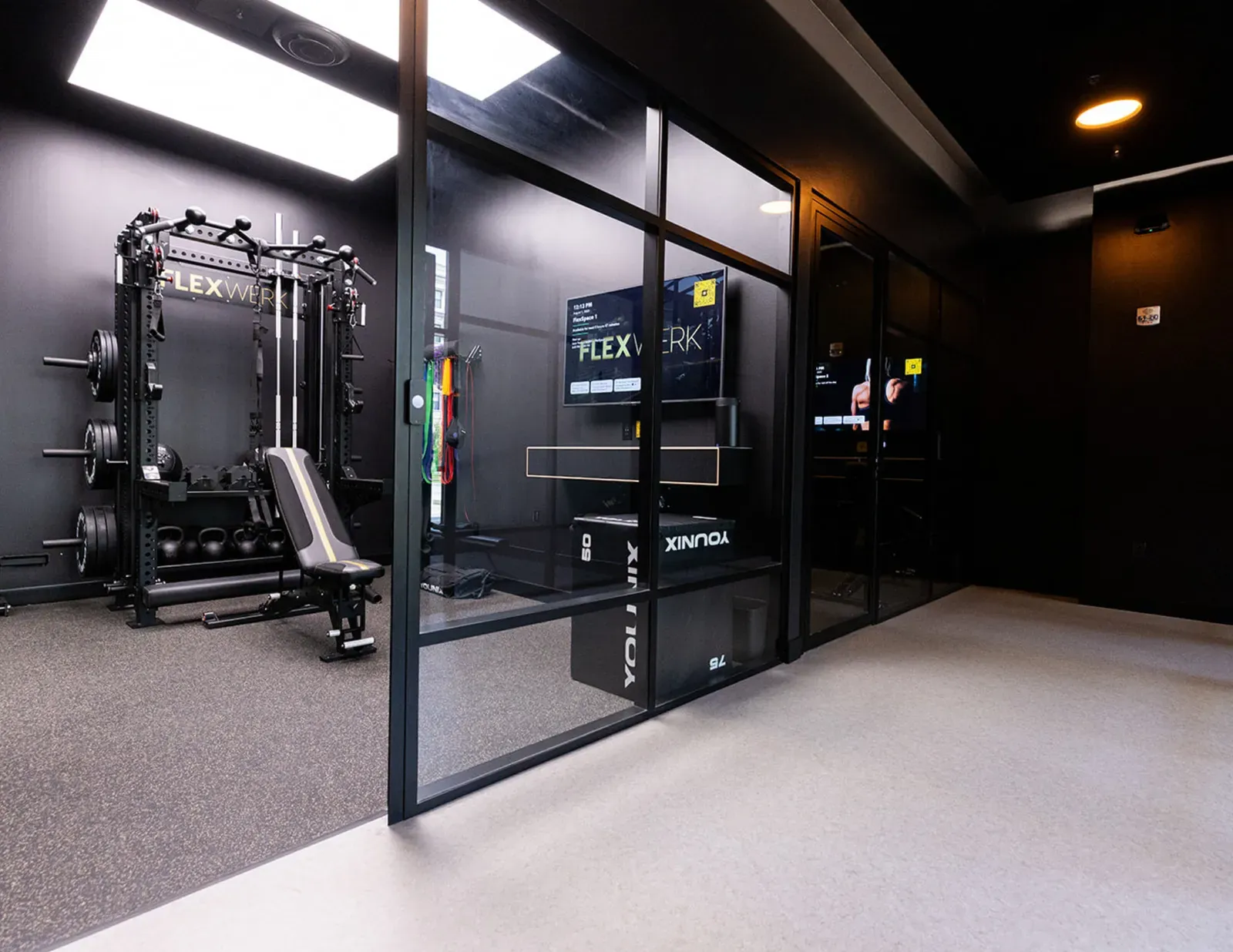
The honest conversations are the program at this stage: sleep, symptoms, medications, how your joints actually feel today. Those conversations happen naturally in a reserved private suite, your own equipment for the hour, your music, a door, no audience, and rarely on a crowded floor. Women who quietly stopped attending big gyms in this season of life tend to name the private room as what made consistency stick, and consistency is what moves body composition at any age. The full deep dive on this coaching specialty lives in the menopause personal trainer guide.
The north-side practicalities
College, Meridian, and Keystone all run you north without touching an interstate, 10 to 15 minutes from Nora and 15 to 20 from Broad Ripple or Meridian-Kessler, against the commute in both windows. Hours run 5 AM to 9 PM weekdays and 7 AM to 4 PM weekends, garage parking sits a short walk from the door, and if you work from home, the mid-morning slot is the calmest hour in the building. The free consultation includes the free InBody baseline and the matching conversation, where you can also request a female coach in the same sentence.
Bring the audition question to that consultation and require real answers; the right coach will pass it easily.
Related questions
Can training fix menopause symptoms?
No, and an honest coach never claims it can. Training addresses the muscle, bone, and body composition side of the transition; hot flashes, sleep disruption, and hormone therapy questions belong with your physician.
How do I test whether a trainer is genuinely menopause-informed?
Ask what they would change about your program because of menopause. Informed coaches immediately talk bone loading, protein, recovery flexibility, and body composition tracking. Vague calorie talk means keep looking.
Is it worth starting if I am already postmenopausal?
Yes. Muscle and bone respond to progressive loading at every age, and plenty of women start coached strength work in their late 50s and 60s. The program starts from your current baseline.