
How Much Water to Drink During a Workout
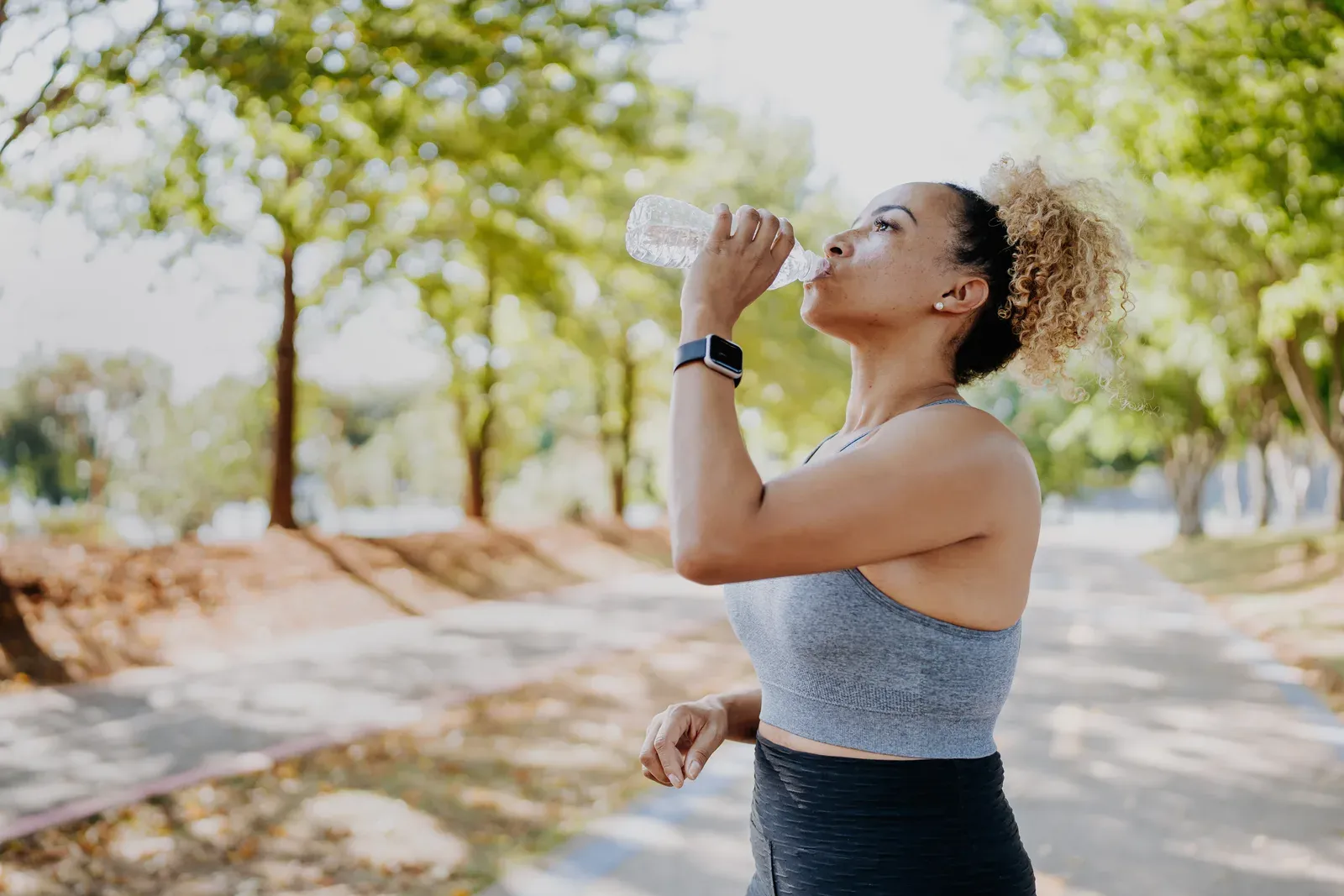
For most workouts, sip about 4 to 8 ounces of water every 15 to 20 minutes, and adjust upward when you sweat heavily or train in heat. That works out to roughly 16 to 32 ounces during an hour of training. Your actual need depends on your sweat rate, which a simple weigh-in can measure.
Sip volumes by session length
Use these as starting points, then refine with the weigh-in test below.
| Session | Typical sipping | Notes |
|---|---|---|
| Up to 30 minutes | A few sips between exercises | Often little beyond what you drank earlier |
| 45 to 60 minutes | 4 to 8 oz every 15 to 20 minutes | About 16 to 32 oz in total |
| 60 to 90 minutes | 4 to 8 oz every 15 minutes | Consider sodium if you sweat heavily |
| Hot, humid or outdoor | Toward the upper end, plus pre-hydration | See the summer training plan |
Between lifting sets, small sips suit better than large gulps. A bottle kept at hand makes this easy.
The sweat-loss weigh-in
This method replaces guessing with your own number:
- Weigh yourself nude or in minimal clothes before the session, after using the bathroom.
- Train as normal and note anything you drink, in ounces.
- Dry off and weigh yourself again.
- Add the ounces you drank to the weight lost: a pound lost equals about 16 ounces of fluid.
For example, if you lose 1.5 pounds and drank 16 ounces, your sweat was about 40 ounces. Over a one-hour session, that points to a need of around 40 ounces per hour. A loss of more than about 2 percent of body weight signals you are falling behind.
Repeat the test in different conditions, since summer and winter results vary a great deal. Our answer on why weight fluctuates explains why the scale swings so easily with fluid.
Before and after
Start sessions well hydrated. Drink a couple of cups of water in the two hours before training, and keep a bottle nearby afterward. A usual replacement guide is 16 to 24 ounces for each pound lost, spread over a couple of hours alongside food. Meals supply sodium and fluids too, so you do not need to chug.
A caution on too much
More is not always better. Drinking well past your sweat loss in long sessions can dilute blood sodium, which is uncommon but real. If you take medication, have a heart or kidney condition or have been told to limit fluids, follow your clinician’s guidance instead of these general numbers.
Adjusting for the situation
Your sweat rate changes with the day. Expect more loss in a warm room, in humid weather, in heavier clothing, with higher effort and on days you start under-hydrated. A larger body generally sweats more. Fitter people often start sweating sooner and lose more. After a few trials you will know your own numbers for a winter lift versus a July run. Keep a small note on your phone: the conditions, the weight lost and what you drank. Within a month you will have a personal guide that beats any general rule.
What to put in the bottle
For sessions under an hour, plain water is enough. For longer or very sweaty sessions, a drink with a little sodium and carbohydrate can help, and so can eating a salty snack afterward. Avoid drinks with large amounts of sugar if they upset your stomach during sets.
What a scan shows
Hydration also appears in body composition readings, which is why scan preparation matters. The page on InBody scans when dehydrated shows how fluid changes the result. A free consultation includes an InBody scan, so you can see your own baseline before building a hydration routine.
Related questions
Should I drink water during a one-hour lifting session?
Yes, small sips between sets are enough for most people. You rarely need large volumes, and gulping a lot at once can feel uncomfortable during heavy lifts.
How much water should I drink after a workout?
A commonly cited guide is about 16 to 24 ounces for each pound lost during the session, spread across the next couple of hours along with a meal.
Can you drink too much water while exercising?
Yes, in rare cases, mostly in very long events where people drink well beyond their sweat loss. It dilutes blood sodium. Matching intake to loss avoids the problem.