
Why Does My Weight Fluctuate Day to Day?
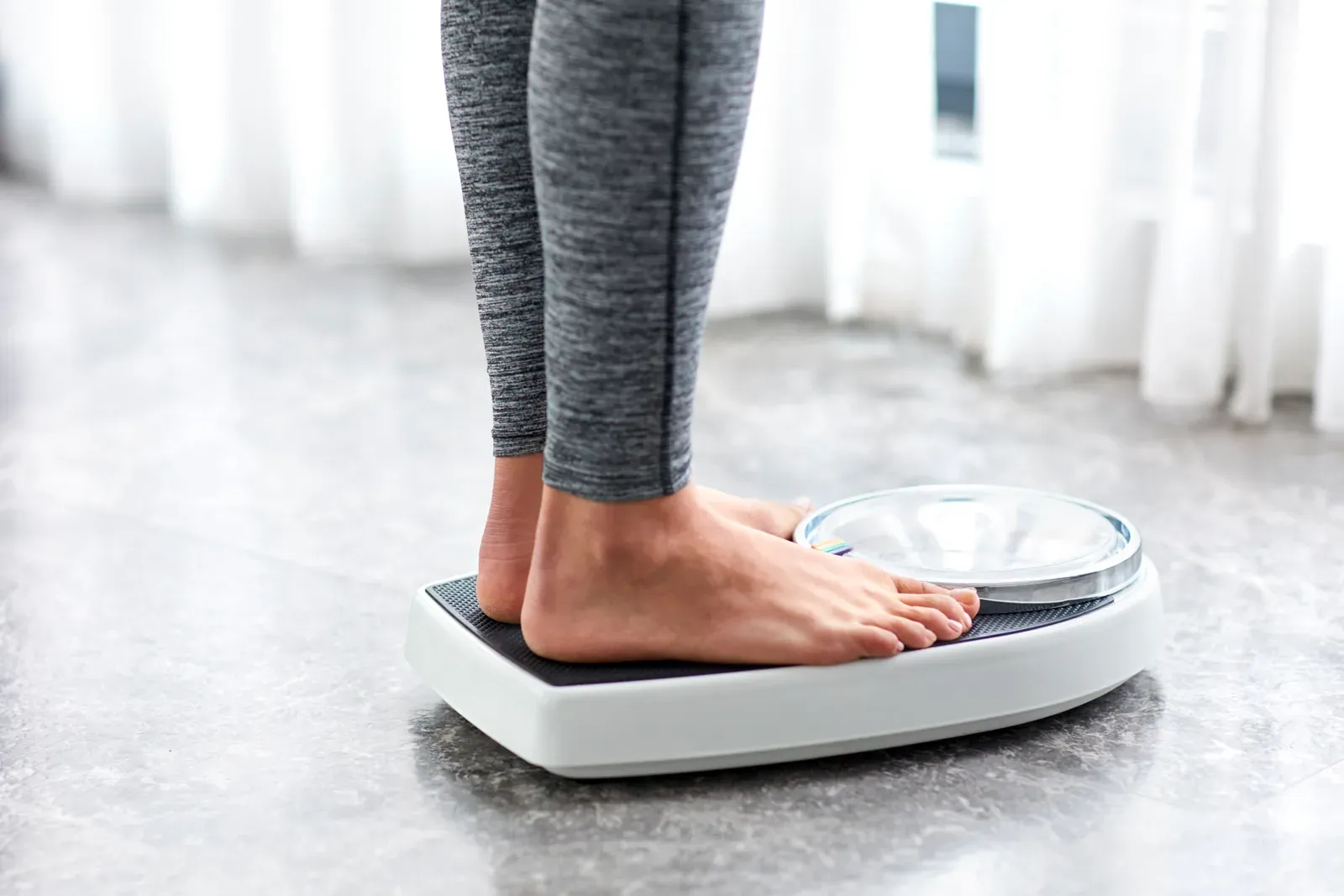
Step on the scale two mornings in a row and you can be up three pounds without having gained an ounce of fat. Day to day weight swings of 2 to 5 pounds are completely normal, and they are almost entirely water, not fat. Real fat change is slow and quiet, measured across weeks. The daily number is mostly hydration, sodium, carbohydrates, hormones, and timing doing exactly what they always do.
What actually moves the scale overnight
Almost everything that changes your weight inside 24 hours is water, or the literal weight of what you ate and drank. Adding a pound of body fat requires roughly 3,500 calories beyond what you burned, which is why genuine fat gain almost never shows up overnight. Here is what does show up:
- Carbohydrates and glycogen. Your muscles and liver store carbohydrate as glycogen, and every gram of glycogen holds roughly three grams of water. A pasta dinner after a low-carb week can add two to four pounds by morning, and a low-carb weekend can drop the same amount. Both are storage shifts, not fat.
- Sodium. A salty restaurant meal makes your body hold extra water for a day or two while it rebalances. This is the classic Monday morning jump after a weekend of eating out, and it corrects itself without any heroics from you.
- The food itself. A normal day of food and fluid weighs somewhere around five to eight pounds on its way through your system. Where you are in that cycle at weigh-in time changes the number on the display.
- Hormones. Water retention across the menstrual cycle can swing several pounds, sometimes for a week at a time. Stress plays a role for everyone: high-cortisol weeks tend to be water-retention weeks.
- Training. New or unusually hard workouts cause small, temporary muscle inflammation, and the repair process holds water. The scale often rises the very week you start training seriously, which is exactly backwards from what most people expect and quits a lot of promising starts.
- Alcohol. It dehydrates you first, which can fake a loss, then the rebound rehydration over the next day fakes a gain.
Notice that fat appears nowhere on that list. The scale is measuring your relationship with water and gravity, not your progress.
Why Indiana summers make the swings bigger
If your weight seems more chaotic in July than in January, you are not imagining it. Central Indiana summers run long and humid, with weeks parked in the upper 80s and 90s, and an hour of brisk walking or running on the Monon in that air can cost you a couple of pounds of sweat. Weigh in that evening and you look artificially light. Rehydrate properly through the night, add a salty dinner, and you are up three pounds by morning. Neither number involved fat.
Winter flips the pattern: less sweating, more indoor eating, and holiday sodium can hold the number artificially high for days at a time. The seasons change the noise, not the signal. If you train outdoors around Carmel through a humid August, expect the daily readings to be jumpier and lean harder on averages.
How to weigh yourself so the number means something
Consistency beats frequency, and averaging beats reacting. If you want the scale to be a useful tool instead of a mood generator, use it like this:
- Same scale, same spot, same time. First thing in the morning, after the bathroom, before food or coffee. Hard floors, not carpet.
- Log the number and move on. No editorializing, no skipping the bad days. Every reading is one data point in a noisy stream.
- Judge the weekly average. Compare this week’s average to last week’s. A half-pound drop in the average is real progress; a two-pound overnight jump is noise.
- Zoom out to two or three weeks for decisions. Changing your plan based on 48 hours of scale data is like changing your retirement strategy based on one afternoon of the market.
And if daily weigh-ins stress you out, weigh two or three times a week, or stop entirely and let other measures carry the job. The scale is one instrument, not the verdict.
When a change is real, and how to confirm it
A trend that survives three weeks of averaging is usually real, but the scale still cannot tell you what changed. Losing five pounds could mean fat loss, muscle loss, water shifts, or a mix, and those are very different outcomes. This is why coaches separate weight from composition. The free InBody scan included in a free consultation at FlexWerk in Carmel gives you a baseline for muscle mass and body fat, so future changes get checked against something better than a bathroom-scale guess.
An honest note: consumer body composition scanners carry their own margin of error, so treat those numbers as trend lines too, not gospel. The pattern across rescans, taken under similar conditions, is what counts. Composition tracking also explains the single most common frustration in training, the scale that refuses to move while clothes fit better, which is usually muscle and fat trading places at roughly equal weight.
One more reason this matters: people abandon programs that are working because a Tuesday weigh-in ambushed them. A coach who reads trends, rechecks composition on a schedule, and knows what a salty weekend does to the number will talk you off that ledge. At FlexWerk, that conversation starts with the baseline scan, and progress gets judged against data instead of one bad morning.
If the daily number has been running your mood, the calmest next step is a baseline: book the free consultation, get the scan, and let weekly averages and rescans tell you the true story from here.
Related questions
How much daily weight fluctuation is normal?
Two to five pounds is common for most adults, and bigger swings happen after salty restaurant meals, hard training, travel, or a high-carb day. None of that is fat gain.
When should I weigh myself for the most reliable number?
Same scale, same time, same conditions: first thing in the morning, after the bathroom, before food or coffee. Then judge the weekly average, not any single day.
How do I know when a weight change is real?
Watch the trend across two to three weeks and confirm it with a body composition scan. If the weekly averages keep moving in one direction, that part is real.