
How to Get Up Off the Floor Without Using Your Hands
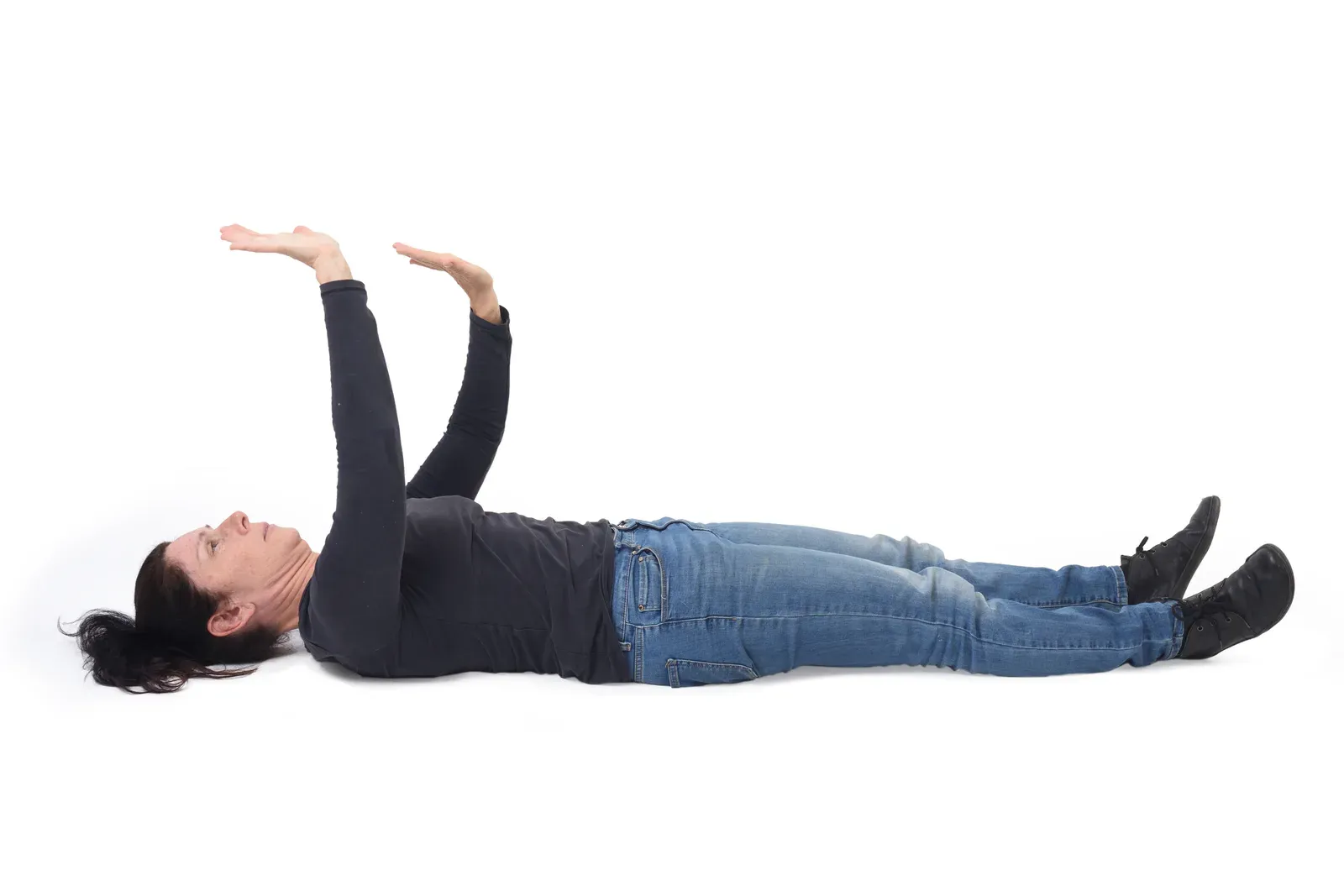
Getting up off the floor without your hands takes three ingredients: enough leg strength to stand from a deep position, enough hip and ankle motion to get your feet under you, and practice with the pattern itself. All three are trainable, and the sit-rise test below tells you where you start. As always with falls, any new difficulty, dizziness or pain belongs with a physician or physical therapist first, and a free consultation is an easy way to have someone watch the move.
Score yourself with the sit-rise test
The sit-rise test gives you a number you can repeat. Stand barefoot on a firm floor with room around you and a sturdy sofa nearby as a safety net. Lower yourself to sitting on the floor in any way you like, then rise to standing, using as little support as you can.
Start with 5 points for the sitting down and 5 for the rising. Each hand, knee, forearm or side of a leg that touches the floor or a support costs one point, and a visible wobble costs a half point. Read the total like this:
| Total | What it usually looks like |
|---|---|
| 10 | No support at all, both ways |
| 8 to 9.5 | One hand or one knee once, or a small wobble |
| 5 to 7.5 | Hands and knees both ways, but steady |
| Under 5 | You need to pull on furniture, so train the pieces below before the full move |
Write the score and the date on the fridge. Retest every four weeks under the same conditions: same floor, same time of day, same footwear.
The training progression, four steps
The move breaks into four jobs. Train the weak one first.
- Strength to stand. Build a heavier chair sit-to-stand. Goblet holds, step-ups and split squats all help. The 30 second sit to stand norms are a useful companion test.
- Hip and ankle range. A deep calf stretch against a wall, a half-kneeling hip stretch, and a slow squat holding a doorframe, ten breaths each.
- Transfer practice, with help. Practice the half-kneel, with one knee down and a hand on a chair. Then make the chair lower, then take the hand away.
- The full rise. Cross your legs, sit, and rise with arms folded. Move to a mid-height cushion first, then the floor.
Each step takes two to four weeks for most people. Do not jump ahead because a day felt good.
What the move should look like
A reliable no-hands route is the half-kneel rise. From sitting, roll to a kneel, step one foot forward under your knee, lean your trunk over that foot, and push through the front leg to stand. The back foot comes forward last. If you cannot step the foot flat, the problem is usually ankle or hip range, so spend extra time on the second step above.
Look at the lean and the breath. People who hold their breath and stiffen the neck burn out halfway. Exhale as you push, keep your gaze forward, and take a pause at the half-kneel to reset.
When to pause and ask a professional
Stop and check in with a clinician before training this move if:
- you have fallen in the last year, or the floor is where you ended up;
- going down or rising brings dizziness, chest symptoms or sharp joint pain;
- a hip or knee replacement is recent, or your surgeon has set movement limits.
If getting down at all is the problem, see our guide to exercise when you can’t get on the floor. It covers a full strength program that never visits the floor.
Where a coach helps
Floor transfers are awkward to practice alone, because the wrong rep is also the one that makes you wary. At FlexWerk the work happens in a reserved private suite at Carmel City Center, with a coach standing within reach, and the free consultation includes an InBody scan that shows how your leg muscle compares with your arms. Your coach sets the format and the timing, so ask about availability when you book.
Take the sit-rise test this week and write your number down. A baseline you can see is the thing most people never have, and it turns practice into progress.
Related questions
Is it normal to need a hand to get up at 60?
It is common, and it is a signal rather than a verdict. Floor rising slows with age mostly because of lost leg strength and less practice, and both respond to training. Needing both hands and a knee is worth working on.
Should I practice on a hard floor or something soft?
Practice on a firm, non-slip surface with a sturdy sofa or low bench within reach. Soft, uneven ground makes the move harder for the wrong reasons and hides your real score.
How often should I practice getting up?
Two or three short rounds a day on most days is plenty, since this is a skill. Add the strength work in two or three separate sessions a week.