
Gaining Weight After Starting to Work Out: What It Means
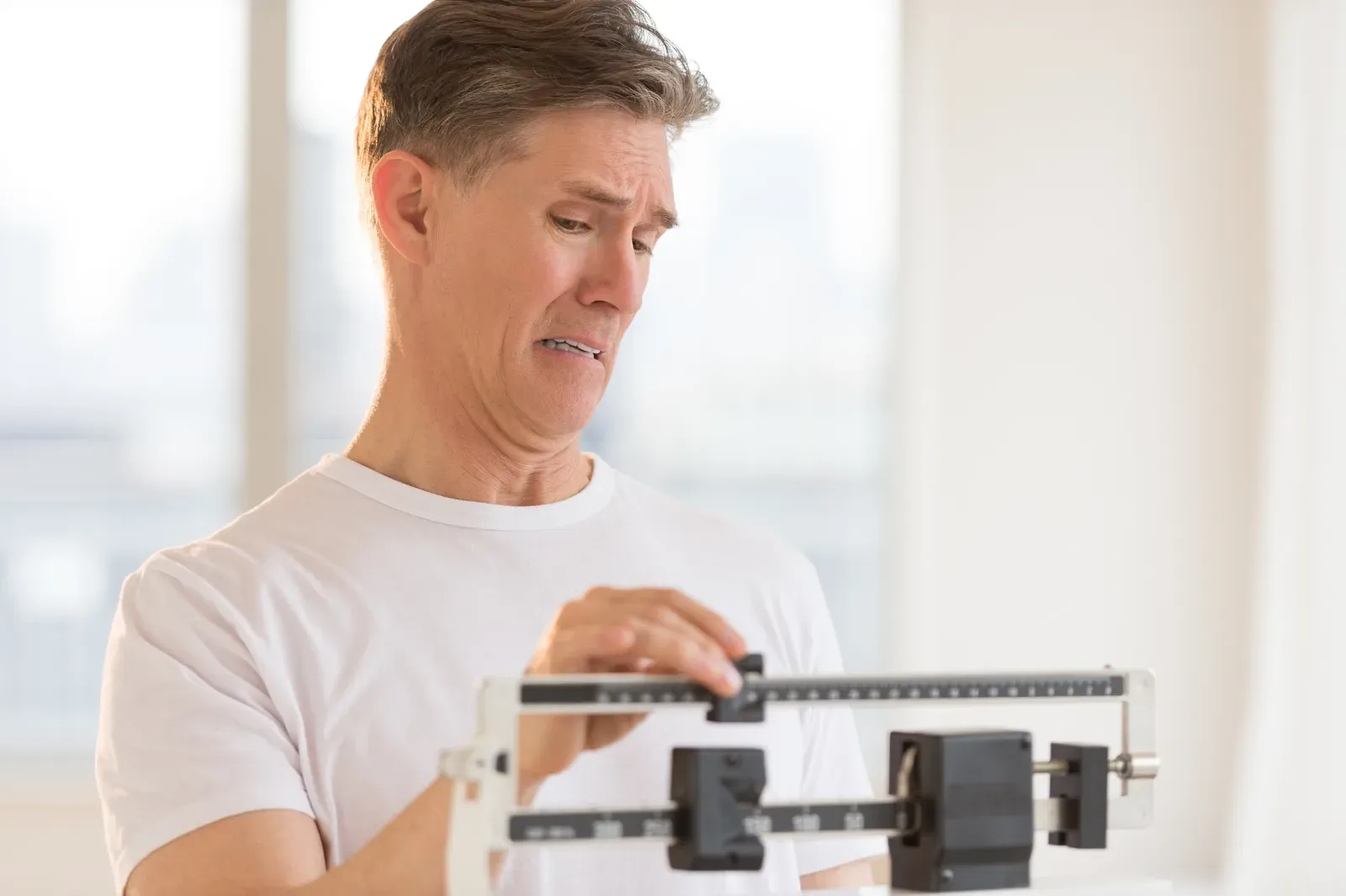
Gaining a few pounds in the first one to four weeks after starting to work out is common and is usually water, stored carbohydrate and tissue repair fluid, not new body fat. Your muscles hold extra water as they adapt, and that shows up on the scale before any change in how you look. A free consultation is a good moment to set a baseline so you can tell the difference.
Three things that raise the scale in weeks 1 to 4
- Glycogen. Muscles store carbohydrate as glycogen, and each gram is held with several grams of water. Training makes your muscles store more, so the scale rises.
- Inflammation and repair. After new or harder training, muscle fibers are repaired, and some extra fluid collects around them. It fades as the work becomes familiar.
- Water from other sources. Higher salt, a hard session, hormonal cycles and more fluid intake from drinking more water all add weight. The weight fluctuation page shows how much the number can swing within a day.
None of these is fat. They also tend to level out within a month or so of regular training.
How true fat gain looks different
Fat gain needs a calorie surplus that continues over time. Signs that it is more than water:
- The scale keeps climbing past week four or five without leveling.
- Your waist measurement increases, not just the scale.
- Your clothes fit tighter in the waist, and your lifts are not improving.
- You notice you are eating more than before, particularly snacks or “reward” meals.
Exercise raises appetite for many people, and a post-workout meal can easily exceed what the session burned. That is not a failure, just something to account for.
What to watch instead of daily weight
For the first month, rank your measures this way:
- Strength and reps. Are lifts getting easier?
- Waist and hips. Measured weekly at the same spots.
- Energy and sleep. These often improve before anything else.
- Weekly average weight. Look at the trend over two to four weeks, not one weigh-in.
If you have a body composition scan, a rise in fat mass would be the real signal, but timing matters because scans read water. The InBody explainer on body fat rising after lifting covers how to scan fairly.
When to speak to a physician
Sudden weight gain of several pounds in a few days, swelling in the ankles, legs or face, shortness of breath, or an increase that does not match your eating, deserves a call to your physician. Medications and medical conditions can also change weight, so mention any recent changes.
What a coach does
A coach keeps you training through the noisy first month, checks food and step habits for drift, and sets a date to review the trend. If you see a fat-gain pattern after eight weeks, the fix is usually a small adjustment to food, not a new program.
What to do while you wait it out
Keep training on schedule, drink water normally, keep salt and carbohydrates at your usual levels and resist the urge to cut calories sharply. A sudden crash diet in the first month can cost you energy and muscle, and it makes the early scale reading harder to interpret. Give it four weeks, then compare your waist and strength.
Your next step
Record your weight, waist and a photo this week, then compare on a four-week schedule. At FlexWerk in Carmel, a free consultation with a free InBody scan sets the starting point, and the muscle versus fat page can help you interpret the first changes.
Related questions
How much weight is normal to gain?
Many people see a rise of a couple of pounds, and some see more. It depends on body size, how hard you trained and how much salt and carbohydrate you eat. A sudden large increase with swelling should be checked by a physician.
Should I stop working out?
Generally no. The early change is part of adapting. Stopping resets the process and often brings the same fluid shift again when you restart.
Could I be eating more because I exercise?
Yes. Appetite often rises after you start training, and that can erase a deficit. A week of honest food tracking shows whether intake has drifted.