
Flexibility Coach Near Me: What Should You Actually Look For?
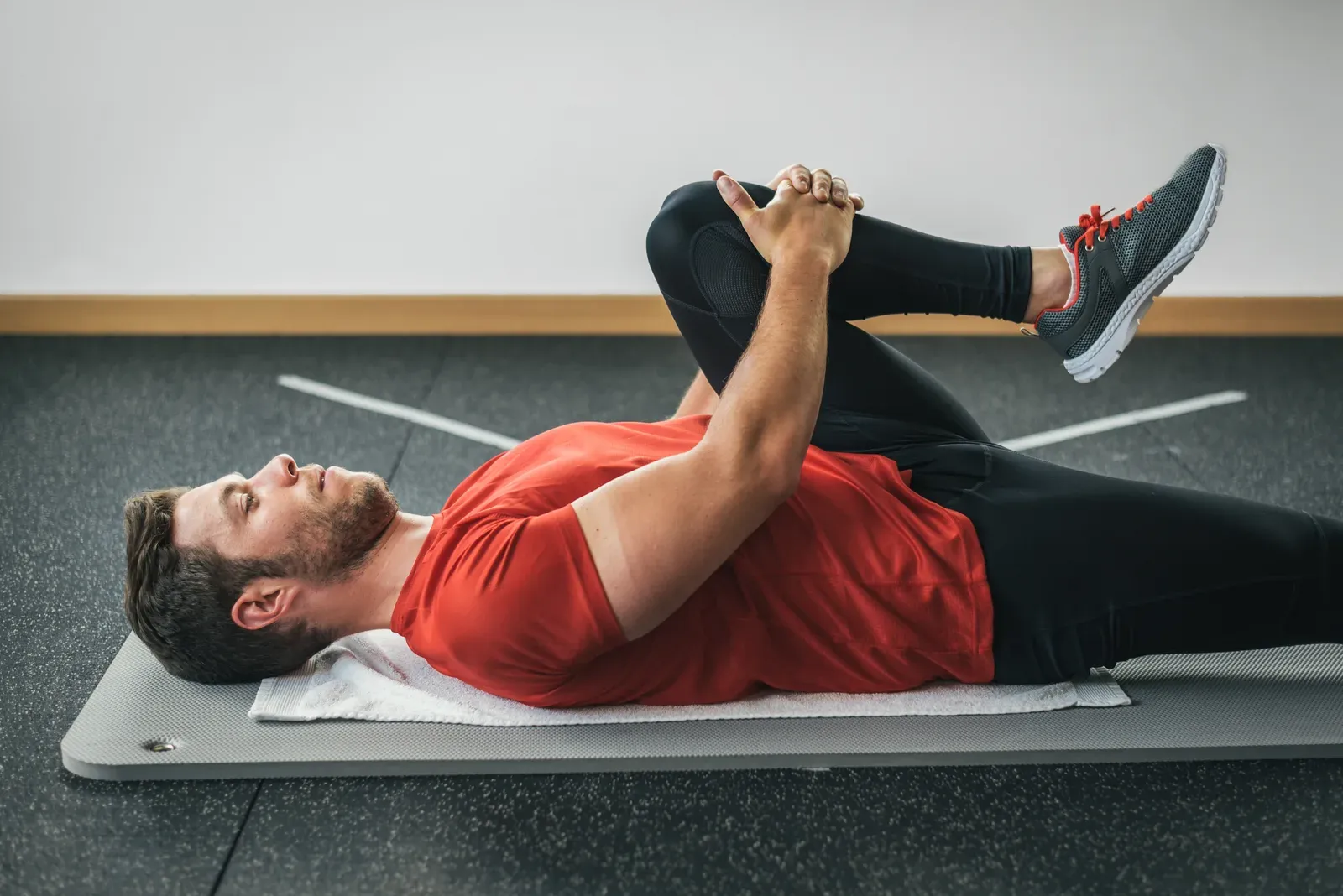
If you are searching for a flexibility coach near you in the Carmel area, the one thing to insist on is this: a coach who loads your new range with strength work, not one who only stretches you. Being stretched changes how you feel for a day. Training the range changes how you move for good. That single filter sorts the field better than any review score, and it is exactly the approach behind the mobility coaching at FlexWerk in Carmel City Center, where the starting point is a free consultation with a free body composition scan.
Why “being stretched” underdelivers
Passive stretching mostly teaches your nervous system to tolerate a position. Tolerance is real, and it is also temporary: without reinforcement it drains away within days, which is why people attend stretch sessions for years and still cannot touch their toes on a cold morning. The assisted stretching guide covers where hands-on stretching genuinely helps, because it does have a place. It just cannot carry the whole job.
What makes range permanent is using it under control: slow tempo lifts into deep positions, end-range holds, light loads through the exact motion you just opened up. Your body keeps what it uses and discards what it merely visits.
What good flexibility coaching includes
- An assessment before a program. Which joints are actually restricted, which are weak, and which are fine. A proper movement assessment prevents months of stretching the wrong thing.
- Focused targets. Usually ankles, hips, thoracic spine, or shoulders. A program that stretches everything improves nothing.
- Strength through the new range. The non-negotiable. Every mobility drill pairs with a loaded movement through the same range.
- Short daily homework. Range responds to frequency. Ten minutes daily outperforms one heroic weekly session.
Where to find it in Carmel
At FlexWerk, flexibility work runs one on one in a private reserved room at Carmel City Center, steps from the Monon Trail with garage parking a short walk away. The privacy is not a luxury detail here: deep lunges, floor work, and wobbly end-range holds are exactly what people skip on a public gym floor, and a closed door with your own music removes the reason to skip them.
FlexConnect matches you with a coach from more than 40 independent professionals based on your goals and personality, so you can ask specifically for movement-quality specialists. Hours run 5 AM to 9 PM on weekdays and 7 AM to 4 PM on weekends, which fits flexibility sessions into lunch breaks for Carmel’s large work-from-home population.
One boundary worth stating: stiffness is a training problem, pain is not. A joint that hurts, has been recently injured, or lost range suddenly belongs with your physician or a physical therapist first, and a good coach will build on what your clinical team clears.
If your search for a flexibility coach is really a search for a body that bends where you need it to, book the free consultation and start with an assessment instead of a guess.
Related questions
What is the difference between a flexibility coach and a stretch therapist?
A stretch practitioner stretches you, which feels good and helps short-term range. A flexibility coach also trains strength in the new range, which is what makes the change last and become usable in real movement.
How often should I do flexibility work?
Little and often beats long and rare. Two coached sessions a week plus short daily homework, ten minutes or so, is the pattern most people progress on.
Can I get more flexible after 50?
Yes. Range of motion responds to training at every age, and the strength-through-range approach is actually gentler on older joints than aggressive passive stretching. If a joint is painful rather than stiff, see your physician first.