
Fall Prevention Training Near Fishers: Start With a Number
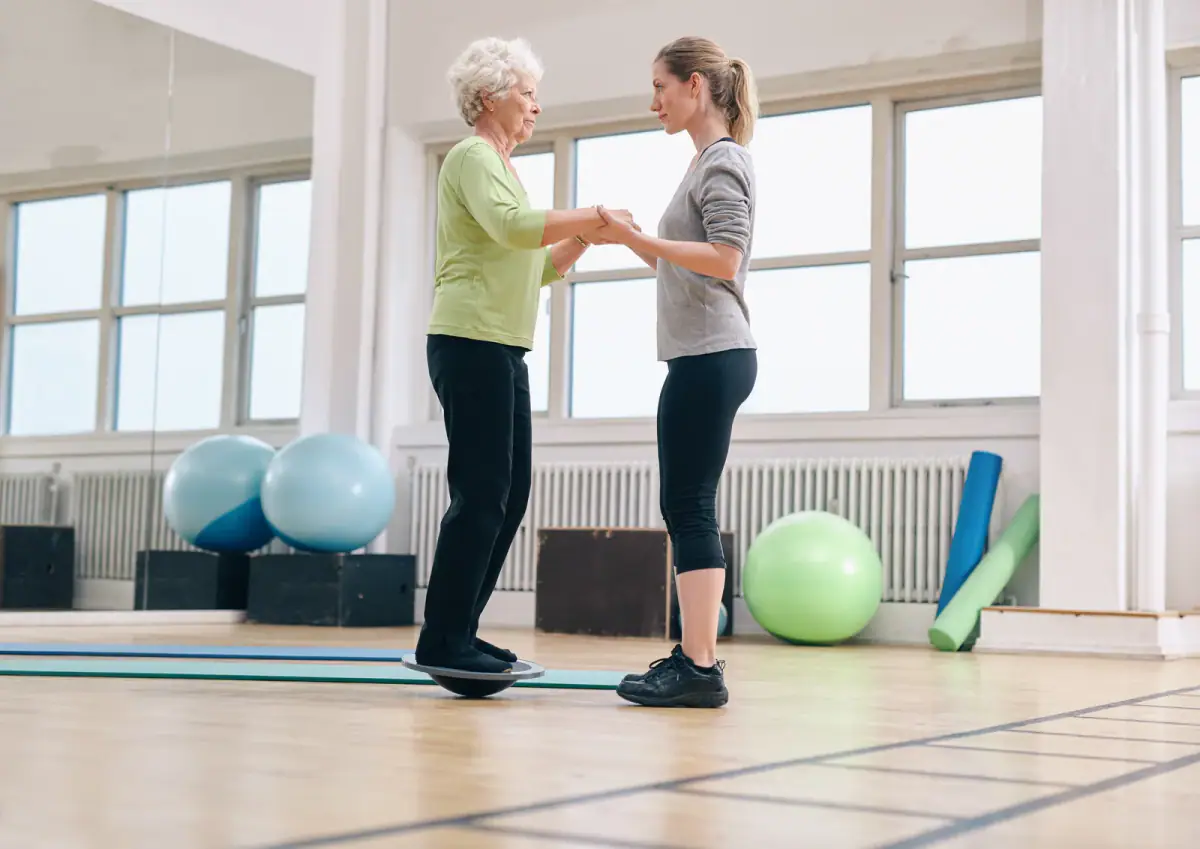
The most useful thing fall prevention coaching gives a Fishers family is a number: how long one leg stays steady, how many chair rises fit in a set window, and how this month compares with last month. Worry is vague; a baseline is not, and watching the numbers climb is what finally replaces “please be careful” with actual confidence. The medical layer still leads. Dizziness, a recent fall, fainting, or a new medication belongs with a physician before any training begins, and where a physical therapist already has a plan, that plan sets the boundaries a coach then works inside.
For Fishers households this often starts as a joint errand: a parent, an adult child, and a 15 to 20 minute drive down 116th or 146th to Carmel City Center. The Fishers personal training page covers what that first visit looks like.
A baseline you can watch move
Measurement is the difference between reassurance and evidence. A coach opens with simple tests anyone can understand, timed single-leg stands, chair rises, stepping patterns, and repeats them on a schedule so progress is a chart rather than a feeling. The research context for one of those measures, the single-leg stand, is covered in what balance tests say about longevity, and the free consultation adds an InBody body composition scan so muscle trends get tracked alongside steadiness.
What the training weeks contain
Sessions split their time between strength and challenge. Legs get loaded through chair rises that graduate into weighted sit-to-stands, supported single-leg work, and step patterns in every direction; balance gets stressed a notch beyond comfortable while the coach stays close enough to touch; and unhurried practice going down to the floor and returning removes the quiet dread that shadows so many older adults. Difficulty rises only as the numbers say it should. The usual cadence is two sessions a week with a short list of simple practice items in between, and a formal retest every few weeks keeps the whole family looking at the same chart rather than trading impressions over the phone.
Doing this as a family
Plenty of inquiries come from the sandwich generation, coordinating a parent’s independence between school pickups and work. Attending the consultation together works well, and the private room matters more than families expect: balance practice looks wobbly by design, and a reserved space with one coach protects a parent’s dignity while the work happens. Coach matching can specifically favor professionals experienced with older adults. The complete program philosophy is laid out in the Carmel fall prevention overview.
If your family’s current plan is caution and crossed fingers, trade it for a baseline: one visit, a few simple numbers, and a program that makes them move.
Related questions
What does a balance baseline involve?
Simple, repeatable measures: how long one leg holds steady, how many chair rises fit into a set window, how confidently you step over and around obstacles. Nothing high tech, everything worth tracking.
How will we know it is working?
The same measures get repeated every few weeks, so the answer comes from numbers moving rather than from anyone's impression. That matters most for families coordinating care from a distance.
Should a doctor be involved before a coach?
Yes. Dizziness, fainting, a recent fall, or new medications call for a physician visit first, and if a physical therapist is involved, their plan leads. A coach's program is built inside that guidance, never around it.