
Exercises to Make Climbing Stairs Easier Again
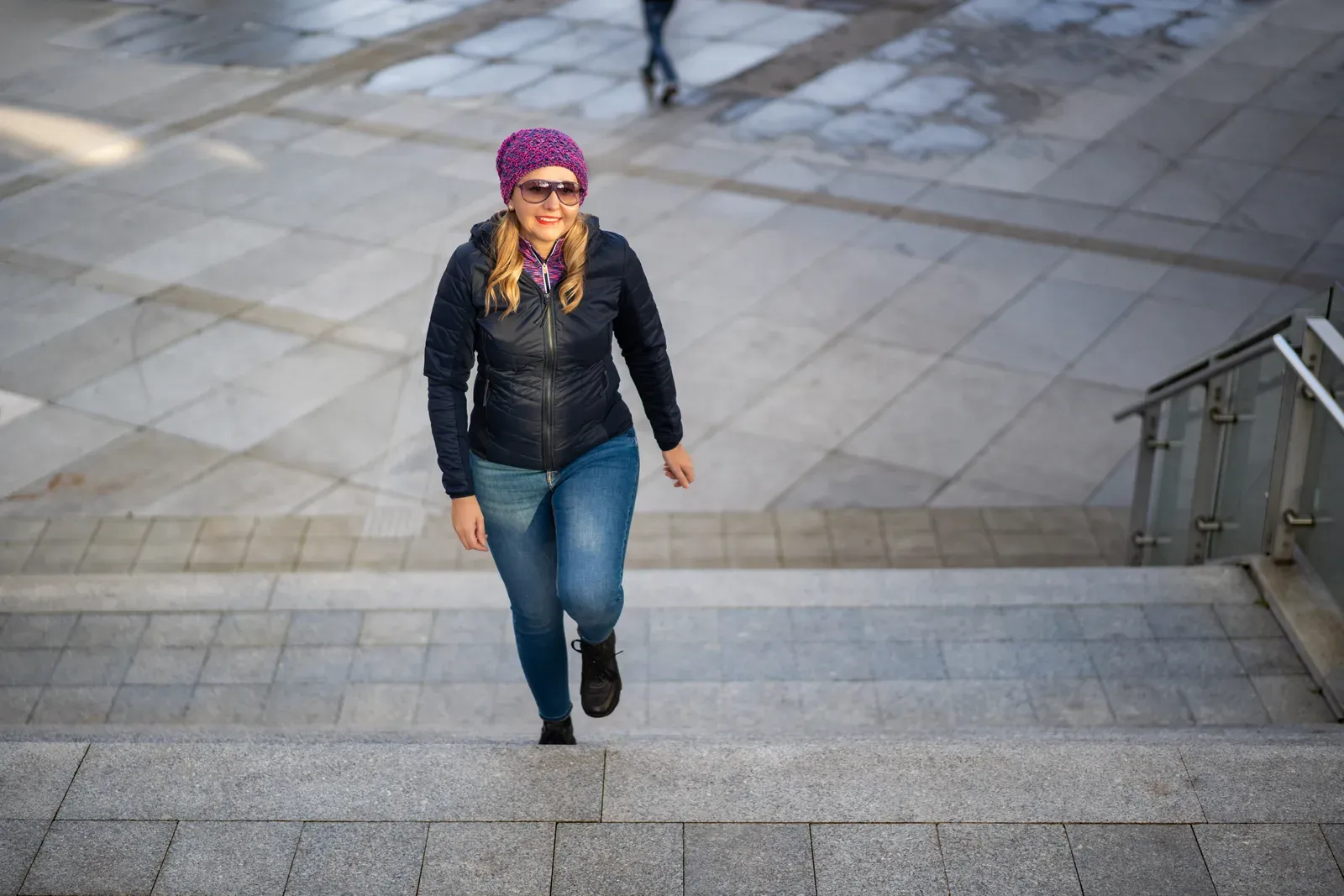
To make climbing stairs easier, train the three things a staircase asks for: the leg strength to lift your body weight one step at a time, the calf and ankle power to push off, and the lungs and balance to keep going. A step-up progression, a sit-to-stand progression and a calf raise progression cover most of it, with a stair test you repeat each month. A free consultation can help you choose your starting level.
Work out why stairs feel hard
Different problems call for different fixes. Notice what you feel first:
| What you notice | Likely limiter | Priority exercise |
|---|---|---|
| Thighs burn or give out | Quadriceps and glute strength | Step-ups, sit-to-stands |
| Out of breath by the top | Aerobic fitness | Easy walking, incline walking |
| Pushing off feels weak, heavy calves | Calf and ankle strength | Calf raises |
| Wobbly, grabbing the rail | Balance and confidence | Single-leg stands, slow step-downs |
| Knee pain on the way down | Control and tolerance | Slow lowering, supported step-downs |
Most people have two of these at once. Start with the one that bothers you most.
The stair test
Pick a staircase you use often and write down these results:
- Time to climb one flight at a normal pace, using the rail only if you must.
- Whether you need to pause at the top to catch your breath.
- How many flights you can climb before you feel you need to stop.
- Whether you hold the rail with a full grip or a fingertip.
Repeat monthly on the same stairs. A pace that gets quicker, fewer rail grabs and a smaller need to stop are all wins. The 30 second sit to stand norms are a companion test for the same leg strength.
The step-up progression
Step-ups train the exact pattern of stairs, one leg at a time. Choose a box or a bottom stair and progress in order:
- Level 1: step up to a low step with a hand on the rail, 3 sets of 8 per leg.
- Level 2: same step, no hands, controlled lowering.
- Level 3: a higher step, about knee height.
- Level 4: hold dumbbells at your sides.
- Level 5: add a knee drive at the top, and a slow three-count descent.
Move up a level when the last set looks controlled and the knee tracks over the middle toes. Do two sessions a week.
The sit-to-stand progression
Rising from a chair is a stair without the height. Start with a high seat and your hands crossed on your chest, then lower the seat, hold a weight at your chest, slow the lowering to three seconds and pause at the bottom. Try 3 sets of 8 to 12. The benefit is big for thigh and hip strength, and it is easy to do at home.
The calf progression
The calf muscles push your body up a step. They are often forgotten, and they weaken with age. Progress these in order:
- Double-leg heel raise holding a counter, 3 sets of 12.
- Single-leg heel raise with a hand on the counter, 3 sets of 8 to 10.
- Heel raise with a dumbbell in one hand.
- Raise from the edge of a step, lowering slowly below the step.
Train calves two or three times a week, since they respond well to frequent practice.
Add the engine
Your heart and lungs matter on a long climb. Walk briskly three days a week for 20 to 40 minutes, and include a hill or a gentle incline on the treadmill. Add one short stair session, climbing at a pace where you can still talk. If breathing is the problem, look at exercising for more energy for a broader plan, and read our page on stair climb training if you ever aim at an event, since that is a different goal from daily life.
Safety on real stairs
Use the rail on any stairs where you feel unsteady. Wear shoes with grip. Keep the stairs well lit and free of clutter. If you feel chest discomfort, unusual breathlessness, dizziness, or a knee that locks or gives way, stop and see a physician or physical therapist before continuing. Our page on balance tests explains simple screens you can do at home.
Training in a private suite
If stairs feel like a source of embarrassment, a private room is a gentle place to practice. FlexWerk in Carmel offers reserved suites with a rack, dumbbells and a cable system, and the free consultation includes an InBody scan. Coaches choose their own formats, so ask what a stair-focused block would look like. Start with the stair test this week, choose your step-up level, and retest in four weeks.
Related questions
Why are stairs harder going up than coming down?
Going up needs the thigh and hip muscles to lift your body weight against gravity, and it raises your heart rate. Going down is controlled lowering, which taxes the same muscles in a different way and stresses the knees.
How often should I practice stairs?
Two strength sessions a week plus a few easy stair climbs on other days is usually enough. Recovery matters because tendons adapt slower than muscles.
Is it safe to use stairs if I have bad knees?
Often, with a rail, a lower step and a pain-free range. If stairs cause sharp pain, swelling or giving way, get it checked before training them.