
Exercises to Make Carrying Kids and Car Seats Easier
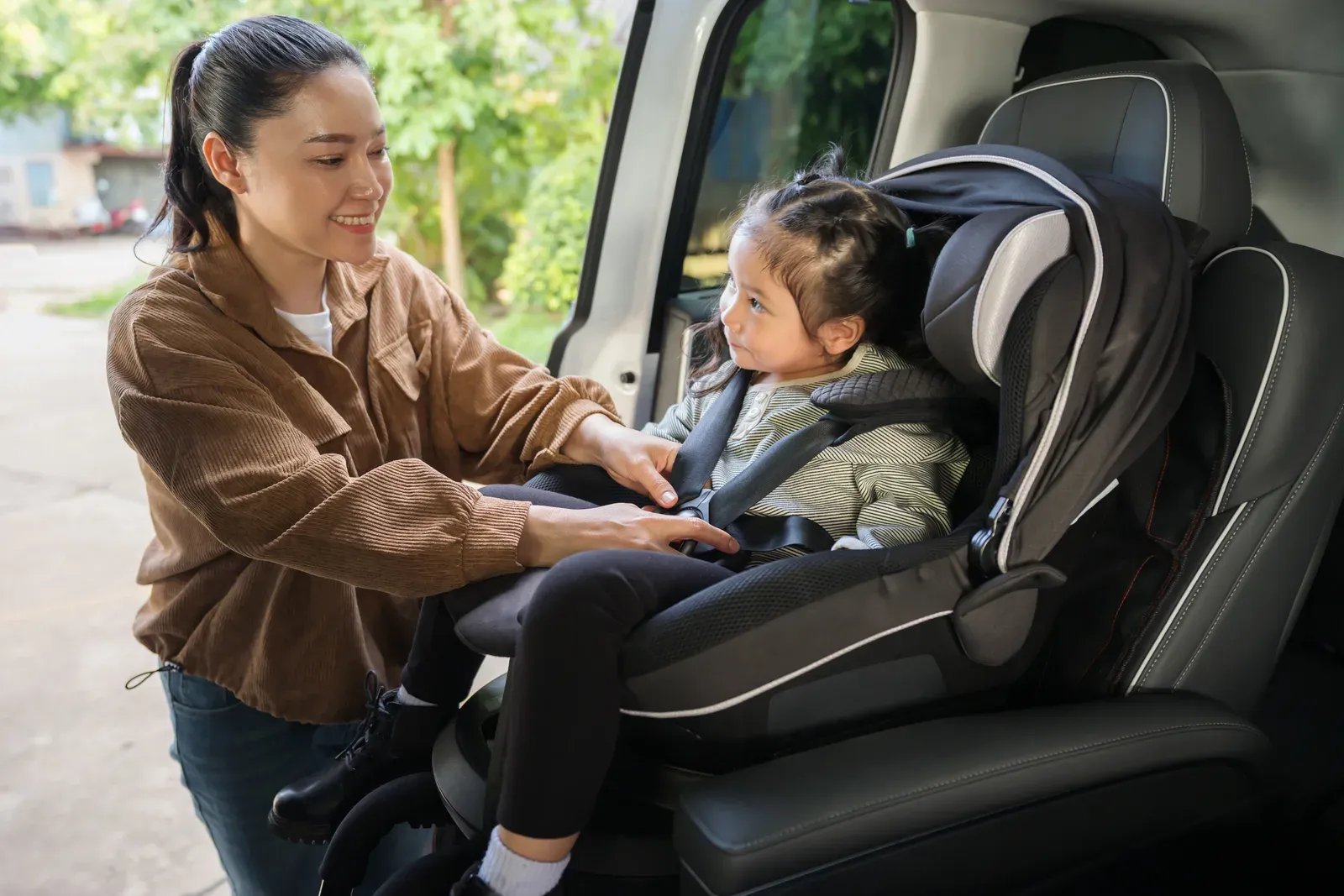
The best exercises for carrying kids are a single-arm carry, a hip hinge, a split squat and an anti-lean core hold, because a child is a moving, one-sided load that pulls you sideways and forward. Add a short practice of the car seat lift itself and you cover almost the whole job. Train two sessions a week and most parents feel the change inside two months.
If you want a coach to match this to your size, your child’s age and any old injuries, a free consultation is a simple place to start. The rest of this page works without one.
What carrying a child demands of the body
A 25 pound toddler sounds light. The trouble is how the load behaves: it squirms, shifts off center, grabs your shirt, and arrives at the end of a day when you are already tired. On one hip, the weight tugs your trunk toward the loaded side, so your opposite side has to resist the lean for the entire walk.
Car seats add a different problem. A bucket seat with a baby in it can be 20 pounds or more, and you lift it by a handle at arm’s length, from a low seat base, through a door frame, often while twisting. That is a hinge under load with the worst possible geometry.
The five exercises that match the job
| Real task | Exercise | Starting dose |
|---|---|---|
| Toddler on the hip | Single-arm suitcase carry, 30 to 40 feet | 3 walks per side |
| Lifting from the floor | Dumbbell or kettlebell deadlift, hands in front of the shins | 3 sets of 8 |
| Car seat from the base | Single-arm hinge with a bucket or kettlebell | 3 sets of 6 per side |
| Standing with a load on one side | Side plank or offset carry hold | 3 holds of 20 seconds per side |
| Bending, kneeling, rising | Split squat or step-up | 3 sets of 8 per leg |
Pick a weight that makes the last rep or last few steps feel slightly hard, with clean posture. When the set looks easy, add a few pounds or extend the distance.
A progression by your child’s weight
You can organize the load to match the season of parenting:
- Infant, under 15 pounds: train the hinge and the single-arm lift with a light bucket or kettlebell, since the main challenge is repeated lifting and a tired back.
- Toddler, 20 to 35 pounds: build the suitcase carry and the offset hold, because the hip carry is the daily load.
- Preschooler, 35 pounds and up: add the step-up and the split squat, for stairs, getting up from the floor, and carrying a sleepy child to bed.
Train a stronger version than the one you need on a normal day. The aim is to feel spare capacity when the child is sick, heavy with sleep or tugging the other way.
How to lift a car seat without wrecking your back
- Open the door fully and get your feet close, so the seat comes toward you, not you toward it.
- Hinge at the hips with a flat back, and grip the handle with one hand while the other braces on the seat base.
- Stand by pushing the floor away, and bring the seat in tight against your hip before you turn your feet.
- Pivot with your feet, not your spine, and carry it low rather than at arm’s length.
- Put it down in reverse order. Never twist at the waist with the handle locked out.
If the carrier clicks into a stroller frame, use it. Letting the stroller bear the weight is not cheating, it is kind to your back.
What to leave to a clinician
Some pain after a day of lifting is common, and most of it settles when the trunk and hips get stronger. But numbness, shooting pain into a leg, pain that wakes you at night, or a recent birth that left you with pelvic or abdominal symptoms should go to a physician or physical therapist before you add load. For parents who want a slower plan, the guide for dads on training without wrecking your back and the trainer guide for moms in Carmel cover the planning side, and our page on keeping up with grandkids uses many of the same lifts for a different age group.
Fitting it into a parent’s week
Short beats perfect. Twenty minutes on a weekday morning plus a longer Saturday session is a workable week, and the carries can be done anywhere you have a bag and a hallway. At FlexWerk in Carmel, the suites are reserved and private, and weekday hours begin at 5 AM, which suits anyone who trains before the house wakes. Coaches set their own formats and times, so ask what a 30 minute slot looks like when you book.
Pick one carry and one hinge this week, and practice the car seat lift in your own driveway with an empty seat, so the pattern is automatic when it counts.
Related questions
How often should I train to carry kids more easily?
Two sessions a week of 30 to 40 minutes is enough for most parents to notice a difference within a month or two. A few short carries on other days keeps the skill fresh.
Which carry works best for a toddler on the hip?
The single-arm suitcase carry with a heavy dumbbell or kettlebell, switching sides each walk. It trains the trunk to stay upright against a load that pulls you sideways, the same thing a toddler does.
My back aches after a day of lifting my toddler. What should I do?
Mild stiffness often eases with hinge practice and a stronger trunk. Pain that persists, spreads down a leg, or comes with numbness should be checked by a physician or physical therapist first.