
Exercise Options When You Can't Get on the Floor
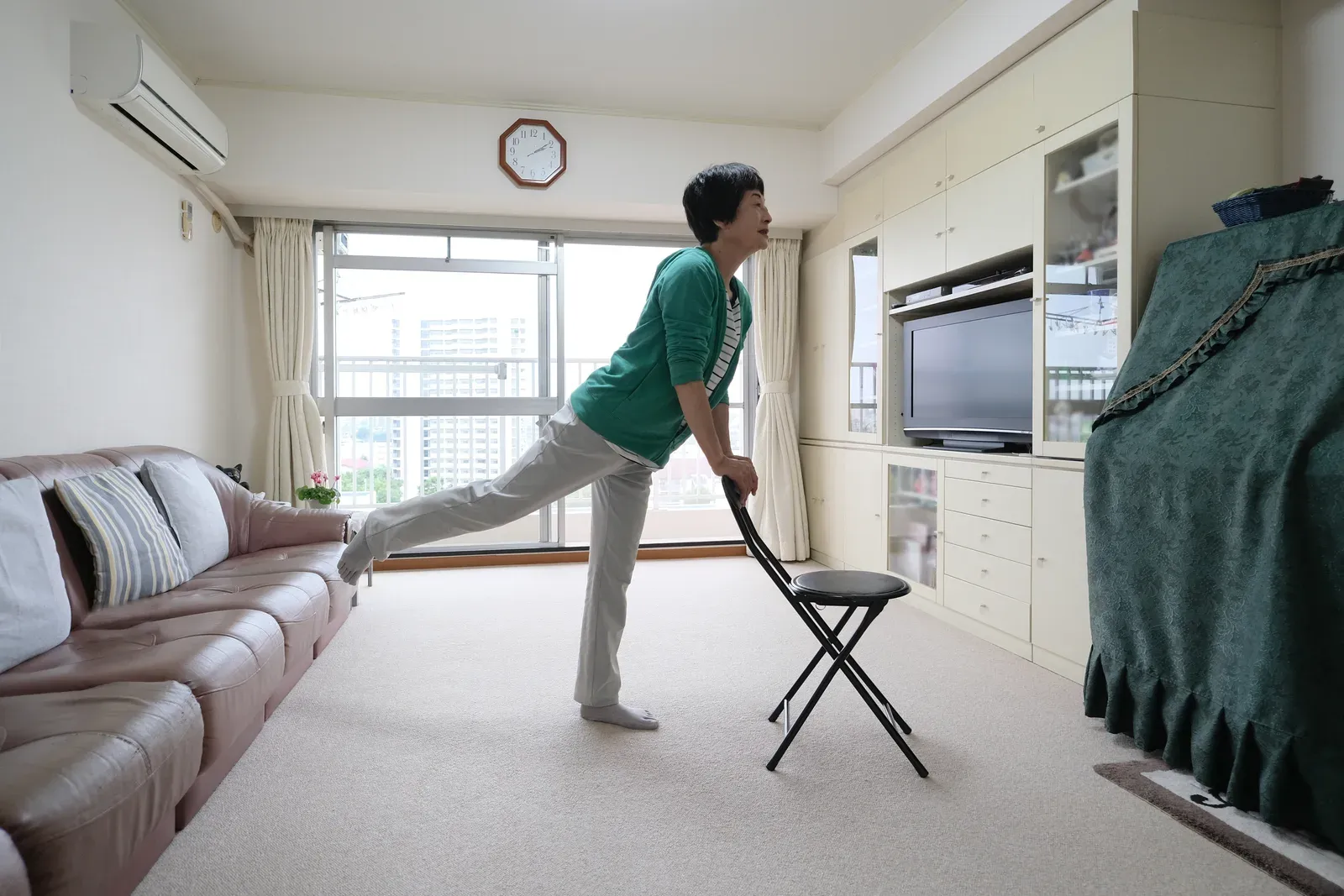
Not being able to get down to the floor, or back up again, does not rule out real strength training. A full program built entirely from standing, seated, and bench positions can train nearly every major muscle group, and for many people it is actually the safer, more sustainable starting point. A free consultation is where a FlexWerk coach in Carmel maps a program around whatever positions are available to you today, before any workout begins.
Why the floor is not required for real strength
Many of the most valuable strength exercises never touch the ground. A goblet squat to a bench, a supported row, an overhead press from standing, a hip hinge holding dumbbells, all of it builds real strength through the legs, back, shoulders, and core without asking your knees or lower back to negotiate a trip down and a trip back up. For someone managing a hip, knee, or back issue that makes floor transitions painful or risky, skipping the floor is not a lesser version of training, it is simply a different, equally legitimate map of the same territory.
What a standing and bench based session actually covers
A well built session hits every major pattern without a single floor exercise:
- Lower body: sit to stands from a stable bench, split stance work holding a rail or rack for balance, standing hip hinges with dumbbells or a kettlebell.
- Upper body: standing or seated presses, supported rows using a bench or cable stack, and assisted pull patterns.
- Core: standing anti-rotation holds, seated marches, and bench supported bracing work that never requires lying flat.
- Balance and stability: single leg holds near a rail and controlled weight shifts, the same qualities behind fall prevention training.
The floor’s usual jobs, and their standing equivalents
Floor work typically earns its place for two things: deep hip and ankle mobility, and certain core exercises that use gravity from a flat base. Both have workable substitutes. Mobility work translates well to standing and seated versions using a strap or a wall, and most core training transfers cleanly to a bench or cable machine, where tension replaces gravity as the resistance. The genuine exception is a small set of specialty exercises that truly need the floor, and a good coach simply leaves those out rather than forcing a workaround that adds risk for no real benefit. Balance training for a new instability issue like vertigo covers one common example of that same judgment call in practice.
When the limitation itself needs a professional first
If getting down to the floor is a new problem, or comes with pain rather than just stiffness or hesitation, that belongs to a physician or physical therapist before a training program does. A coach can build confidently around a known, cleared limitation. A new or painful one deserves a diagnosis first, and a coach worth training with will say so plainly rather than program around a warning sign.
Bring whatever position works for you today into a free consultation, and a coach builds the entire program around it rather than around what a typical workout is supposed to look like.
Related questions
Can I really build real strength without ever using the floor?
Yes. Squats to a bench, standing hip hinges, presses, and supported rows train the same muscle groups floor exercises target, just from a position that is safer and more accessible for you.
What if I used to be able to get on the floor and now cannot?
If that change is new or comes with pain, see a physician or physical therapist first to understand why before building a training program around it. A coach works confidently once the cause is known.
Will avoiding the floor slow down my progress?
Not meaningfully. The muscles that grow stronger from floor work respond just as well to standing and bench based loading, since what matters most is progressive resistance, not the specific position you are in.