
Exercise With Varicose Veins: What Helps the Legs
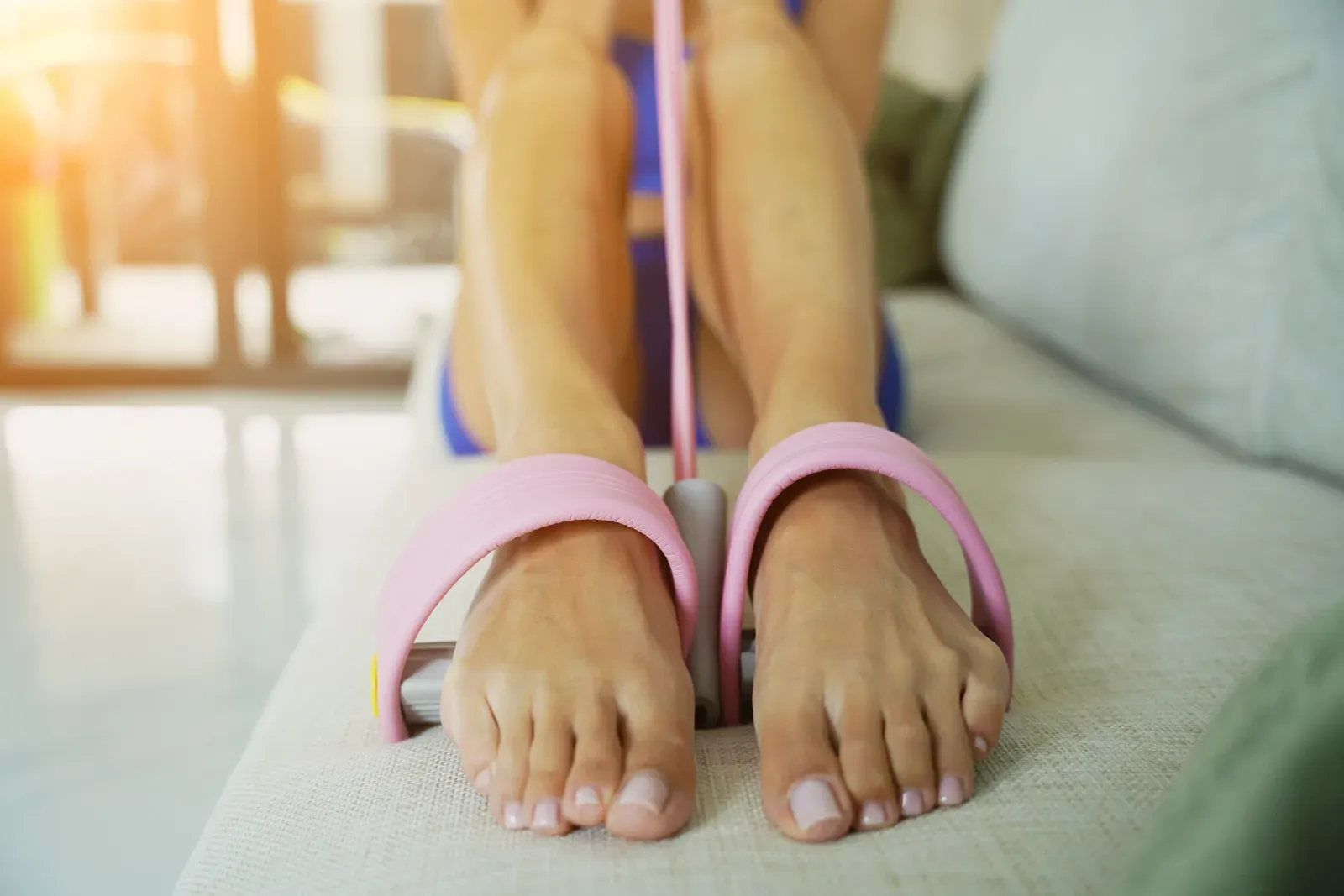
Exercise with varicose veins is usually encouraged, because the calf muscles act as a pump that helps return blood from the legs, but a physician should look at your veins and symptoms before you build a program. The remaining questions are practical ones: which movements feel good, how to handle standing and sitting between sets, and where compression fits. Here is how a coached plan from a free consultation typically handles each.
The calf is the engine
Every step or heel raise squeezes the veins in the lower leg and helps push blood upward. That is the plain explanation for why long, motionless standing or sitting often feels worse than moving. A plan for venous symptoms therefore keeps the calves working in a rhythm, with:
- Walking, including short walks between sets or during the day.
- Rower and cycling-style cardio at an easy, steady effort.
- Controlled calf raises and leg presses at moderate loads.
For desk-bound clients, the walking pad and strength plan shows how to build calf movement into a sedentary day.
Lifting without bearing down
Heavy lifts with a held breath raise pressure inside the abdomen, which some clinicians advise people with venous problems to limit. Rather than banning exercises, coaches commonly emphasize:
- Steady breathing, exhaling on the effort.
- Moderate loads with controlled tempo instead of maximal attempts.
- Seated or supported options when standing still feels uncomfortable.
- Rests that include movement, such as a slow walk, instead of standing in place.
Your physician’s guidance on how heavy is heavy overrides any general rule.
Compression, positioning and rest
Whether to wear compression stockings while you train is a clinician’s call, including the strength and fit. Between sets, many people prefer to walk a few steps over standing rooted to one spot. Elevating the legs after a session is a comfort measure some find helpful, but if swelling or pain persists, that belongs on your next appointment’s list. A private suite lets you shift positions freely, take a seated rest and step out for a walk without worrying about holding a station.
Cardio choices that tend to feel better
- Rower and CLMBR, which keep the calves and thighs working in a smooth cycle, are options at FlexWerk Carmel’s cardio suites if your physician agrees.
- Curved treadmill at walking pace is another gentle choice.
- Hot environments can make legs feel heavier for some people, so cooler rooms and breaks are worth planning.
When to stop and call
Some symptoms are not training questions at all. A sudden swollen, tender or warm leg, a leg sore that will not heal, or chest pain and sudden shortness of breath should be treated as urgent medical issues. Report skin changes, ulcers or bleeding from a vein to your clinician promptly. If your leg circulation concern is arterial rather than venous, the peripheral artery disease guide covers a different set of rules.
Questions to ask your physician first
- Are my veins cosmetic, or is there a circulation problem I should know about?
- Should I wear compression during exercise?
- Are there lifts or positions I should avoid?
- What would mean I should stop and be seen?
Next step
A coach designs around your clearance and tracks how your legs feel session to session. Each coach sets their own terms, and the free consultation with a free InBody scan is the place to explain your symptoms and ask about experience.
Related questions
Is it safe to lift weights with varicose veins?
For many people it is, but sudden breath-holding and heavy straining raise pressure in the legs and abdomen. Ask your physician about your own veins, then favor steady breathing and controlled loads.
Will exercise make varicose veins disappear?
No, and nobody can promise that. Exercise can help how your legs feel and function day to day, while treatment decisions belong to your vascular clinician.
What leg symptoms mean I should stop and call a doctor?
A sudden painful, swollen or warm leg, chest pain or sudden breathlessness needs urgent medical attention. Ordinary aching and heaviness should still be mentioned at your next appointment.