
Exercise With Hip Bursitis: Glute Strength Without Flare
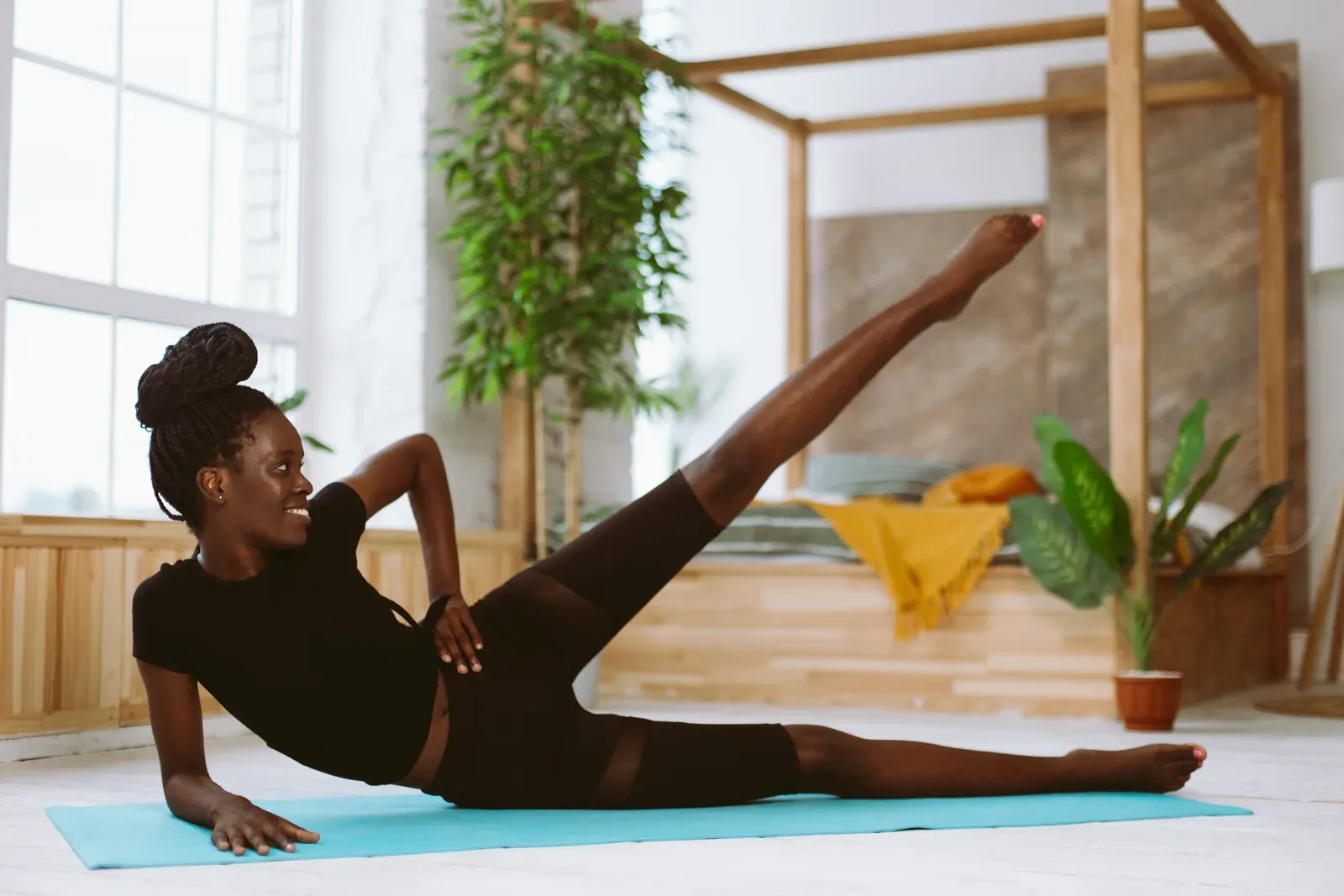
Exercise with hip bursitis starts with confirming the source of your outer hip pain with a physician or physical therapist, then builds glute strength gradually while avoiding positions that squash the tender area. Many cases of what is called hip bursitis involve the gluteal tendons as well, and the training approach for lateral hip pain leans on steady, controlled loading. A free consultation can help you organize it once your clinician has weighed in.
Why compression is the enemy
The outer point of the hip, where the large gluteal tendons attach, sits under a bursa and the band of tissue along the thigh. Crossing your legs, standing with one hip dropped, lying on that side or doing a wide-stance stretch pulls the tissue tight across the bone, which compresses it. The result is a sore patch that is tender to touch and hurts on the stairs or in bed. Reducing compression is the first job, before you add strength.
Daily habits that calm things down
- Sleep position. Lie on the unaffected side with a pillow between the knees, or on your back with a pillow under the knees.
- Sitting. Avoid crossing the legs, and use a seat that keeps the hips level or slightly above the knees.
- Standing. Spread weight evenly through both feet, not resting on one hip.
- Mattress and pad. A softer pad or topper may reduce pressure at night.
- Stairs and hills. Take them at a comfortable pace and avoid sudden increases.
None of this replaces a clinician’s advice, but it removes irritation that otherwise undoes your training.
A loading plan for the glutes
If your clinician approves, glute strengthening progresses in stages. The aim is to load the tendon without provoking a sharp flare, usually with mild discomfort that settles quickly.
- Isometric holds. Gently press the outer knee against a band or the wall while standing or lying, hold, and release. Short, calm effort.
- Bridges. Both feet down at first, then one leg when it feels solid.
- Side-lying or standing abduction. Small, slow lifts with the leg not crossing the midline, or a cable standing version.
- Step-ups to a low step. Keep the pelvis level and the knee tracking over the foot.
- Hip hinges and squats. Controlled depth with feet roughly shoulder width, avoiding deep inward collapse.
- Single-leg work. Split squats and single-leg stands when stable.
Progress by adding load or time slowly, and keep the week’s hard lower body days spaced out.
What to hold back early on
Wide stretching of the outer hip, aggressive foam rolling directly on the sore spot, running downhill and deep side lunges often add irritation. Delay them until the area is calmer, and ask your therapist about stretching advice in particular, since it varies.
Questions to ask your physician first
- Is this bursitis, a tendon problem or something else, such as a joint issue?
- Which exercises should I avoid for now?
- How much pain during training is acceptable?
- Is a therapist-led program appropriate first?
- When should I be rechecked?
What a coach adds
A coach can set up cable and bridge work in comfortable positions, watch for pelvic drop and keep your upper body and other lower body training going. A coach does not diagnose the problem or provide injections or manual treatment. At FlexWerk in Carmel City Center, private suites make it easy to lie down, prop a pillow or stop between sets without an audience, and each coach sets their own terms. For a different hip pain pattern, the hip impingement page explains range-based swaps, and the hip fracture page covers a post-injury return. This page is general information, not medical advice.
Related questions
Is it bursitis or a tendon problem?
Outer hip pain frequently involves the gluteal tendons as well as the bursa, and clinicians often group the two under lateral hip pain. An exam can tell which is leading, and the training plan is similar either way.
Why does lying on my side hurt so much?
Lying on the sore side compresses the tender area, and so does crossing the legs. A pillow between the knees, sleeping on the other side or on your back, and a softer surface can help, and your clinician may have more advice.
Can I keep walking?
Short, comfortable walks are often fine, but long hills, stairs and sudden increases may flare the area. Ask your clinician about a sensible limit and increase gradually.