
How to Build a Wider Back: Lats, Rows and Patience
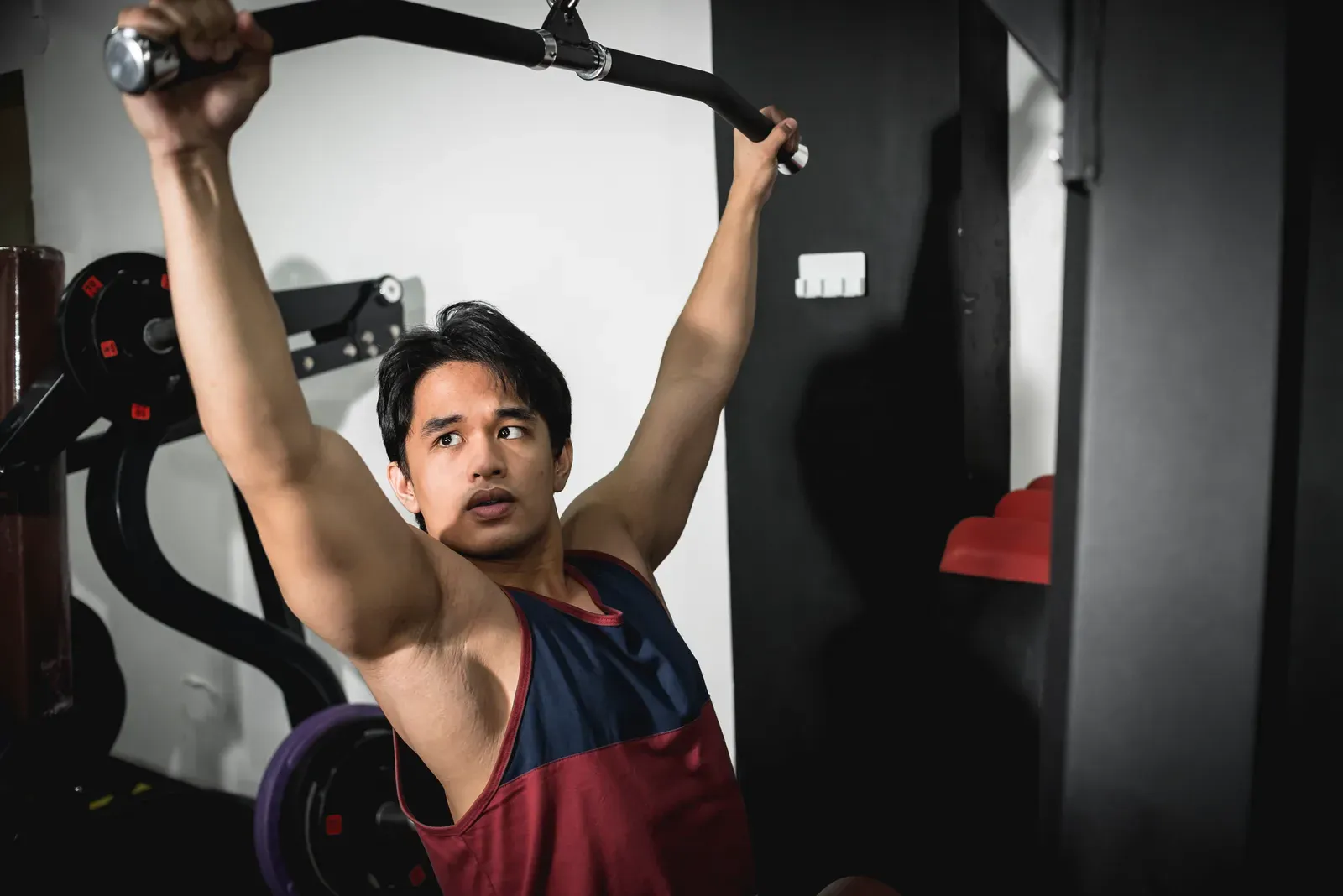
To build a wider back, train your lats with pulldowns, pull ups and rows two or three times a week for roughly 10 to 15 hard sets in total, and add weight or reps gradually over months. The lats are the large muscles that run from your mid-back to your upper arms, and they create most of the width you see from the front and behind. A free consultation can help you work out where to start.
What “wider” actually comes from
Your skeleton sets the width of your frame, and you cannot change it. What you can change is muscle: the lats on the sides, the muscles between the shoulder blades, and the rear shoulders. Together they fill out the upper back and make the waist look relatively smaller, even without any fat loss.
Pick two vertical and two horizontal pulls
Mix movements that pull downward with movements that pull toward you.
- Vertical pulls: lat pulldown with a wide or neutral grip, assisted pull up, or pull up.
- Horizontal pulls: seated cable row, chest-supported row, one-arm dumbbell row.
Vertical pulls stress the lats at long muscle lengths and are the best width builders. Horizontal pulls add thickness and balance. Include a few sets of face pulls or rear-delt raises for the shoulder rear.
Make each rep count
Poor technique turns back work into arm work. Use these cues:
- Start each rep by moving the shoulder blades down, then bend the elbows.
- Aim the elbows toward your back pockets.
- Pause for a beat at the contraction, and lower under control for two to three seconds.
- Stop a rep or two before you start swinging.
Using a lifting strap on heavy sets lets grip stop being the weak link. A form review from a coach, as described on the form check page, speeds all this up.
A weekly layout
| Session | Lifts | Sets |
|---|---|---|
| Day A | Lat pulldown, seated cable row, face pull | 3 each |
| Day B | Assisted pull up or pulldown, one-arm row, straight-arm pulldown | 3 each |
Add a third short day if recovery allows, but most regular adults grow fine on two. Raise the weight when you hit the top of the rep range (usually 10 to 12) on every set.
How long it takes
Strength typically rises within the first month. Visible width takes longer, and most people notice a difference in photos after about three to six months of steady work and enough food and sleep. Body fat also affects what you see, as the back fat page discusses.
If you want a rough sense of where your pulling strength stands, the strength standards guide offers commonly cited reference points.
Cautions
Shoulder, neck or elbow pain during pulling deserves attention. Check with a physician or physical therapist, and avoid forcing a wide-grip pull behind the head, which stresses the shoulder.
Mistakes that keep the back narrow
Four habits stall most adults. They swing the torso to finish heavy rows, which moves the work to the lower back. They train only vertical pulls and ignore the shoulder blades. They keep the same weight for months because the last set still feels fine. And they skip the rear shoulders, which leaves the back looking flat from behind. Fix them one at a time: slow the tempo, add a row, log every set, and finish with face pulls.
Next step
Choose one vertical and one horizontal pull for this week, and note the weight. At FlexWerk in Carmel, a private suite with a cable system lets a coach adjust angles and grips for you.
Related questions
Do I need pull ups to build a wide back?
No. Lat pulldowns, assisted pull ups and cable work build the same muscle. Pull ups are one tool, and many adults progress faster on pulldowns first.
Why do my arms tire before my back does?
Your grip and biceps are likely doing the pulling. Think about driving the elbows toward your hips instead of the hands to your chest, and consider straps on heavy sets.
Can I widen my back at 50 or older?
Muscle can be built at any age with progressive training, though recovery may take longer. Start with joint-friendly angles and check with a physician if you have shoulder or neck problems.