
Programmed, Not Broadcast
Every participant follows their own plan: their own lifts, loads, and progressions. The coach moves between people, coaching each one's sets, exactly as in solo sessions.
Carmel City Center · Serving the north side
There is a version of personal training the industry undersells: two to four people sharing one coach in one private suite, each following their own program. It is not a fitness class with better marketing. It is individual coaching that happens to have company.
Complimentary wellness assessment · No commitment required
Semi-private training, defined honestly
Every participant follows their own plan: their own lifts, loads, and progressions. The coach moves between people, coaching each one's sets, exactly as in solo sessions.
Two to four people share one coach's hour, which lowers the per-person cost without lowering the substance. The headcount cap is what keeps it personal training.
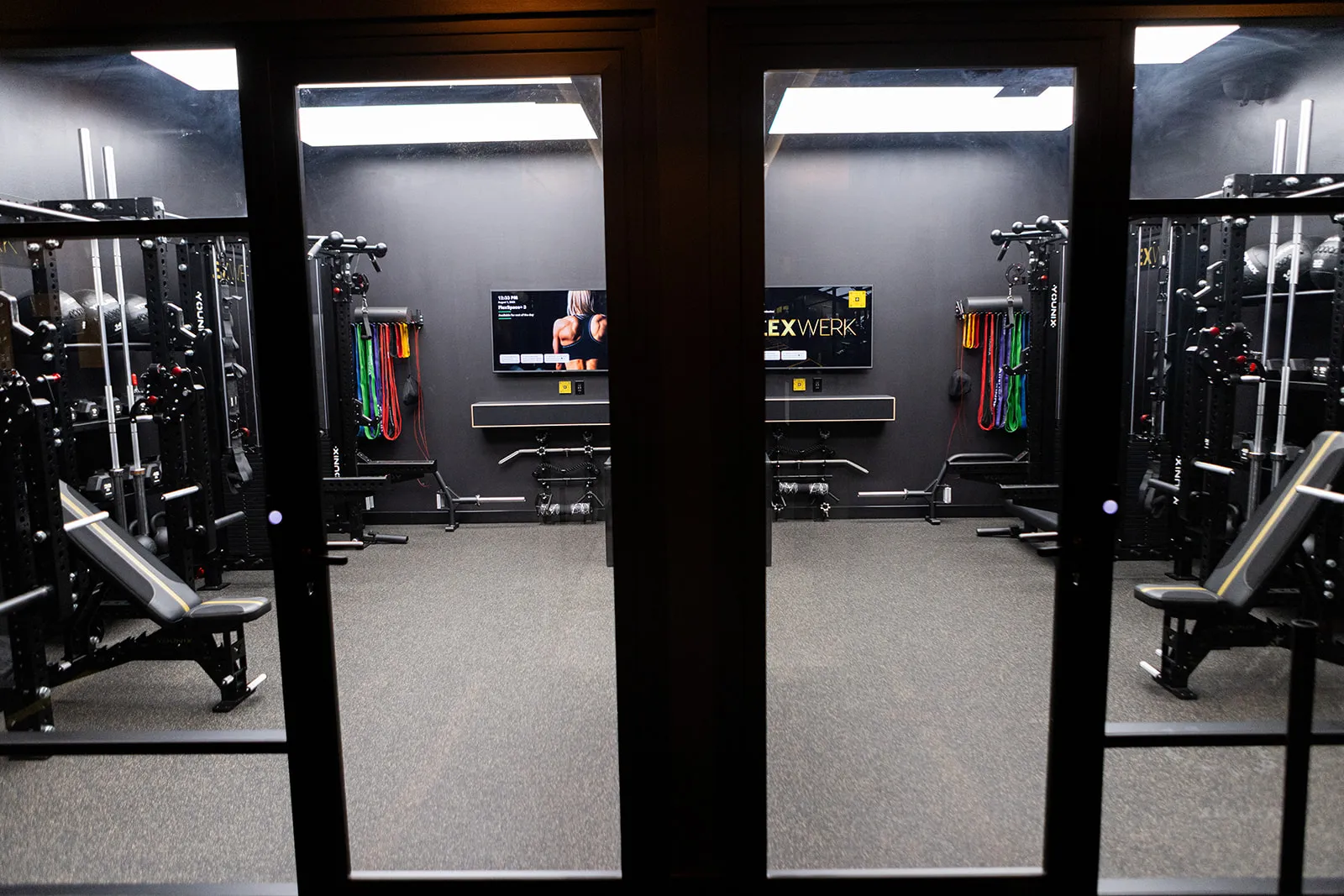
Sessions run behind a door in a private suite, so the group is your group: training partners you chose or were matched with, not whoever wandered by.
How it actually works
The definition hinges on one word: programmed. In a semi-private session, every participant has their own plan built from their own goals and history, and the coach moves between people coaching each one's sets. What is shared is the hour and the fee. Contrast that with a group class, where one workout is broadcast to the room and you scale it to survive. Classes are great cardio-adjacent fun; they are not coaching, and the differences are unpacked honestly inone-on-one versus group classes. Semi-private sits deliberately between: class-adjacent economics with personal-training substance. The headcount cap protects that substance, because past four or so people, coaching each individual's sets quietly becomes supervising a room, whatever the marketing says.
The economics are simple without needing a menu: a coach's hour split among a small group changes the per-person arithmetic substantially, which is how people who could not justify twice-weekly premium coaching suddenly can. Two honest footnotes. Rates are set by each independent coach, so the free consultation is where your actual numbers get discussed. And cheaper per person cuts both ways: you are receiving a share of attention rather than all of it. Whether that trade is brilliant or false economy depends on which kind of trainee you are, and the fuller comparison lives inwhether semi-private beats 1-on-1 on value.
Semi-private training needs a specific kind of room: enough equipment for parallel programs and no public floor chaos. FlexSpace Plus is purpose-shaped for it, at 200 square feet with room for up to 4 guests and an equipment set, custom lifting rack, cable system, and dumbbells, supporting more than 1,100 exercises, plus your group's own music, lighting, and screen. Three people can run three different programs simultaneously without queuing or improvising. Individual measurement survives the group format too: each participant gets their own free InBody body-composition baseline at the consultation and re-tests on their own numbers. Shared hour, separate scoreboards.
Two routes, both common. You bring your own group: a friend, a sibling, two coworkers with compatible calendars, and the coach builds around you from day one. Or you join one: coaches running semi-private blocks often slot a compatible new trainee into an existing pair, matching on schedule, experience level, and temperament much the way FlexConnect matches individuals to coaches. More than 40 independent fitness professionals run their businesses at Carmel City Center, and several build semi-private groups deliberately. Groups that share a standing time slot tend to be remarkably durable, because nobody wants to be the reason Tuesday fell apart.
Semi-private earns its keep for budget-conscious trainees who want real programming without the full premium rate, for friends or colleagues who will keep each other honest, and for experienced-enough lifters who need coaching eyes on their sets but not continuous hand-holding. Choose 1-on-1 instead if you are a true beginner in your first months, since technique-building deserves all of a coach's attention; if you are working around injury history or physician-guided limitations, and as always, medical questions go to your physician before any program starts; if you want scheduling built entirely around your calendar; or if privacy was the point and even two friendly witnesses is two too many. Couples get their own version of this format on ourcouples personal training page.
Find your format, free
The 1-on-1 versus semi-private question gets answered against your actual situation, not a pricing page: a free consultation covering goals, schedule, and budget honesty, plus a free InBody body-composition scan for your baseline. First session is free. Bring a friend into the conversation if you already have your group in mind.
At Carmel City Center, serving the north side
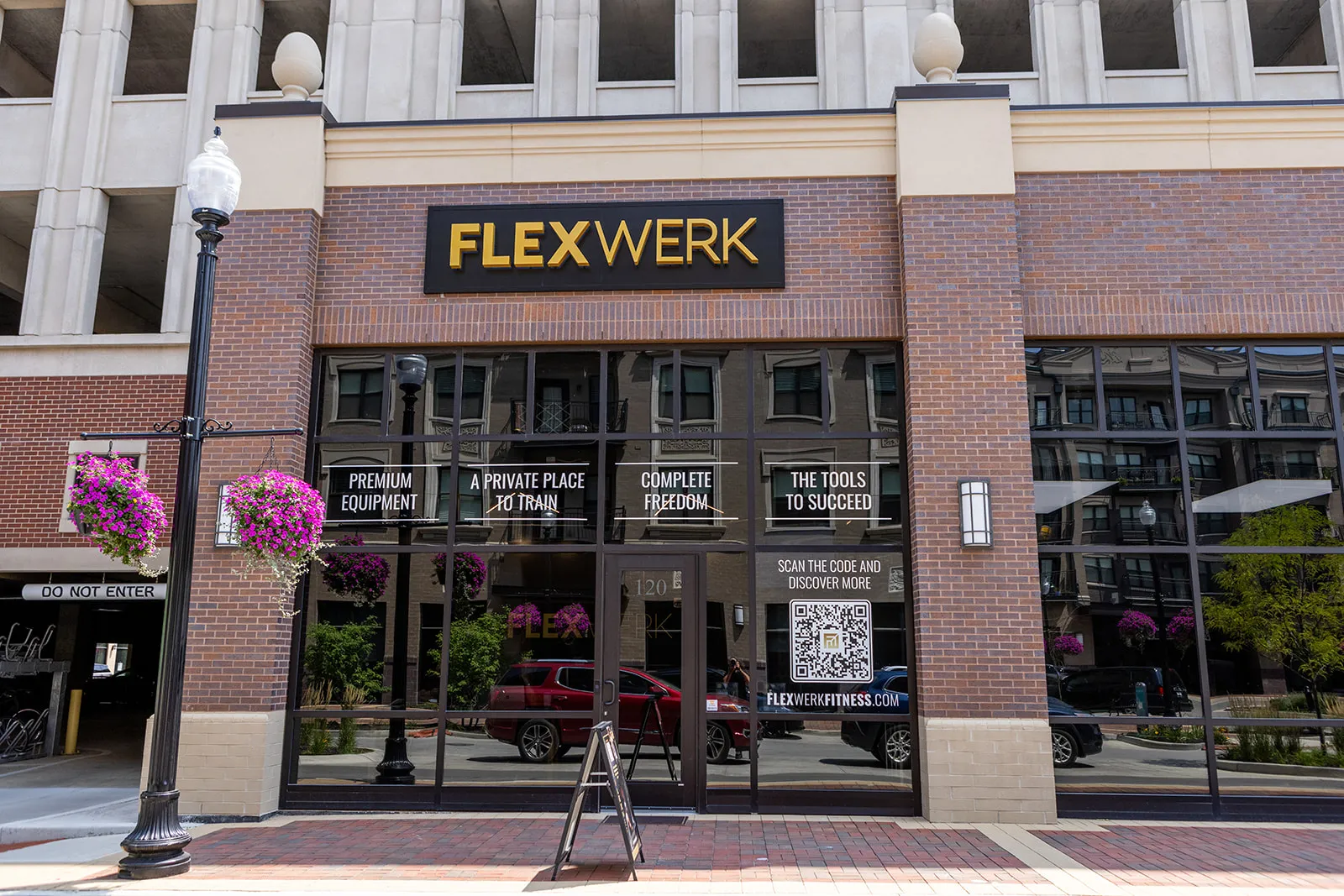
FlexWerk is at 885 Monon Green Blvd, Suite 120, Carmel, Indiana 46032. Steps from the Monon Trail, with garage parking a short walk away. From Carmel City Center we serve the whole north side: seepersonal training in Carmel, plus our pages forFishers,Westfield, andnorth Indianapolis.
Guest stories
Before you build your group
Typically two to four, small enough that everyone follows an individual program with real coaching attention. At FlexWerk, the larger FlexSpace Plus suite hosts up to 4 guests.
Per person, commonly yes, because you are splitting one coach's hour. Exact rates are set by each independent coach, so the free consultation is where the real math happens.
No. A class delivers one workout to everyone; semi-private training runs individual programs side by side with a shared coach. The cap on headcount is what keeps it personal training.
Yes. A friend, a sibling, or two coworkers with compatible calendars works perfectly, and guest access is free for clients. If you are starting solo, coaches running semi-private blocks often match a compatible new trainee into an existing pair.
No commitment required
Tell us about your goals, and your group if you have one, and a host will match you with the right coach, or skip the form and call(888) 353-9975.
A few quick questions so we can match you to the right coach and plan.
Leave your details and a FlexWerk host will call you.
No commitment required
Book your free consultation, get your complimentary wellness assessment, and feel the difference of a private FlexSpace for yourself.
Welcome!
Meet Rex, your 24/7 AI assistant. He's here to help you explore how FlexWerk Fitness can support your needs and answer any questions you have. Choose how you'd like to connect:
Call or Talk Live with Rex, Our AI Voice Guide
Want a real conversation over the phone +1 888 316-6530 or online? Rex can speak with you directly through your browser. No downloads..., no wait times. Ask about FlexWerk Fitness, our private training spaces, co-working options for fitness professionals, or how we can support your goals. Rex is ready for a one-on-one conversation with you right now. Read more..
Chat Instantly with Rex, Your AI Assistant
Prefer texting? Rex is your instant guide for answers, information, and a walkthrough of what FlexWerk Fitness offers.... Ask about private training spaces, memberships, availability, or how to get started. Rex will respond in real time to help you find the right fit. Read more..