
A Personal Trainer for Your Teen in Carmel (No Sports Required)
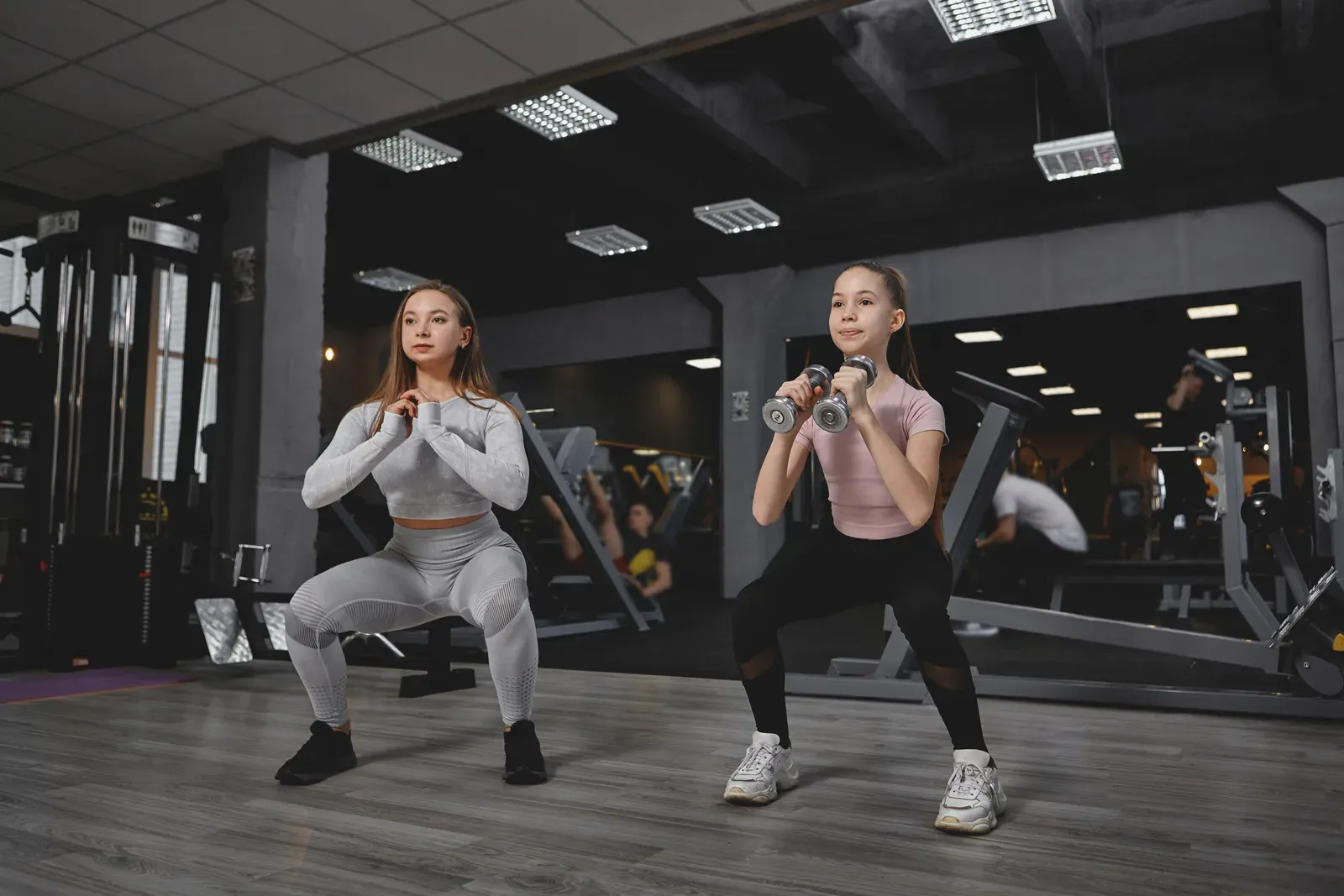
Not every teenager in Carmel plays a sport, and in a city whose high school won the 2025-26 national title for top athletic program, the teens who do not can feel it. A personal trainer for a non-athlete teen is not about making varsity: it is about confidence, posture, energy, and a relationship with exercise that outlasts high school, built one private session at a time. If your teen shrinks from PE, slouches through screen-heavy evenings, or simply has no idea where to start, one-on-one coaching in a private room removes every audience that makes gyms miserable at fifteen.
The way in is a parent-booked free consultation: you and your teen meet a coach, talk goals honestly, and see the space before anyone commits to anything.
Why non-athlete teens get skipped, and what coaching fixes
School sports serve the kids who make teams, and Carmel serves those kids extraordinarily well: the Dads’ Club alone sees more than 15,000 participants a year, and the travel-sport pipeline through Grand Park never sleeps. The teens outside that pipeline mostly get a PE grade and a phone. There is no obvious on-ramp to fitness for a fifteen-year-old who is not competitive, and big-box gyms, with their crowds and mirrors and social pressure, are close to the worst possible first exposure.
One-on-one coaching flips the equation. A patient coach teaches the basic patterns from zero, expects nothing on day one, and measures progress against last month instead of against other kids. For teens, the usual wins arrive in this order: competence, then confidence, then the posture and energy changes parents notice, then, quietly, a habit. This page is deliberately not about sports performance; if your teen is an athlete chasing speed or a roster spot, the youth athlete training guide is the better read.
What sessions look like at this age
Technique-first, load-later, and genuinely fun more often than parents expect.
- The basics, taught properly: squat, hinge, push, pull, carry, with bodyweight and light implements until form is boringly good. Boringly good form at sixteen is a gift that lasts fifty years.
- Posture and screens: upper-back strength and hip work that counteracts the phone-and-laptop shape teenagers fold into.
- Habits over heroics: consistent, moderate sessions beat occasional exhausting ones, and a coach frames effort so it feels like leveling up rather than punishment.
- Zero body-comment culture: good teen coaching talks about what a body can do, not what it looks like. Say so if that matters to your family; it is a fair screening question for any coach.
Sessions typically run 60 minutes, and a coach who senses a flagging teen can flex the last block toward games that are secretly conditioning; at this age, finishing wanting more beats finishing flattened.
If your teen has a medical condition, an eating concern, or an injury history, bring your pediatrician into the loop first and tell the coach plainly. Coaches coach; anything clinical belongs with your doctor.
The private suite is the unlock for self-conscious teens
Most teen gym resistance is really audience resistance. At FlexWerk in Carmel City Center, sessions run inside a reserved private suite: a full rack, cables, and dumbbells in a room with a door, your teen’s music if they want it, and nobody watching a beginner be a beginner. Parents are welcome in the room, which solves both the comfort question and the supervision question in one move; plenty of families do the first month parent-present and taper from there. The private setting works for adults for the same reason, as the gym anxiety article lays out, but for teenagers it is often the difference between trying and refusing.
Logistics behave for school-year calendars: weekday hours run 5 AM to 9 PM, so after-school and early-evening slots exist all semester, weekends run 7 AM to 4 PM, and the 885 Monon Green Blvd location with garage parking a short walk away makes drop-off simple. Winter cooperates too: with January highs around 33 degrees, a warm private room keeps the streak alive through the months when driveway workouts do not happen.
How parents can tell it is working
Forget before-and-after photos; the honest markers at this age are behavioral. Watch for your teen mentioning a number they hit, standing taller without being nagged, sleeping better on training days, and volunteering for the next session instead of being driven to it. Coaches track the training side, strength on the fundamental lifts and consistency across the month, and share it with parents at whatever level of detail your teen is comfortable with.
Timing matters less than parents fear. Some families run school-year blocks scheduled around homework and finals; others use summer, when open weekday afternoons make scheduling trivial. Consistency across eight to twelve weeks is where the habit takes root, and the habit, not any single block, is the actual product.
Cost, coach fit, and the sensible first step
Every coach at FlexWerk is an independent professional who sets their own rates, so pricing is a conversation rather than a menu; the free consultation is where you have it, with no obligation attached. More than 40 professionals run their businesses in the building, and FlexConnect matches your teen by goals, schedule, and, most importantly at this age, personality. A coach a teen actually likes is worth more than any credential, because liking the coach is what gets a sixteen-year-old back in the room on week six.
Start with the free consultation, bring your teen, and let them meet the coach and stand in the private room before deciding anything. Teens who leave that meeting willing to try are most of the way there.
Related questions
Can a parent sit in on a teen's training session?
Yes. Sessions run in a private suite, so a parent can be in the room without a gym crowd around, and many families start exactly that way. How involved you stay after the first few sessions is up to you and the coach.
Is strength training safe for teenagers?
Supervised, technique-first strength training is commonly considered safe and beneficial for teens, which is exactly what one-on-one coaching provides. If your teen has a medical condition or an injury history, loop in your pediatrician first.
My teen is not athletic at all. Is that a problem?
It is the point. This kind of coaching exists for teens who never clicked with team sports: no tryouts, no comparison, just a patient coach, a private room, and progress measured against last month, not against teammates.