
Home Gym Cost vs Hiring a Trainer: A Two Year Comparison
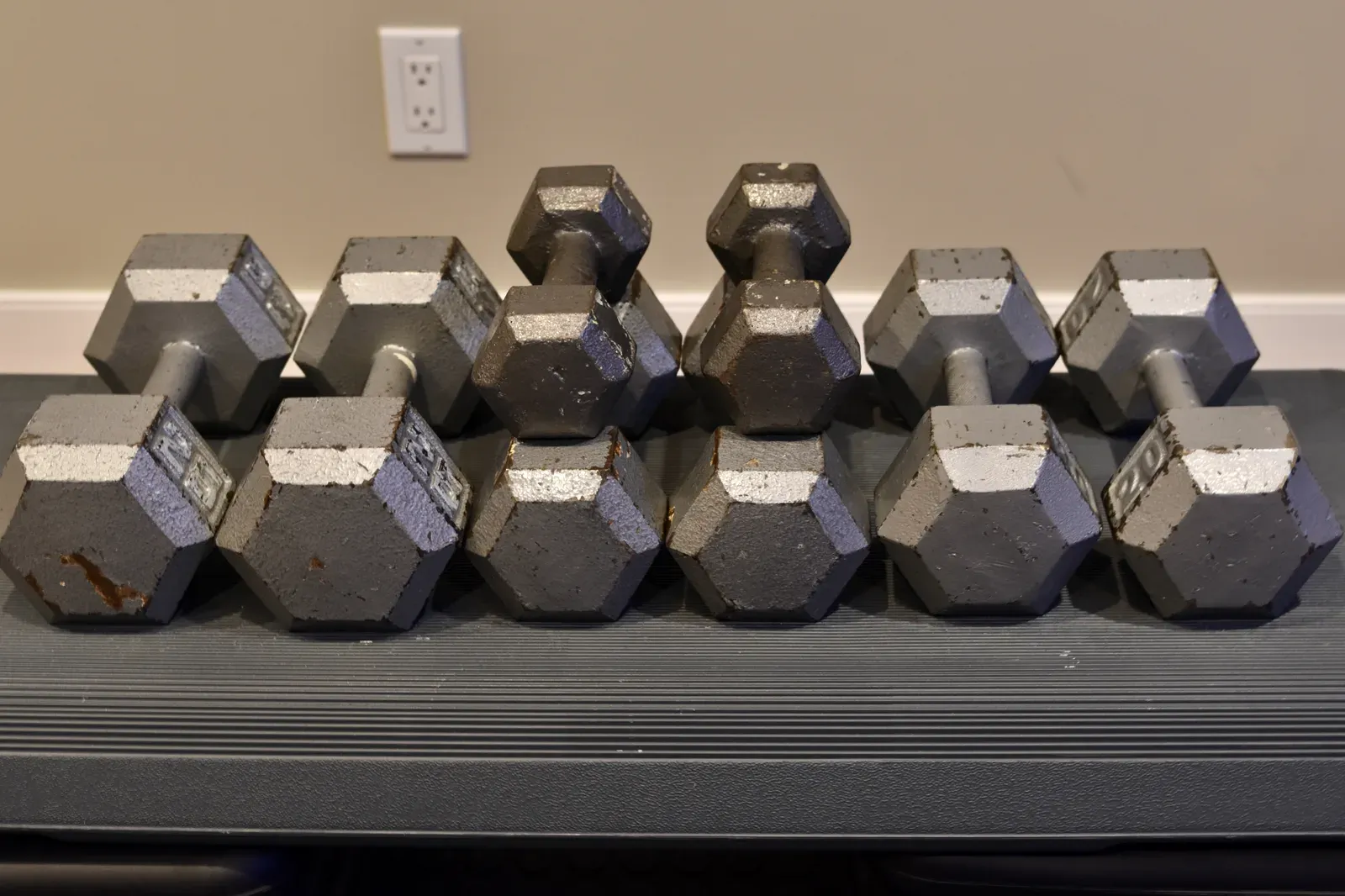
Over two years, a home gym is cheaper than hiring a trainer only if you keep using it and already know how to train; if the equipment gathers dust or you do not know what to do with it, coached sessions can cost less per result. The honest comparison is not price against price but cost per workout actually done.
If you want a reality check on the coaching side, a free consultation gives you real numbers for your goals and schedule.
What a home gym really costs
Equipment is the visible part. The full list is longer:
- Equipment. Racks, benches, weights, a cardio machine or a handful of dumbbells and bands.
- Space. A corner, a garage bay or a spare room, which has its own cost in what else you could use it for.
- Flooring and setup. Protection for the floor and time to assemble.
- Upkeep. Replacement parts, repairs and the occasional upgrade as you get stronger.
- Knowledge. Programs, books or a subscription, plus the time to learn.
Pick numbers that match your plan. Our worksheet below uses placeholders, because prices vary widely and you should use real quotes.
What hiring a trainer really costs
The cost is mostly the sessions. Market averages for Carmel run around $40 to 70 per hour on commercial floors and $75 to 125 or more in private settings, according to area figures cited across the metro, and each coach sets their own rate. Shared formats lower each person’s share, as shown in semi-private pricing. Add travel time and the cost of fitting sessions into your day.
The trade-off is that you get more than a room and weights: programming, correction, tracking and a person expecting you.
A two-year worksheet
Fill in your own figures:
| Line | Home gym | Trainer |
|---|---|---|
| Up-front cost | Equipment and setup | None, or a block |
| Monthly cost | Upkeep and subscriptions | Sessions per month times rate |
| Space cost | Floor space used | None |
| Learning cost | Time and programs | Included |
| Total over 24 months | Add up | Add up |
| Workouts you expect to do | Be honest | Be honest |
| Cost per workout | Total divided by workouts | Total divided by workouts |
The last line is the one that decides. A home gym used twice a week for two years is a bargain. The same gym used for three months and abandoned is the most expensive option on the table.
Drop-off risk, the hidden line item
Nearly everyone buys equipment with good intentions. What predicts use is friction and accountability, not price. At home, the barbell is always there, but so are the laundry, the couch and the phone. A standing appointment with a person is harder to skip than an open evening, which is why accountability is a large part of what coaching sells.
Ask yourself:
- Have I stuck with a home routine for at least six months before?
- Do I know how to program and progress my own workouts?
- Will I train even on days I would rather not?
- Do I have a safe place to lift, with enough space?
If you answered no to the first three, price in the risk that the gym goes unused.
The hybrid that often wins
Many people do both. They hire a coach for a short block to build a program and learn technique, then train at home with occasional checkpoints. Our four session plan shows how to do that on a small budget. Others rent time in a private suite when they want a coach, or when they need equipment they do not own, such as a cable system, a custom rack or a rower.
A private room at a facility like FlexWerk in Carmel, with suites reserved by the hour, gives you access to equipment without buying it. For a broader comparison with membership gyms, see the private suite versus big-box cost guide.
When a home gym is clearly the right call
- You already train regularly and know your program.
- Your schedule makes travel the main barrier.
- You have space and a modest, well-chosen list of equipment.
- You are happy to pay a coach occasionally for checkpoints.
When a trainer is clearly the right call
- You have started and stopped before.
- You are new to lifting and unsure of technique.
- You want a structured plan with measured progress.
- You value a standing appointment.
A decision you can check
Pick the option you expect to use in month eighteen, not month one. If you are unsure, start with a small coached block and a few basic pieces of equipment, then spend more once the habit is proven. Spending less before you know what sticks is the cheapest insurance you can buy.
Two sample households
Picture a couple with a spare bedroom. They buy a rack, a bench and a set of weights, then train together three mornings a week for two years. Their cost per workout falls steadily because the equipment never changes and their routine holds. For them the home gym wins, and a coach is a once-a-year checkpoint.
Now picture a solo exerciser who buys the same setup in January, trains hard for six weeks and then lets work take over. By the second year the rack is a clothes hanger. Their effective cost per workout is high, and a small coached block, or a rented suite when they feel like training, would have cost less for what they actually did.
Most people sit between these two, which is why the worksheet matters. Write down what you did in your last attempt at a routine, and use that, not your hopes, as the number of workouts in your estimate.
Related questions
Is a home gym cheaper than hiring a trainer?
It can be, if you use it consistently and already know how to train. If the equipment sits idle, the cost per workout climbs fast, and a coach may turn out cheaper per result.
Can I combine a home gym with a trainer?
Yes, and it is a common setup. Use a few sessions to build a program and learn technique, then train at home between checkpoints.
What are the hidden costs of a home gym?
Floor space, flooring, replacement parts, a second set of weights as you progress and the time it takes to set up and clean. Many people forget these when they price equipment.