
Stretching Before or After a Workout: What's Better?
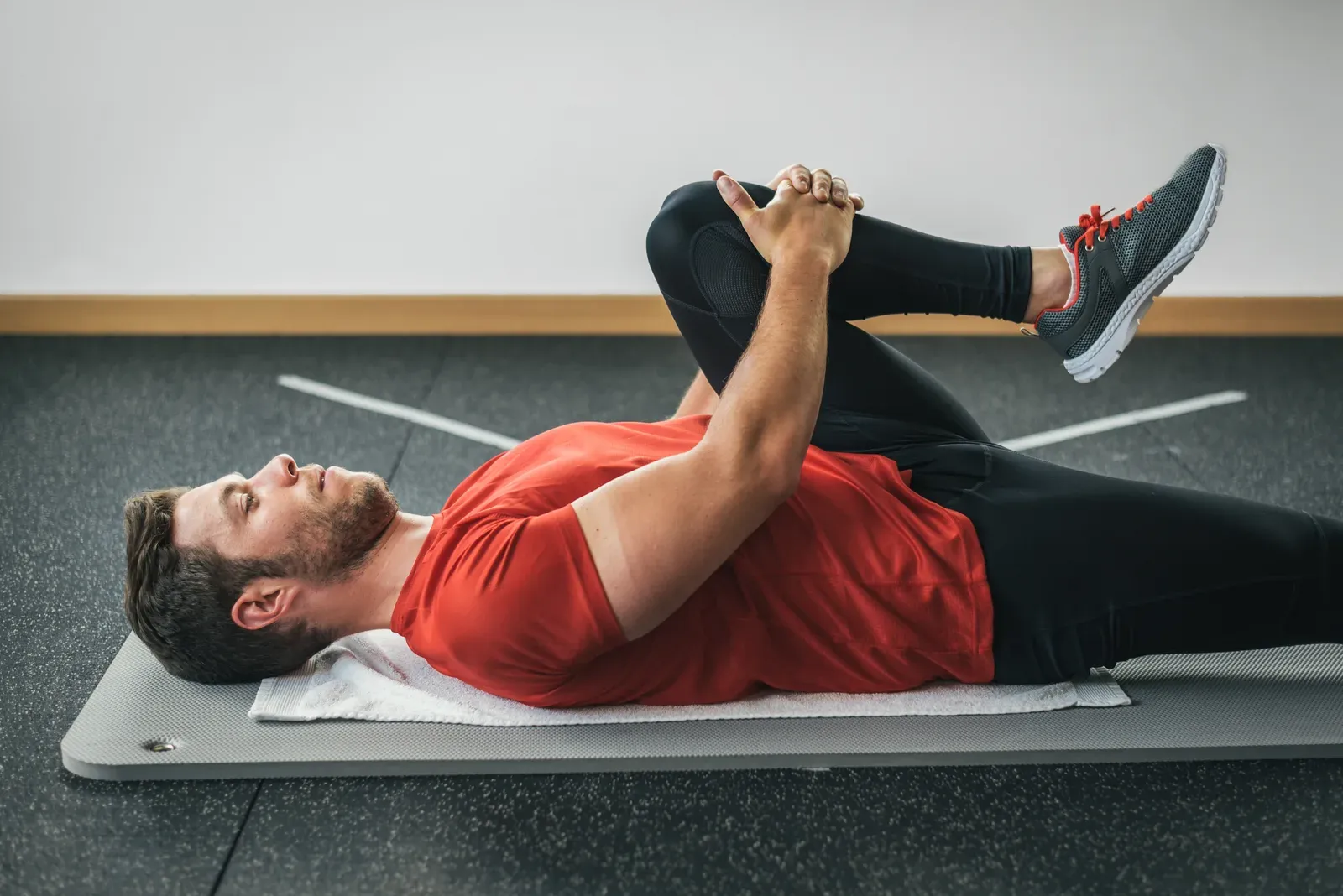
Stretch dynamically before a workout and save long static holds for afterward or for a separate session. Dynamic stretching means controlled movement through range, such as leg swings, hip circles and arm sweeps, and it prepares the joints and muscles you are about to use. Static stretching means holding a position, and it is better suited to cooling down or to a dedicated mobility block. A coach in a free consultation can sort out which of your tight areas need which treatment.
Before training, move; do not hold
The purpose of the pre-workout minutes is to raise temperature, wake up the nervous system and rehearse the patterns of the session. Active, rhythmic movement does all three. A held stretch of 30 seconds or longer does the opposite in the short term: research on static stretching commonly shows a small, temporary drop in strength and power in the stretched muscle.
For a lower-body day, a sensible sequence looks like this:
- 10 leg swings per side, front to back and side to side
- 8 walking lunges with a torso twist
- 10 bodyweight squats with a pause at the bottom
- 8 glute bridges, squeezing at the top
Then ramp up with lighter sets of your first lift. How much time that takes is covered in how long a warm-up should be.
After training, hold if you like
Once the session is done, muscles are warm and pliable, which makes a static stretch feel better and easier to reach into. This is the sensible window for 30 to 45 second holds on whatever felt tight: hip flexors, calves, chest and upper back.
Be honest about what it does. Post-workout stretching has a modest record for reducing later soreness. What it reliably gives is a calmer finish to the session and a small, gradual improvement in range of motion when you repeat it for weeks.
Match the stretch to the goal
The better question is often “what am I trying to change?” rather than “when do I stretch?”
- Feel ready to lift: dynamic movement first, nothing held.
- Gain range in a stiff hip or shoulder: static or loaded stretching, three or more times a week, ideally on its own or after training.
- Wind down and sleep better: slow holds in the evening, with long breathing out.
- Sit at a desk all day: short movement breaks every hour beat one long stretching session.
A simple if-this-then-that guide
- If you are about to lift heavy, then do dynamic drills only.
- If you are about to run or row, then use leg swings and easy pace for the first five minutes.
- If a joint feels restricted and you have no session today, then use longer holds or assisted work, see assisted stretching in Carmel.
- If a stretch causes pinching, tingling or sharp pain, then stop and check with a clinician before continuing.
Where a coach helps most
Generic stretch lists ignore the fact that tight is not always the problem. Sometimes a muscle feels tight because it is weak, or because a neighboring joint is not moving. A coach watches how you squat and hinge, identifies the true limiter and picks drills that change it. At FlexWerk in Carmel, each coach sets their own terms and specialties, so ask at your free consultation which coach pays attention to mobility and how they would build it into a session.
Related questions
Does stretching before a workout prevent injury?
A warm-up that raises temperature and rehearses the movements you are about to do is the sound habit. Long static holds on cold muscles are not proven protection, and they can leave you less powerful for the first sets.
How long should I hold a static stretch?
Fifteen to 60 seconds per position is the commonly used window, repeated once or twice. Go to a point of mild tension, never sharp pain, and keep breathing normally.
Should I stretch on rest days?
It is a good use of one. Longer holds and mobility drills on an off day build range of motion without taking anything away from a training session, as covered in the recovery day guidance on this site.