
Stair Climb Training for the Indianapolis Tower Climbs
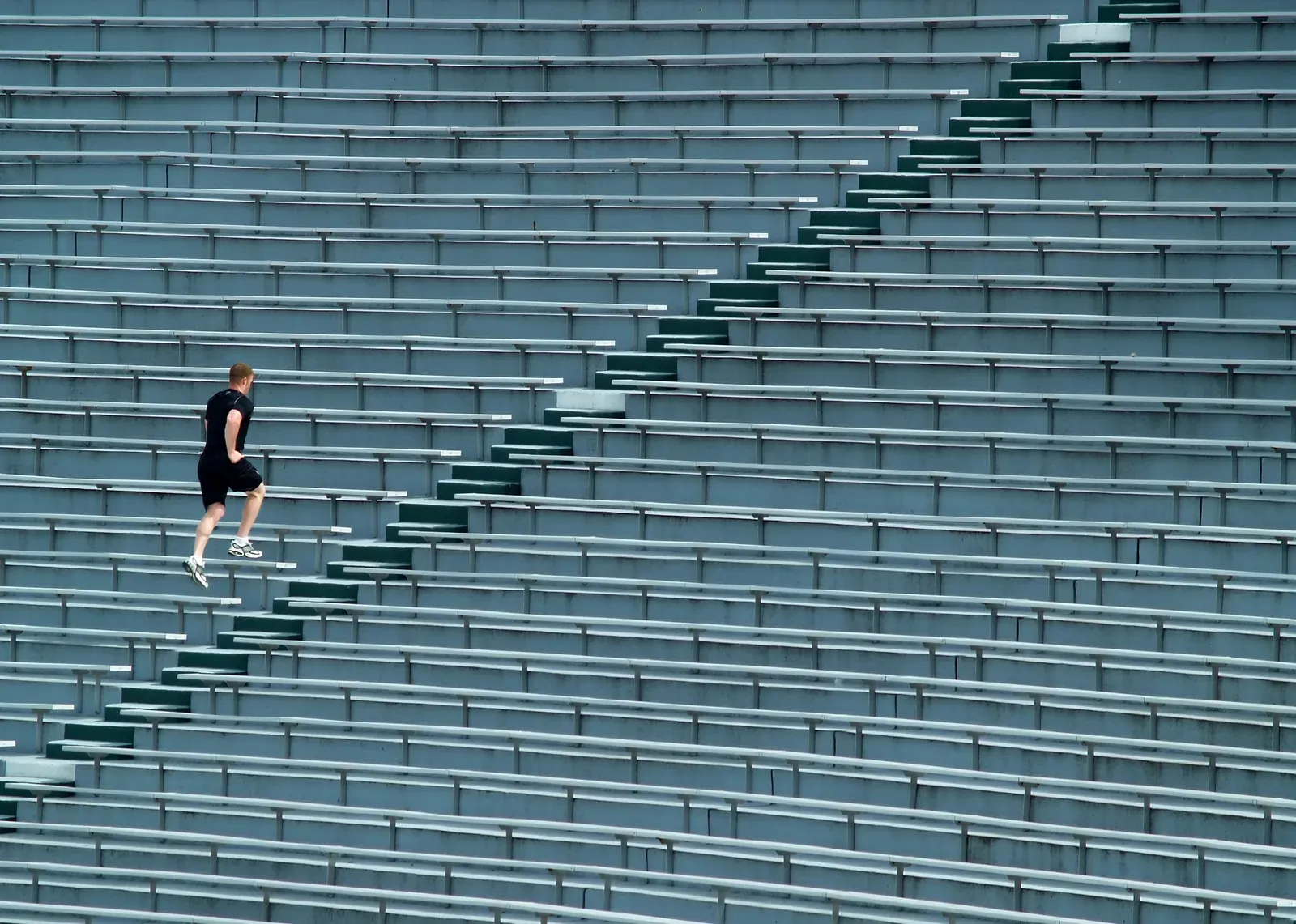
Stair climb training is quad and calf endurance plus pacing discipline, and a 36 floor downtown Indianapolis tower climb is short enough that both can be built in ten weeks with two sessions a week. The Indianapolis calendar offers two targets, a tower climb in late January and one on March 6, 2027, which puts the whole preparation in the coldest, darkest stretch of the year and makes an indoor plan the only realistic plan. In Carmel, the coached version begins with a free consultation that includes a free InBody body composition scan, useful for an event where every extra pound rides up every step with you.
What 36 floors actually demands
A stairwell climb is unlike any road race: there is no coasting, no downhill, and no flat, only continuous vertical work that sends heart rate to its ceiling within two or three floors and holds it there. The quads do the lifting, the calves do the push-off, the glutes do the hip extension, and the lungs try to keep up in a space with no airflow. The event ends in minutes rather than hours for most participants, which fools people into treating it as a sprint; it is a sustained maximal effort, closer to a hard interval than a 5K, and the strategy that wins is the one that avoids blowing up on floor eight.
The training menu
Three tools cover almost everything the stairwell asks for:
- Step-ups and single-leg work. Weighted step-ups to a knee-high box, split squats, and slow step-downs build the one-legged push that climbing is made of and the eccentric control that keeps knees happy. Two coached strength sessions a week, with calf raises finishing each one.
- Vertical climber intervals. A vertical climber drives arms, legs, and trunk together in a stepping pattern that is the closest gym approximation of a stairwell; the FlexWerk cardio suites have them, and the vertical climber workout guide explains the machine. Intervals of two to five minutes at a hard, steady effort with equal rest build the specific engine.
- Stairwell repeats. Once a week, find a parking garage or office stairwell you are allowed to use and climb continuously for a set number of floors, take the elevator down, and repeat. This is the rehearsal, and it teaches the rhythm and breathing no machine can.
Pacing lives on the rate of perceived exertion scale, not on a watch. Heart rate spikes faster in a stairwell than any device tracks usefully, so the skill to build is feeling the difference between a 7 and a 9 out of 10 and holding a 7 for the first two thirds of the climb.
A ten week calendar for late January or March 6
Count backward. The late January climb means a block beginning in mid-November, right through Thanksgiving and the holidays, which is exactly when an appointment someone expects you at is the difference between training and intending to; the tactics in winter workout consistency in Indiana apply in full. The March 6 climb allows a post-holiday start in early January and a cleaner build.
Either way the shape is the same: weeks one to four build single-leg strength and easy climber intervals; weeks five to eight add stairwell repeats and lengthen the hard intervals; weeks nine and ten drop volume, keep one short sharp session, and rehearse the race pace once. Runners who just finished a turkey trot can roll straight into the late January block with the base already built.
Climb day tactics
Start slower than feels reasonable, because the first five floors feel easy to everyone and the last ten feel hard to everyone; the gap between those two experiences is where a good pace lives. Single-step with a steady rhythm unless you trained doubles, keep a light hand on the rail for balance rather than pulling, breathe on a count, and expect the landings to be where you lose time if you slow to turn. Anyone with heart, blood pressure, or lung conditions should have a physician clear a maximal effort of this kind before registering, and should train with that clearance in hand.
Two sessions a week in a private room, one stairwell rehearsal, and ten weeks of counting back from the date is the whole plan; the coach’s job is making sure the legs arrive at the first floor with something left for the thirty-sixth.
Related questions
How long does it take to train for a stair climb?
Eight to ten weeks is plenty for someone who already exercises a few times a week, and twelve to fourteen for someone starting from scratch. The late January climb means a block that starts in mid-November; the March 6 climb allows a start after the holidays.
Is a stair climb hard on the knees?
Climbing is kinder to knees than descending, since the load is pushing rather than braking, and most events take the elevator down. Existing knee pain still belongs with a physician or physical therapist before training starts, and single-leg strength work is the best preparation once cleared.
Should I take two steps at a time?
Only if you have trained it. Double-stepping is faster per floor but costs far more per step, and untrained legs burn out by the tenth floor. Most first timers do best single-stepping with a steady rhythm and a light hand on the rail for balance, not for pulling.