
Rowing Machine vs Treadmill: Which Is Better for You?
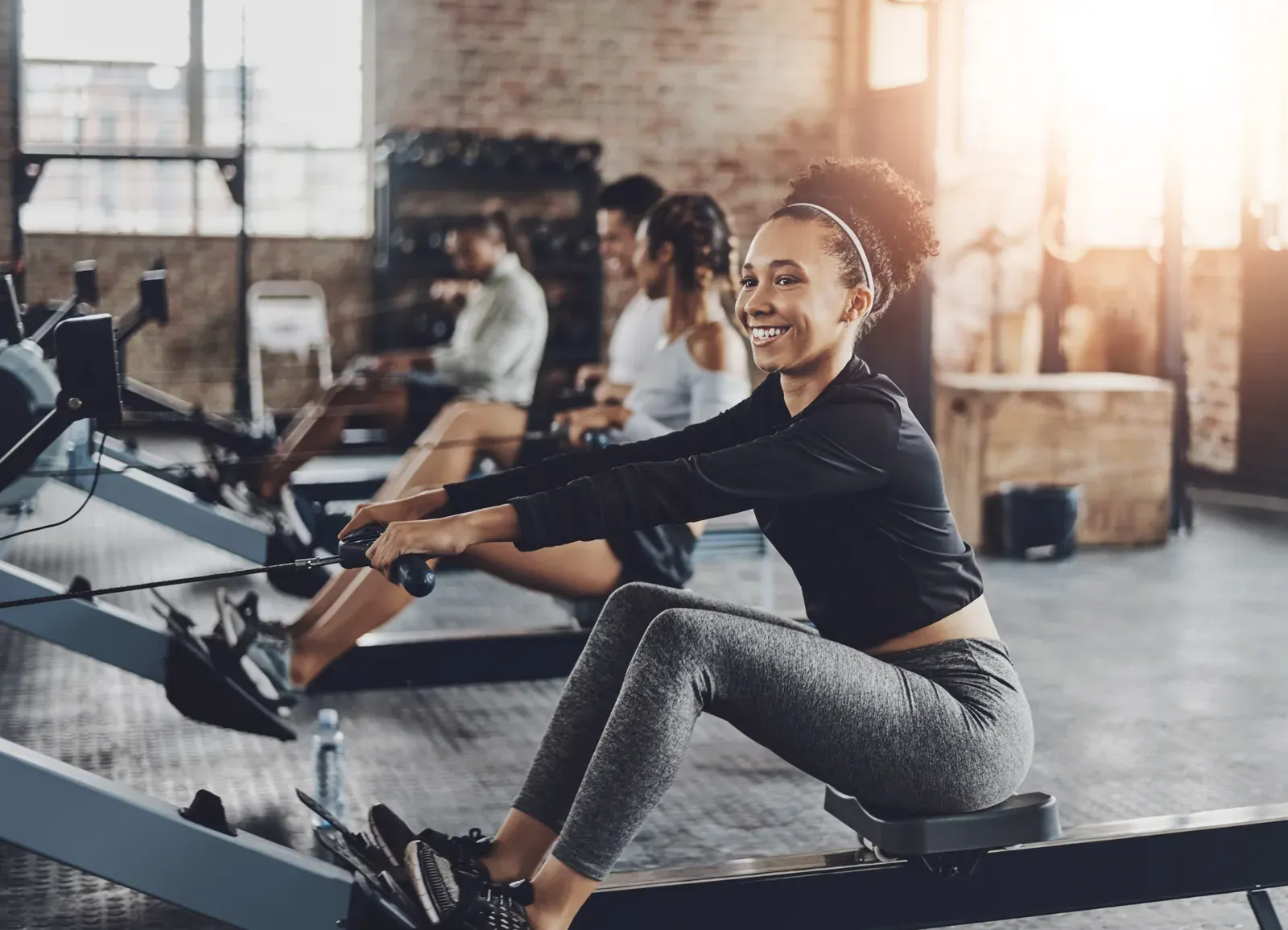
A rowing machine is better when you want more muscle, no impact and a short, hard session, and a treadmill is better when you want the simplest, most scalable tool for walking and running fitness. At the same effort the calories are similar, so the right pick depends on your knees, your goal and how much time you have. A free consultation is a quick way to try both and see which feels better in your body.
The comparison at a glance
| Factor | Rowing machine | Treadmill |
|---|---|---|
| Joint impact | None, the feet stay planted | Moderate to high when running, lower when walking |
| Muscle use | Legs, back, arms and trunk | Mostly legs and hips |
| Learning curve | Real, technique matters | Minimal |
| Calorie estimate at hard effort | Similar to running | Similar to rowing |
| Scaling | Pace, stroke rate and resistance | Speed and incline |
| Best for | Full-body cardio, sensitive knees | Walking volume, running prep |
| Biggest risk | Poor form straining the back | Impact load, falls from mistakes |
Joint impact
Running sends several times your body weight through the legs with each stride, which is why many people with sensitive knees or hips move away from it. A rowing machine keeps your feet strapped and planted, so there is no landing. The legs push, the hips swing back and the arms finish the stroke, with the load spread across many joints. Walking on a treadmill, especially on a slight incline, is a middle option with far less impact than running.
Calorie estimates
Calorie burn depends on effort, body weight and how long you work. Published activity tables put moderate rowing in the mid single-digit range and hard rowing higher, close to running at a moderate pace. For an 80 kilogram adult, an hour at a hard but sustainable pace might land in the mid to high hundreds of calories on either machine, with large variation. Treat any number as an estimate, and remember that many people cannot keep a hard rowing pace as long as they can walk or jog.
Muscle use
A good stroke is roughly a leg drive, a hip swing and then an arm pull. That sequence recruits large muscles in the legs, back and trunk, with the arms last. The treadmill mostly trains the legs and hips, along with the calves. If you spend your days at a desk and want your back and posture muscles involved, rowing helps. For a full discussion of coached rowing see rowing workouts in Carmel.
Which one by goal
- Weight loss. Either works if you stick with it. Pick the one you enjoy, and pair it with strength training and eating habits.
- Sensitive knees. Rowing or incline walking, with your physician’s agreement.
- Time-poor. Rowing intervals deliver a lot of muscle work in 15 to 20 minutes.
- Running goals. A treadmill, because specificity matters.
- Easy daily movement. A treadmill walk, which is simple and low stress.
For the longer climbing alternative, see stair climber vs treadmill.
Technique matters more on the rower
A rowing machine rewards form. Drive with the legs first, swing the hips, then pull the handle to the lower ribs, and reverse that order on the return. Rounding the back or pulling with the arms early wastes energy and can irritate the lower back. A few coached minutes fix most issues. The treadmill asks for less, mostly upright posture, a natural stride and not gripping the rails.
Where FlexWerk fits
FlexWerk’s cardio suites in Carmel City Center include HYDROW rowers and curved treadmills, and a coach can set intervals on either while you work in a private room. That makes it easy to try both in one session and decide with your own legs. Each coach sets their own format, so ask what they offer. After you choose, the next question is how boxing or strength work fits around it, covered in boxing for weight loss.
Related questions
Which burns more calories, a rowing machine or a treadmill?
At the same perceived effort the estimates are close, and published activity tables put hard rowing and running in a similar range. Because rowing uses more muscle, many people find a given pace feels harder.
Is rowing good for bad knees?
It avoids the impact of running, which many people with knee trouble prefer. Rowing still bends the knee under load, so ask your clinician about your own case.
Can I use both in one week?
Yes, and many people do. Rowing on one day and walking or running on another spreads the load across different muscles and joints.