
Good Plank Time By Age: What Counts as Strong
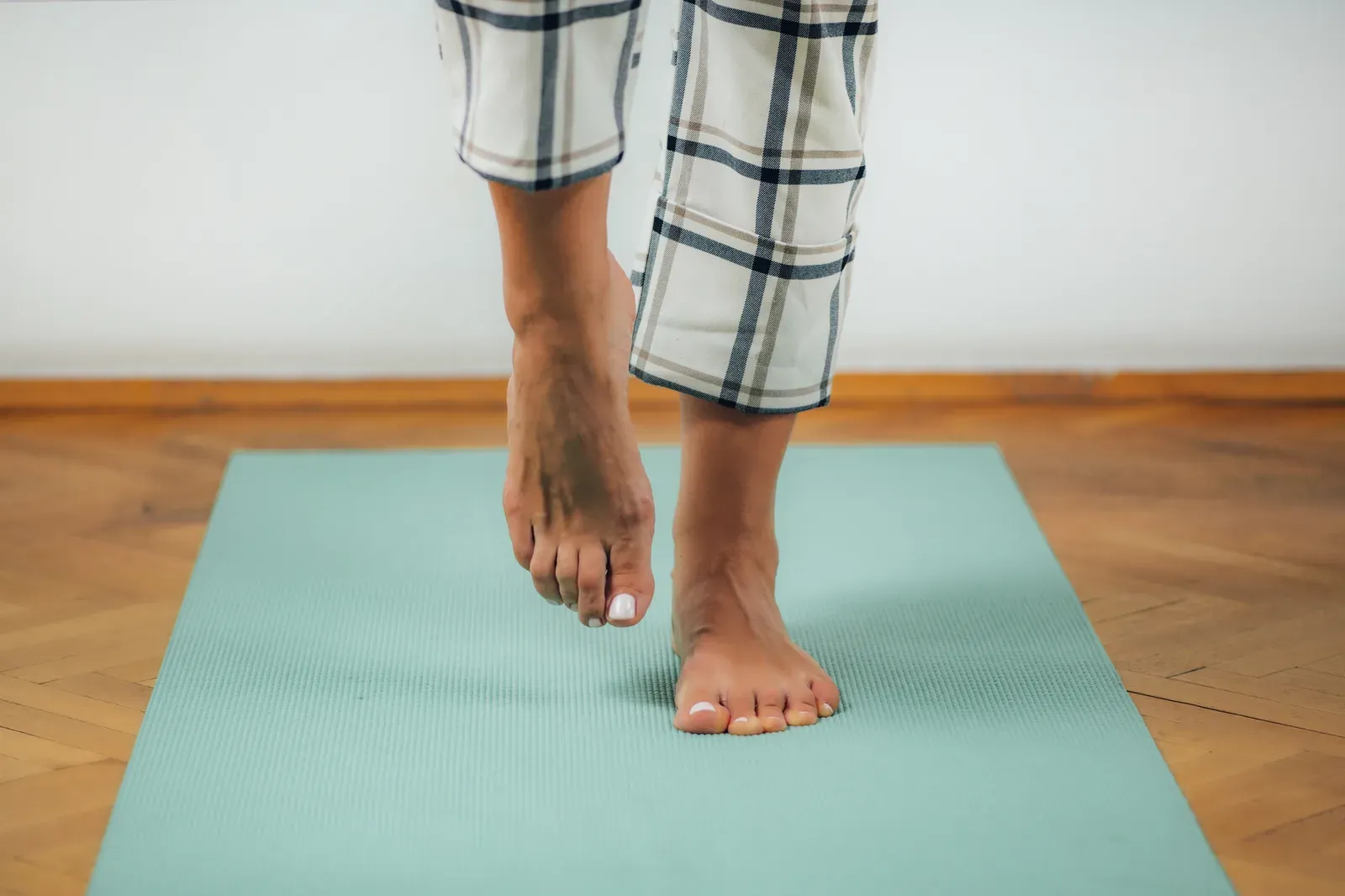
A commonly cited target for a strict, front-loaded plank hold runs from about sixty to ninety seconds in your twenties down to twenty to forty seconds past sixty, measured the moment your form actually breaks rather than the moment you decide to quit. The clock is a popular shorthand for core endurance, but the number people chase and the number that actually predicts anything useful are not always the same thing. FlexWerk coaches in Carmel test it as one data point among several, then build the program around whichever one is genuinely lagging. A free consultation is the easiest way to find out which piece of your core is actually the weak link.
Plank time by age
Reference ranges below describe a standard front plank on the forearms, hold stopped at the first sign of hip sag, back arch, or held breath:
| Age band | Commonly cited target |
|---|---|
| 20s | 60 to 90 seconds |
| 30s | 45 to 75 seconds |
| 40s | 40 to 60 seconds |
| 50s | 30 to 50 seconds |
| 60 and up | 20 to 40 seconds |
These are commonly cited exercise physiology benchmarks for good form, not a medical scale, and surface, forearm width, and how strictly a coach calls form breaks all shift the number.
Why the clock stops early, most of the time
Watch a hundred people attempt a plank and the pattern repeats: the hips drop a few inches before the person notices, the chin juts forward, and somewhere around the thirty second mark most people quietly stop breathing normally and start holding air instead. All three of those failures happen well before the deep core muscles themselves are actually spent. A honest plank score measures how long you can brace correctly under fatigue, which is a coordination skill as much as a strength one, and coordination responds fast to a few coached corrections.
Building the number without wrecking your low back
Longer daily holds are the least efficient way to raise a plank time and the most common way people irritate a low back doing it. A better rhythm trades one long daily grind for two or three shorter, genuinely strict sessions a week, adding ten seconds at a time only once the previous length is clean. Side planks and dead bug style anti-rotation work round out the same core system from angles a front hold never tests, and pairing that with pressing and pulling work keeps the whole trunk balanced rather than over-trained in a single plane.
Read it alongside your other numbers
Plank time correlates loosely with a push up count, since both lean on the same trunk bracing under fatigue, and it pairs naturally with a dead hang as a second time-based endurance check. None of these three replace each other, and a coach reading all three together spots a real weak link faster than any single test does alone. Test your plank once a month under the same conditions, and let the trend, not any one number, tell you whether the program is working.
Related questions
Should I hold a plank until I physically collapse?
No. Stop the moment your hips sag, your low back arches, or you start holding your breath, and log that as your time. A collapsed, breath-held plank at ninety seconds is a weaker result than a strict, breathing plank at forty five.
Why does my plank time stall even though I practice it often?
Daily maximal holds mostly train your ability to tolerate discomfort, not your core's actual capacity. Two or three shorter, strict sessions a week, with real rest between them, tend to move the number more than a daily grind does.
Is a short plank time a sign of a weak core specifically?
Often it reflects poor bracing technique or breath-holding rather than true weakness, since the test rewards mechanics as much as strength. A coach can usually spot which one is limiting you within a single session.