
A Personal Trainer After Rotator Cuff Surgery: The Right Order
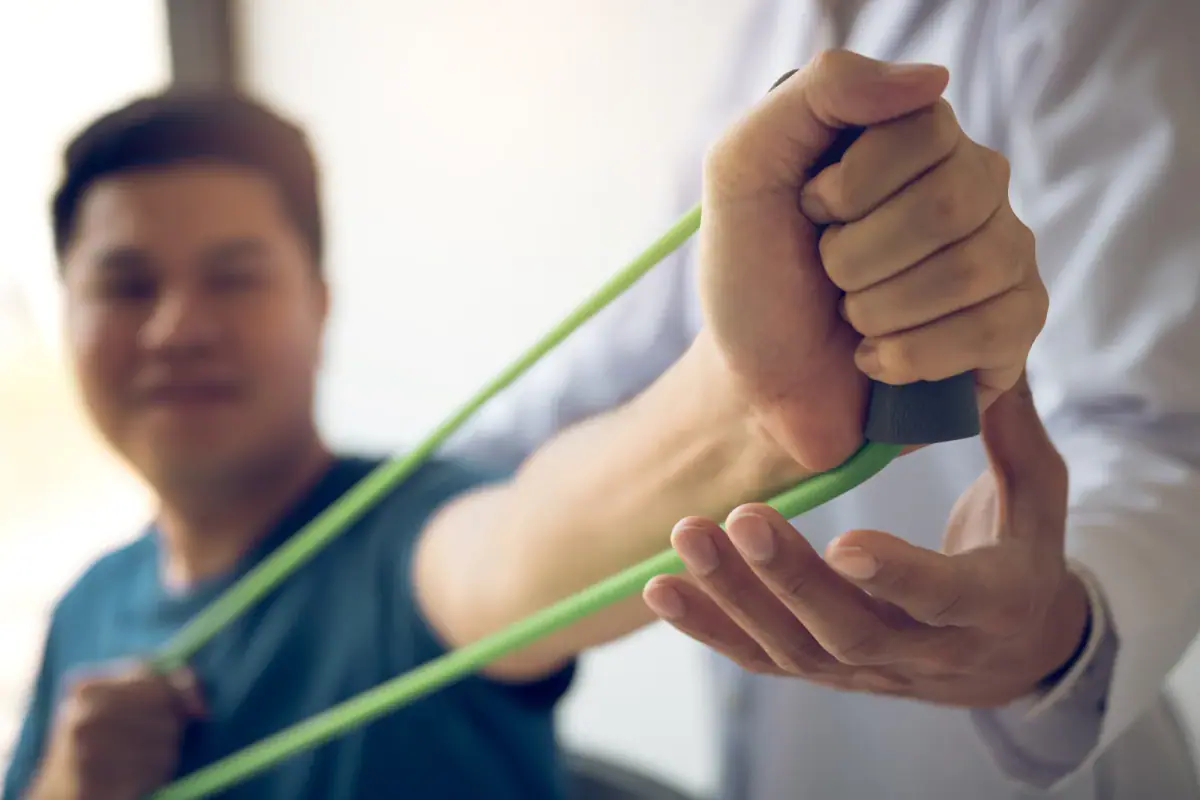
A personal trainer belongs at the end of the rotator cuff story, not the middle: coaching starts only once your surgeon and physical therapist have discharged you and cleared progressive strength work, and every load a coach selects stays inside their guidance. The stretch after discharge is where a repaired shoulder either becomes a genuinely strong shoulder or quietly stays fragile for years, and it is the one stretch of the process nobody supervises by default. Filling that supervision gap is the coach’s actual job, and in Carmel it begins with a free consultation built around your surgical history.
Three professionals, one sequence
The order of operations is fixed, and respecting it is the whole game. Your surgeon owns the repair and the medical milestones. Your physical therapist owns rehabilitation: range, early strength, and the criteria for discharge. A trainer owns what comes third, general strength and fitness built on the foundation the first two created, and never sooner. If you are still in active rehab, the move is more PT, not a coach, and any trainer who suggests otherwise has answered your vetting question for you. The formal boundary between the roles is laid out in trainer vs physical therapist.
The load order a repaired shoulder gets
Post-surgical shoulder programming is patient by design, and the sequence matters more than the exercises. A coach working inside your clinical team’s guidance typically rebuilds in this order:
- Everything that is not the shoulder trains normally. Legs, core, and conditioning go to work from week one, so the rest of you stops paying for the surgery.
- Supported before free. Pressing and pulling start braced, seated, or chest-supported, where the repair does the least stabilizing.
- Close before far. Work near the body precedes long-lever work away from it, because leverage is load a shoulder feels before a scale does.
- Overhead last, and earned. Loading above the head is the graduation exercise, reached through weeks of clean, comfortable reps, never through a date on a calendar.
Starting loads should look almost insultingly light, and that is correct: the early product is confidence and clean patterns, and the weight follows. If the elbow rather than the shoulder is your current complaint, the grip-focused version of this logic lives in working out with tennis elbow.
Keeping your PT in the conversation
The best post-surgical coaching treats your physical therapist as a silent partner rather than a former provider. Bring your discharge summary, your home exercise list, and any written restrictions to the first meeting; the home exercises usually survive as warm-up and accessory work rather than being thrown away. Going the other direction, a coach keeps notes worth sharing, and encourages you to check in with your PT at sensible intervals rather than only when something goes wrong. The stop conditions are agreed in advance: anything your surgical team told you to watch for pauses the program and books the clinical appointment first. Being forthcoming about every detail of the history is what makes all of this work, and telling your trainer about an injury explains how to have that conversation well.
Why a private room suits a rebuilt shoulder
A repaired shoulder does not need an audience, a queue, or a reason to rush, and a private reserved room removes all three. The cable column adjusts to whatever height and path your pressing is ready for this month, rest lasts as long as your coach wants it to, and the only eyes on your form are the ones paid to watch it. At Carmel City Center, the consultation is free and includes a free InBody scan, so the rebuild starts from measured facts instead of memories of your pre-surgery self, and FlexConnect matching lets you require post-rehab experience by name from the building’s independent professionals.
If you are discharged, cleared, and unsure what comes next, that is precisely the gap this coaching exists for: book the consultation, bring the paperwork, and start the bridge.
Related questions
How long after rotator cuff surgery can I start with a personal trainer?
There is no standard number, and a trainer should never supply one. Your surgeon and physical therapist own the timeline; coaching begins once you are formally discharged and cleared for progressive exercise.
Can a trainer restore my shoulder's range of motion?
No. Restoring range is rehabilitation, and rehabilitation belongs to your physical therapist. A coach builds strength and work capacity on whatever range your rehab team restored, inside their guidance.
What if my repaired shoulder aches after a coached session?
Ordinary muscle soreness in the surrounding areas can be part of training, but anything at or near the repair, or anything new, goes to your surgeon or physical therapist before the next session. A good coach insists on that order.