
Where to Find a Mobility Coach Near Fishers
A mobility coach near Fishers should do two things in order: find the restriction that actually limits you, then load the new range so it sticks, and that assessment-first method runs 15 to 20 minutes from Fishers in private suites at Carmel City Center. The Fishers personal training page covers the drive and the setup; here is what the mobility work itself looks like.
Assessment first, always
Tight is a symptom, not a diagnosis. The hamstrings that feel short are often guarding a hip that does not rotate; the stiff lower back is frequently a stiff upper back and immobile hips sending the bill elsewhere. A mobility coach starts by testing joint by joint, hips, upper back, ankles, shoulders, to find the actual limiter, because stretching the loudest body part is how people foam-roll the same spot for five years with nothing to show for it. For the desk-and-commute pattern that defines most Fishers workdays, the usual suspects are predictable, and the desk posture strength guide explains why the fix is stronger, not just looser.
Stretching feels good; loading makes it last
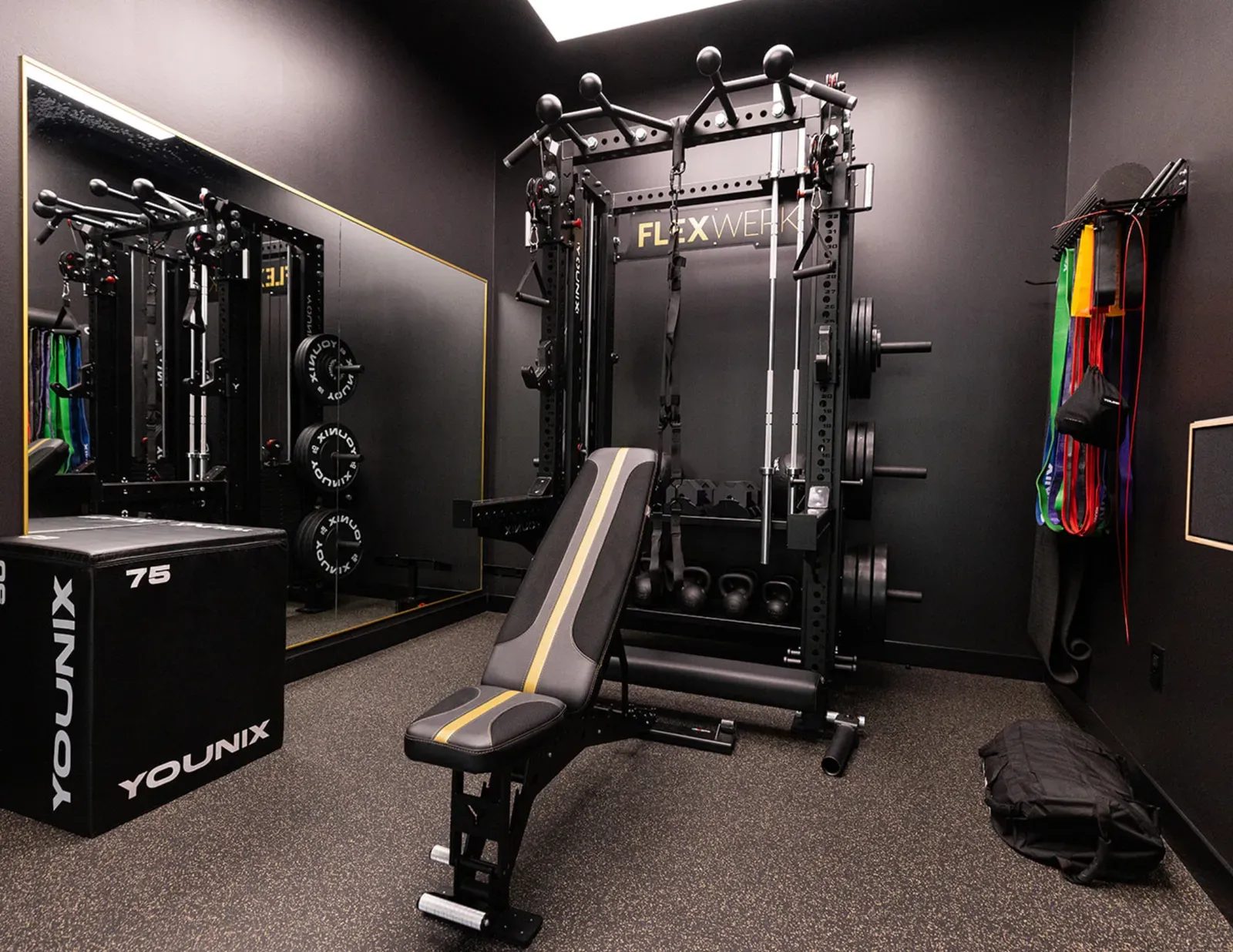
Passive stretching buys temporary range that mostly evaporates by lunch. What makes range permanent is strength inside it: controlled, progressively loaded work at the edges your assessment uncovered, which is why sessions here happen in a room with a lifting rack, cable system, and dumbbells rather than on a stretching mat in a group room. Each hour runs one on one in a reserved FlexSpace, no audience for the awkward end-range positions, your music, and a coach watching every rep, with short daily homework carrying the gains between sessions. The full method, and what a program looks like month to month, is laid out in the mobility coach in Carmel guide; if the search behind your search is really core control and precise movement, the private pilates answer for Fishers covers that fork.
When a coach is not the right first stop
Clear line, honestly drawn: pain, numbness, tingling, a recent injury, or anything post-surgical belongs with a physician or physical therapist first, not a trainer. A mobility coach works on movement quality in healthy tissue and picks up where clinical care leaves off, ideally coordinating with whatever guidance your provider sends along; the boundary between the two professions is mapped in trainer versus physical therapist. If you are cleared and simply stiff, you are the exact person this work is for.
Logistics from Fishers are simple: 15 to 20 minutes via 116th Street or 146th Street to 885 Monon Green Blvd, garage parking a short walk away, hours 5 AM to 9 PM weekdays and 7 AM to 4 PM weekends, and FlexConnect matching to pair you with a coach from more than 40 independent professionals whose specialty is exactly this. The free consultation includes a free InBody body composition scan and, more usefully for this goal, the first honest look at where your movement actually stops.
If you have been stretching the same tight spots since last winter, stop guessing at the restriction; book the free hour and have someone find it.
Related questions
How often do I need mobility sessions?
One to two coached sessions a week plus short daily homework is the typical rhythm. The homework is where the range gets kept; the sessions are where it gets built.
How fast will I notice a difference?
Some range commonly returns within a session or two, which feels like magic and is not: keeping it takes weeks of consistent loading. No honest coach promises a timeline.
What is the difference between mobility and flexibility?
Flexibility is passive range, how far you can be stretched. Mobility is usable range, how far you can move with control and strength, and it is the one that changes how you feel and perform.