
How to Fix Hunched Posture in Older Adults Safely
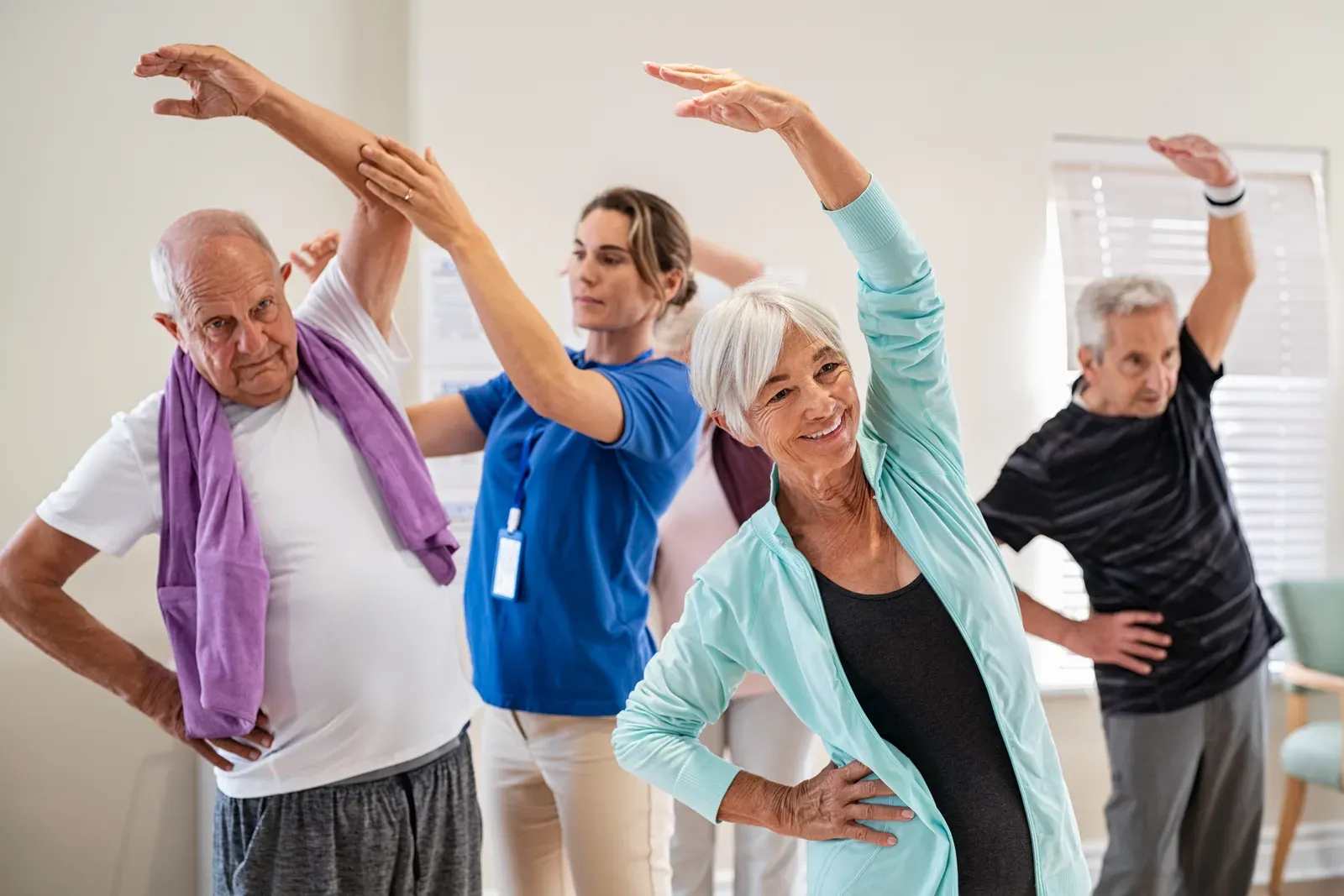
A hunched posture in later life is worth a physician’s look first, particularly for bone density, and once you have clearance, strengthening the upper back, hips and trunk can often help you stand taller and move more comfortably. The two causes overlap: weak back muscles let the shoulders drift forward, while changes in the spine itself can curve it however strong the muscles are. A coach handles the first and has no way to sort out the second, which is why the medical conversation comes before the exercises. A coach on the personal trainer over 50 path will ask for that guidance before building anything.
Why a doctor looks first
A rounded upper back is called kyphosis when the curve is more pronounced than usual. Some of it is habit and muscle fatigue, and some can come from changes in the bones of the spine, which is more common when bone density has dropped. Your physician can order a bone scan or imaging if it is warranted and tell you which movements are off limits. If you have had a recent fracture, a sudden new curve, new back pain or height loss, mention it at once.
What strengthening can address
Plain exercise guidance applies here. The muscles between the shoulder blades, the back of the shoulders and the hips tire out in people who sit or stand slumped for years. Training them improves your ability to hold a more upright position, makes reaching overhead easier and helps your balance. It cannot reverse a bone-related curve, and no coach should promise it will.
A safe session plan
Keep the effort moderate, the movements slow and the loads light enough that form never breaks. A typical session of about 30 minutes looks like this:
- Rows with a band or cable, pausing with the shoulder blades gently drawn together.
- Wall slides or wall angels, sliding the arms up a wall without arching the lower back.
- Hip hinge practice with a dowel or a light weight, keeping the back long and bending at the hips.
- Gentle back extension lying face down with a small lift of the chest, only if your clinician approves it.
- Chest opening such as a doorway stretch held comfortably, never forced.
- Balance work next to a counter, since falling is the real risk for many older adults.
Skip loaded forward bending, aggressive twisting and fast jerky movements unless a physician or physical therapist has said they are fine. The osteopenia guide on strength training with osteopenia goes into which movements coaches typically adapt.
Questions to ask your physician first
- Does my spine or bone density need to be checked before I start?
- Are there movements I must avoid, such as bending forward under load?
- Would a physical therapist visit help me learn the starting exercises?
- Which symptoms, such as new pain, numbness or a sudden change, should make me stop and call?
- Is it safe to do back extension or lying face down?
How a private suite helps
Many older adults feel self-conscious about posture in a crowded gym. A private suite at FlexWerk in Carmel City Center removes the audience, with room to practice slowly and a coach next to you. Hours run from 5 AM on weekdays and from 7 AM on weekends. The free consultation includes an InBody scan, which gives a muscle baseline. The scan for seniors and muscle loss explains how coaches read it, as a training tool and not a diagnosis.
Related questions
Can exercise straighten a rounded upper back at 70?
It can often improve posture and strength when the rounding is partly from weak, tired muscles. How much improves depends on your spine, which only your physician can assess. A coach works on the muscles and leaves the diagnosis to the clinical team.
Are sit-ups and toe touches okay?
Many coaches avoid loaded forward bending for people with a rounded back or low bone density, since it stresses the front of the vertebrae. Ask your physician, and expect your coach to choose alternatives such as hinges and planks.
How often should I train for posture?
Two or three short sessions a week of upper back and hip strength, plus a few minutes of daily practice, is a sensible rhythm for most older adults, adjusted to your clinician's guidance and how you recover.