
Circuit Training vs Straight Sets: Which Gets Results?
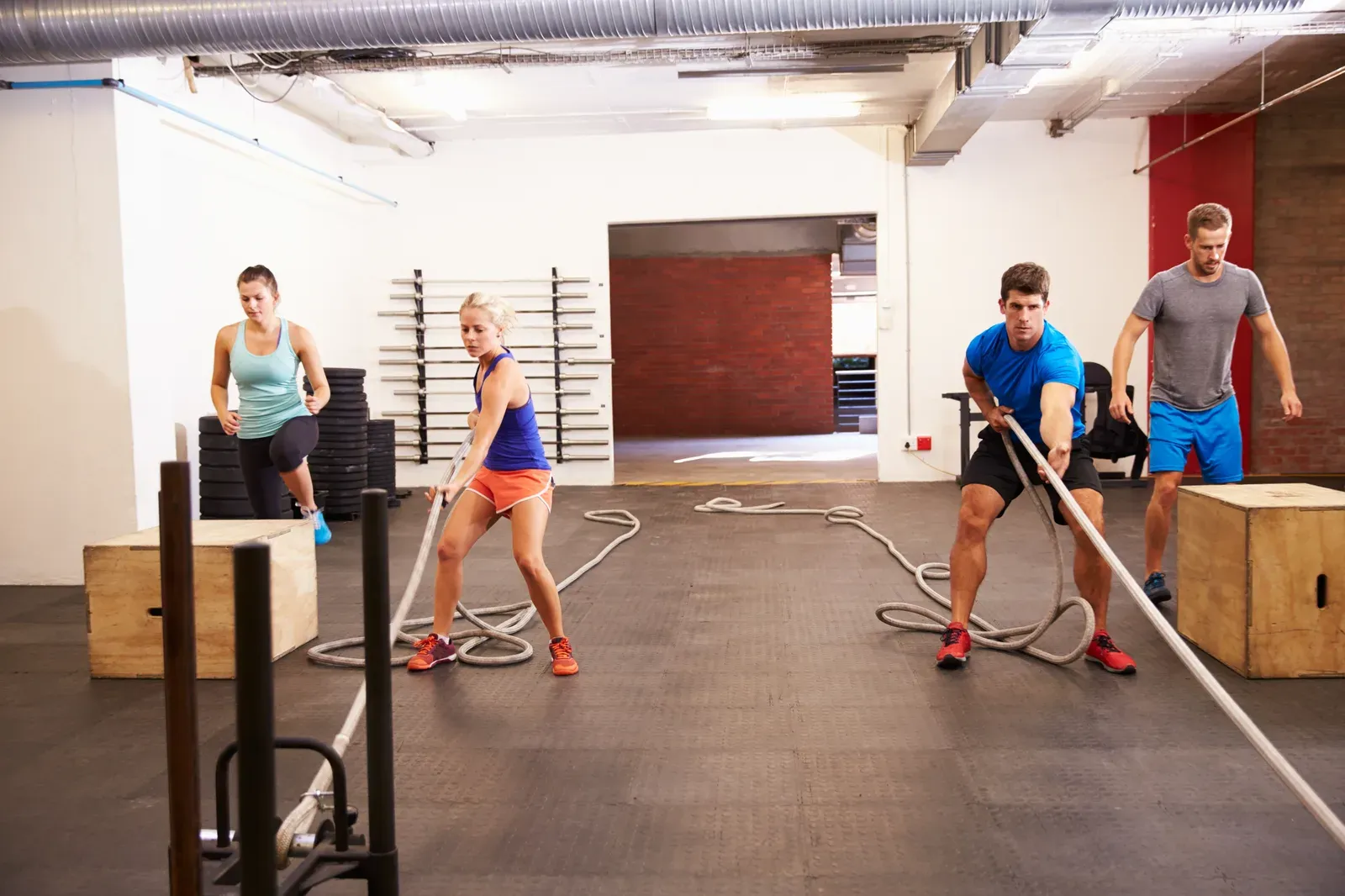
Straight sets get you stronger faster, and circuits get you fitter faster; the right choice depends on which result you want first. In a straight-set workout you do all sets of one exercise with full rest before moving on, so each lift gets your best effort. In a circuit you rotate through several exercises with little rest, which keeps your heart rate high but forces lighter loads. Neither is a wrong answer, and a free consultation can help you rank your goals before you commit to one.
What each format does to your body
Straight sets let your muscles and nervous system recover between efforts. That recovery is what allows a heavier load on set two and set three. Circuits spread the work across muscle groups so no single muscle recovers fully before the next station asks something of it, and your lungs and heart carry much of the effort.
The result in plain terms:
- Straight sets: heavier weights, steadier progress on specific lifts, more time on your feet resting.
- Circuits: more calories used per minute, improved work capacity, lower weights on every station.
Compare them on what you care about
| If your priority is | Lean toward |
|---|---|
| Lifting a heavier weight in three months | Straight sets |
| Getting through a workout in 30 minutes | Circuits |
| Learning new exercises with good form | Straight sets |
| Breathing harder and feeling a conditioning change | Circuits |
| Tracking numbers cleanly | Straight sets |
| Keeping it fun and varied | Circuits |
A hybrid that works for many adults
You do not have to choose permanently. A common template pairs the two:
- Open with two main lifts as straight sets, such as a squat pattern and a press, for three sets each.
- Move to a four-station circuit for 10 to 12 minutes: a row, a lunge, a carry and a core move.
- Finish with a few minutes of easy walking or stretching.
This keeps your heavy work fresh and still delivers the conditioning dose. Compare it with the pairing approach in are supersets worth it, which sits between the two formats.
When circuits are a bad fit
Skip the circuit format, or slow it way down, in these situations:
- You are still learning the movements. Fatigue magnifies form errors.
- You have a joint that is fragile under speed, such as a shoulder or knee.
- A clinician has set a limit on your heart rate or blood pressure response. Clear any high-intensity work with your physician first.
- The equipment is crowded. A circuit needs stations free, and waiting breaks the format.
Where intervals fit
A circuit is a close relative of interval training, in which hard efforts alternate with recovery. If you want the conditioning side without the gym-floor logistics, private HIIT training in Carmel explains how intervals can be dosed to your own fitness level.
Choose by month, not by forever
Pick one format for four to six weeks, track a simple measure such as the weight on a main lift or how long you can sustain a hard station, and revisit. If a number you care about stalls, change the format, not your effort. A private suite at FlexWerk in Carmel has the rack, cable system and dumbbells in one place, which makes a hybrid session easy to run, and coaches set their own formats, so ask which structure they favor for your goal.
The sets and reps inside either format matter, too; 5x5 versus 3x10 covers that side. Your next step is to write your main goal on a card and pick the format that serves it.
Related questions
Is circuit training good for weight loss?
It can help, because it burns energy in a short window and keeps you moving. Weight loss still depends mostly on your overall eating and weekly activity, not on the format alone.
Can I build muscle with circuits?
Yes, especially as a beginner, if the loads are challenging. The limit is that fatigue from the previous station keeps the weight lighter than you would use with full rest.
How long should a circuit workout be?
Twenty to thirty minutes of work is plenty for most people. Longer circuits tend to turn into a slow grind where form and effort both slide.