
Calisthenics vs Weight Training: Which Fits Your Goal?
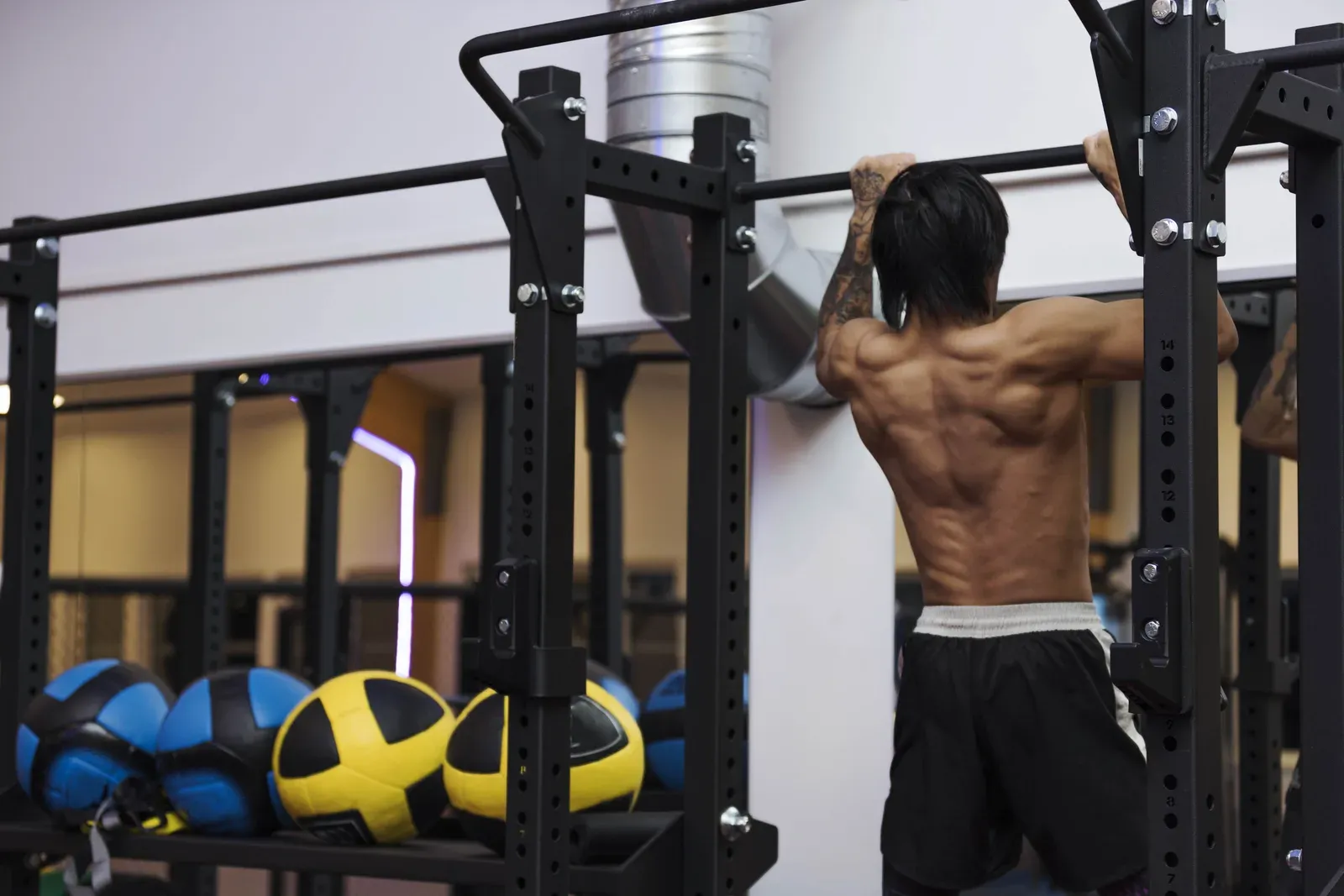
For most beginners, calisthenics and weight training build muscle about equally well; the real difference is how you progress: weights give you small, exact load jumps, while calisthenics asks you to make a movement harder by changing leverage. Pick the style you will repeat twice a week for a year, then add the other one where it fills a gap. Your goal decides the rest, and a free consultation is the quickest way to match one to the other.
How each style adds difficulty
Weights progress by numbers. You add 2.5 pounds to a dumbbell or a small plate to a bar, and the jump is the same every week, which makes tracking painless.
Calisthenics progresses by leverage and skill. A wall push-up becomes an incline push-up, then a floor push-up, then a feet-elevated version. Each step is a bigger jump than a plate, so you may need a few weeks to bridge it with extra reps or slower tempo. The upside is that every rung teaches balance and trunk control. The downside is that progress can stall between rungs if nobody shows you a bridge variation. Our guide to progressive overload without weights lists those bridges.
Which goal points where
Use this if-then list as a starting rule, not a verdict:
- If you want bigger legs and glutes, lean on weights. A squat or deadlift can be loaded far beyond what single-leg bodyweight work offers.
- If you want your first pull-up, lean on calisthenics, with band or lowering work. The path is laid out in how long it takes to get a first pull-up.
- If you travel or work from a small apartment, calisthenics fits in a hotel room.
- If you are recovering strength after a layoff, weights or machines let you start lighter than your body weight.
- If you want to stay lean and athletic with minimal kit, a mix of both is the norm.
Joint load and injury risk
Both styles hurt people the same way: too much, too soon, with sloppy positions. Weighted lifts concentrate load on the spine and knees when the bar is heavy. Bodyweight skills concentrate it on wrists, elbows and shoulders, particularly with handstand work, dips and high-rep pull-ups. A heavier person doing dips is lifting a heavy load whether or not a bar is involved.
The sensible rule for either is to add one variable at a time: reps, range, or difficulty, never all three. If you have a diagnosed joint problem, get your physician’s go-ahead and tell your coach.
Equipment, honestly
| Need | Calisthenics | Weight training |
|---|---|---|
| Space | A floor | A rack, bars, plates or dumbbells |
| Entry cost | Close to nothing | Higher, or a facility |
| Easiest thing to scale down | Incline or knee variations | Lighter weight |
| Easiest thing to scale up | Harder leverage, slower tempo | Heavier load |
| Best for legs | Needs single-leg skill | Straightforward |
Dumbbell and kettlebell choices sit in between; see kettlebell vs dumbbell training.
When to combine them
Combining is the default for people who train with a coach. A typical split uses weights for the lower body and heavy presses, then bodyweight rows, push-ups, carries and core for the rest of the session. That gives you progression you can measure and movement skill you can feel.
At FlexWerk, a coach can build that mix inside a private suite, so you are not waiting for a rack or practicing a new skill in front of a crowd. Coaches set their own formats, so ask during the consultation which style they favor and how they would blend it for your goal. Then try two weeks of the mixed plan and keep what you actually enjoy.
Related questions
Can you build as much muscle with calisthenics as with weights?
For the first year or two, yes, if the exercises keep getting harder. The ceiling shows up later: legs and heavy pulling are tough to overload with bodyweight alone, which is where added weight earns its place.
Which is easier on the joints?
Neither is automatically gentler. Weights let you pick the exact load and machine path, while calisthenics ties the load to your body weight, so a heavy body on a push-up or dip can stress wrists and shoulders more than a lighter dumbbell press would.
Do I need a gym for calisthenics?
Not to start. Push-ups, squats, rows under a sturdy table and planks need only floor space. A pull-up bar is the one piece of kit that truly widens the menu.