
Ankle Mobility for Squats: Why Your Heels Lift
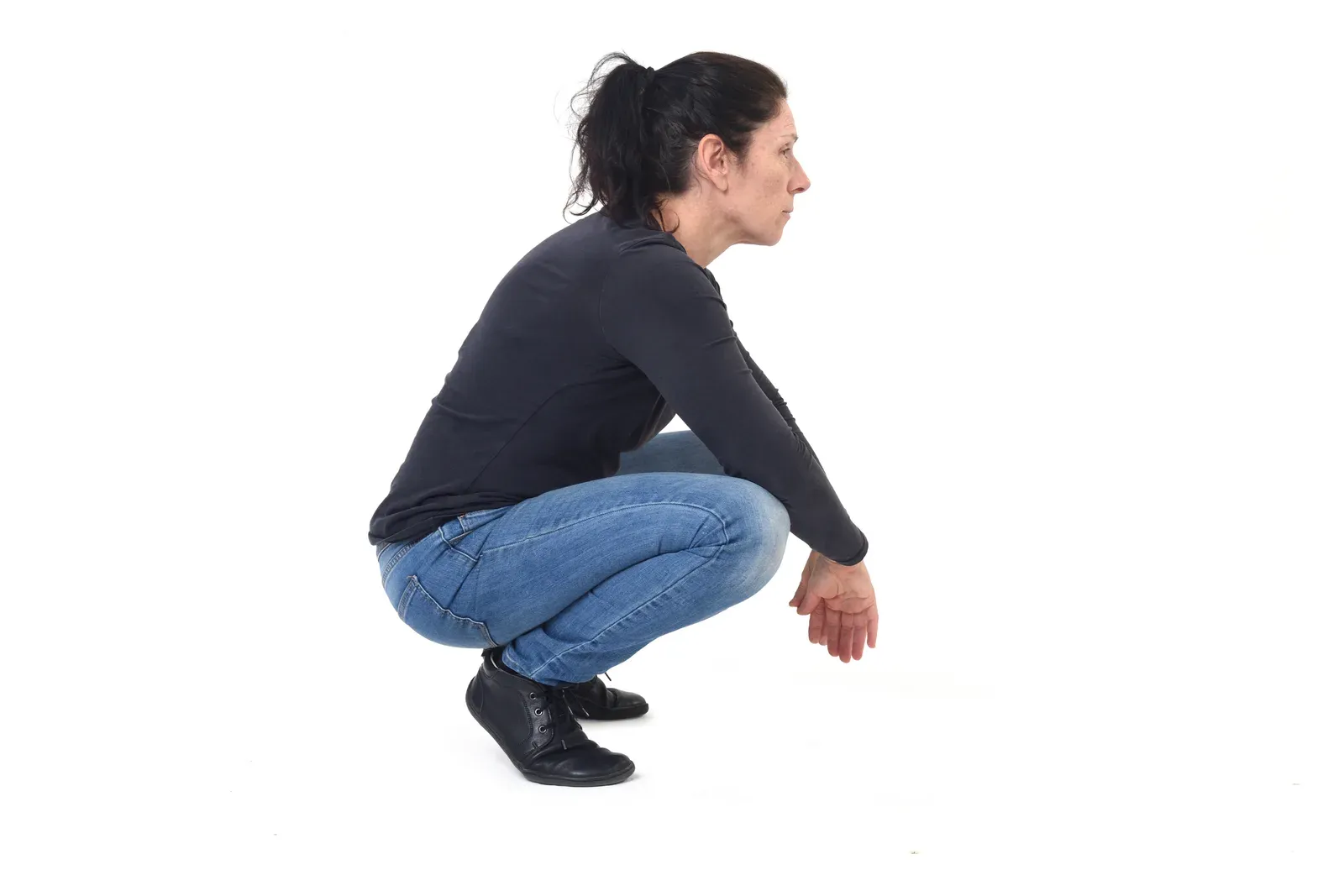
Your heels lift in a squat when your ankle cannot bend far enough for your shin to travel forward, and a simple wall-knee test shows whether the limit is a tight calf, a stiff joint, or both. Fixing it is a matter of testing, doing the matching drill daily, and using a heel-elevated squat so training continues while range builds. If you want a coach to watch your squat, the free consultation can include it, and the bodyweight squat guide lays out the progression you will follow once the ankles cooperate.
The wall-knee test
- Stand facing a wall with one foot a few inches back, toes pointed straight ahead.
- Bend the knee to touch the wall without letting the heel lift.
- Move the foot back an inch at a time until you find the farthest distance where the knee still touches.
- Measure from big toe to wall. Repeat on the other side.
About 4 inches (10 centimeters) is a commonly used benchmark. A much smaller number on one side is the one to work on first.
Calf or joint? The bent-knee check
Repeat the test twice: with the knee straight over the toes, and with a deliberate bend and a slight inward drift of the knee.
| Result | Likely limit | Drill |
|---|---|---|
| Stops with a stretch in the calf and eases with a bent knee | Calf muscle range | Calf stretches, soleus stretch with knee bent |
| Stops with a pinch at the front of the ankle | Joint or bone block | Joint glides, strength in the range, ask a clinician |
| Stops with a stretch in the back of the lower leg, no change with knee bent | Both | Combine calf and joint work |
A pinch is a stop sign, not something to push through. Mention it to a physician or physical therapist, and tell your coach what they say.
The drills that help
- Calf stretch against the wall: 3 holds of 45 seconds per side, once with a straight knee and once with a bent knee.
- Wall-knee rocks: 2 sets of 10 slow reps per side, heel down.
- Band-assisted ankle glide: loop a band around the front of the ankle, anchored behind you, and rock the knee forward.
- Slow calf raises over a step: 3 sets of 10, lowering for 3 seconds, which builds strength at the end of the range.
- Deep squat hold: 3 holds of 30 seconds, holding a weight in front for balance.
Do them daily for three to four weeks and retest. A change of half an inch to an inch is a good result.
The heel-elevated squat stopgap
While range builds, raise your heels with a small plate, a board or lifting shoes. This lets the shin move forward without the ankle having to supply all the bend, so you can train depth and strength now. Aim for a heel lift of half an inch to an inch, and reduce it as the wall-knee number improves. If you are curious how this affects load, the squat not going up guide covers other causes of stalled squats.
Other causes of lifting heels
A narrow stance, a very long torso, a forward-leaning bar position, and weak glutes can all contribute. If your ankles pass the test and the heels still lift, try a wider stance, turned-out toes and a slower descent.
Past sprains and instability
If your ankle feels loose or gives way, the problem is stability, not mobility, and the ankle instability answer explains the clinician-first route. FlexWerk’s private suites in Carmel City Center rent by the hour, and each coach sets their own format. Run the wall test today and note the numbers.
Related questions
How far should my knee go past my toes at the wall?
A common benchmark is about 4 inches, or 10 centimeters, from the wall to the big toe while the heel stays down. Less than that on one side compared with the other suggests a limit worth working on.
Can stretching alone fix it?
Sometimes, but range you do not load tends to fade. Pair mobility drills with squats to the new depth, and add calf strength with slow raises.
Are tight ankles a reason to avoid squatting?
No. Squat with heels elevated, a wider stance or a counterweight while the range builds. If you have a past ankle injury or pain, ask a physician or physical therapist first.